Coin toss.
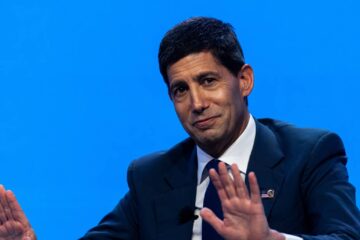
That’s the message the market sent to Federal Reserve Chairman Kevin Warsh after his debut speech at the central bank’s annual economic summit in Jackson Hole, Wyoming, displayed a noticeable hawkish shift.
Warsh’s Aug. 28 speech, made on his 100th day as Fed chairman, addressed the need to monitor inflation in a more nuanced tone than the “word salad” that many investors said they heard from him after the July policymaking meeting.
Hence the chairman’s pledge to tame elevated inflation — “We have work to do” — reset market expectations in the CME Group FedWatch Tool for a 25 basis-point hike probability to nearly 60% next month, up from 35% from the previous day.
“Certainly that’s a close call,” Morgan Stanley Chief U.S. Economist Michael Gapen told CNBC, adding “our view is inflation is decelerating” and the result should be enough to keep the Fed on the sideline next month. But the key, Gapen said, is how much and how fast those inflation numbers will slow down.
John Luke Tyner, Portfolio Manager & Head of Fixed Income at Aptus Capital Advisors, told TheStreet in an email that Warsh’s remarks provided the market with what participants hoped for: a more thorough view of the economy and inflation, which appeared to satisfy investor concerns.
“His comments indicated that underlying inflation trends have not meaningfully improved, and if they don’t improve quickly, then there is more work to do at the Fed. This reassured market participants that Warsh and team aren’t going to sit back and wait even longer for the inflation (2%) target to be achieved (already at 65 months and counting),’’ Tyner said.
Here’s why the September rate-hike bet is a coin toss
Greg Gizzi, Head of Fixed Income and Municipal Bonds at Nomura Asset Management International, told TheStreet in an email that he expected the Federal Open Market Committee will continue to hold the benchmark short-term interest rates steady at its Sept. 16-17 meeting.
“The hawkish messaging was unmistakable, with the Chairman stating he would be ‘hard pressed to describe broad financial conditions as restrictive’ and noting that credit and loan activity show little evidence of restraint,’’ he said.
Gizzi said that Warsh stressed that inflation expectations in the medium term “are not pushed around easily, and right now they are well anchored.”
“This anchoring of expectations is significant and suggests underlying confidence in the inflation trajectory, providing an important counterbalance to the otherwise hawkish tone,’’ Gizzi said.
Warsh focuses on inflation side of the Fed’s mandate
The Fed’s dual mandate from Congress requires maximum employment and stable prices.
- Lower interest rates support hiring but can fuel inflation. This risks fueling further inflation, potentially leading to an inflationary spiral.
- Higher rates cool prices but can weaken the job market. This increases the cost of borrowing and further stifles economic activity.
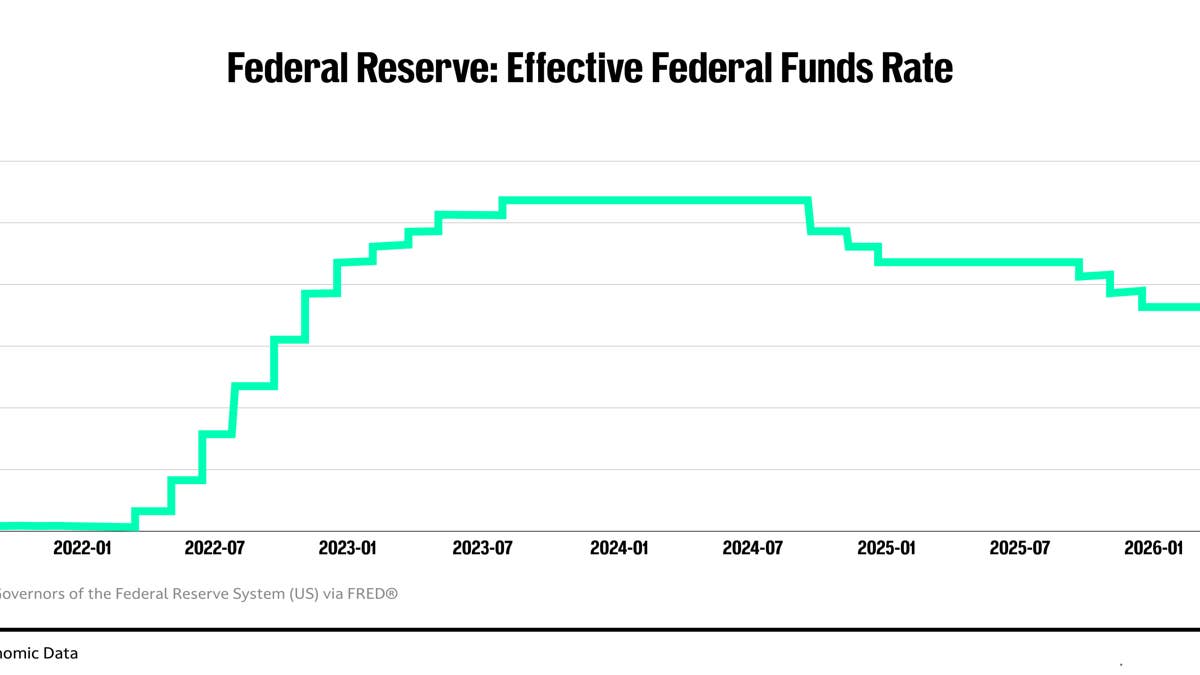
As I reported, the rate-setting FOMC voted 9-3 last month to hold its benchmark Federal Funds Rate target in a range of 3.5% to 3.75%. The three dissenters wanted to raise rates by 25 basis points because of inflation concerns.
Policymakers had cut rates by 25 basis points at its last three meetings of 2025 to shore up the softening labor market.
These “insurance” cuts stopped after the majority of policymakers decided the risk from higher prices was outweighing signs that the jobs market was stabilizing.
Tyner said that Warsh’s commentary “feels more in line with what we’ve heard from the growing hawkish chorus of other Fed officials as well as considering the three July dissents. We still think a large factor in determining that meeting’s outcome will be the August employment and CPI reports coming over the next few weeks.”
The funds rate is the interest rate at which banks lend balances at the Federal Reserve to other banks overnight.
A change in the funds rate triggers moves in short-term borrowing costs ranging from credit cards to student loans and home equity loans.
Key inflation measures remain elevated
The Wealth Alliance CEO and Managing Director Robert Conzo said the 12-month change in the Personal Consumption Expenditures — an economic measure of consumer spending — and the Consumer Price Index measures remain elevated.
“Over the most recent six months, 49% of PCE basket components showed price increases above 3%. Summer PCE and CPI readings were better than expected but did not indicate a meaningful improvement in underlying inflation trends,’’ Conzo told TheStreet in an email.
Related: Why Warsh’s Jackson Hole debut may trigger a bond-market shock
Warsh also doubled down on his discomfort providing forward guidance to markets, Conzo said.
“As a further example, the Chairman cautioned against the ‘hall of mirrors’ problem; markets relying on Fed guidance for trading decisions while the Fed simultaneously relies on market prices — a dynamic that can blind both parties to new economic developments,’’ Conzo said.
Warsh also discussed AI impact on Fed activities
Cetera Financial Group Chief Investment Officer Gene Goldman said Warsh’s speech at Jackson Hole avoided giving any clear signal on rates, but “he sounded upbeat on the economy while making clear he’s still worried that inflation isn’t cooling fast enough.’’
Specifically, Goldman told TheStreet in an email that his three takeaways from the speech are:
- Warsh won’t signal rate moves anymore. Warsh says the old Fed habit of hinting at future rate decisions backfires, it makes the Fed and markets chase each other’s signals instead of the real economy, so he’s deliberately not giving any hints.
- Growth is good, inflation isn’t. Business spending, profits, and jobs all look solid, but inflation is still running near 3.7%, well above the Fed’s 2% goal, and Warsh doesn’t see clear signs it’s actually cooling.
- Artificial intelligence is now a Fed watch item. Warsh is treating AI’s economic impact as a real unknown worth studying (a new task force is looking at it), but said it won’t factor into any near-term rate decisions.
Related: Bessent’s $40 trillion debt answer puts Fed rate hike in focus