For the past five days or so, President Trump has pronounced the war in Iran at or near an end.
Behind his thinking — and much of Congress, Wall Street and others — is that Israeli and U.S. attacks on Iranian air defenses, air fields, naval vessels and the like have destroyed Iran’s ability to fight back.
And Iran will seek a cease fire soon enough. So, the thinking goes.
If that occurs, the stock market will soar to who-knows-what level.
Adding to the argument: The International Energy Agency (IEA) announced that its 32-member countries had unanimously agreed to release 400 million barrels of oil from their emergency reserves to try to lower global oil prices.
Trump also said he would order a drawdown of the U.S. Strategic Petroleum Reserve, which now stores about 416 million barrels in five sites.
But the president might not release the oil unhappily. In the past, he has criticized using the SPR to bring prices down.
Are the Iranians serious?
Maybe the Iranians are engaged in fantastical bravado, but the Iranian government so far has declined to cry uncle. Most of the nations around the Persian Gulf are still getting hit with drone and missile attacks.
Airlines have canceled flights into the region at least until the end of the month. British Airways has stopped flights from London Heathrow to Abu Dhabi in the United Arab Emirates “until later this year,”theStreet’s Veronika Bondarenko reported.
Abu Dhabi is about 200 miles across the Persian Gulf from Iran.
On March 11, the Iranian government promised to block ships passing through the Strait of Hormuz either from the Persian Gulf or entering the Gulf. And it suggested a blockage that lasts, say, several weeks could push crude oil prices to $200 a barrel. That would more than double crude oil prices and wreak serious global economic havoc.
Both Brent oil, the global crude benchmark, and Light Sweeet crude, the U.S. benchmark, seemed to jump higher on the news of the Iranian threat.
Brent finished Oct. 11 at $91.98 a barrel, up 4.8% but down 23% from its 52-week high of $119.50, reached on March 9.
Light sweet crude was at $87.25, up 4.6% on the day but off 27% from its $119.48 peak, also on March 9.
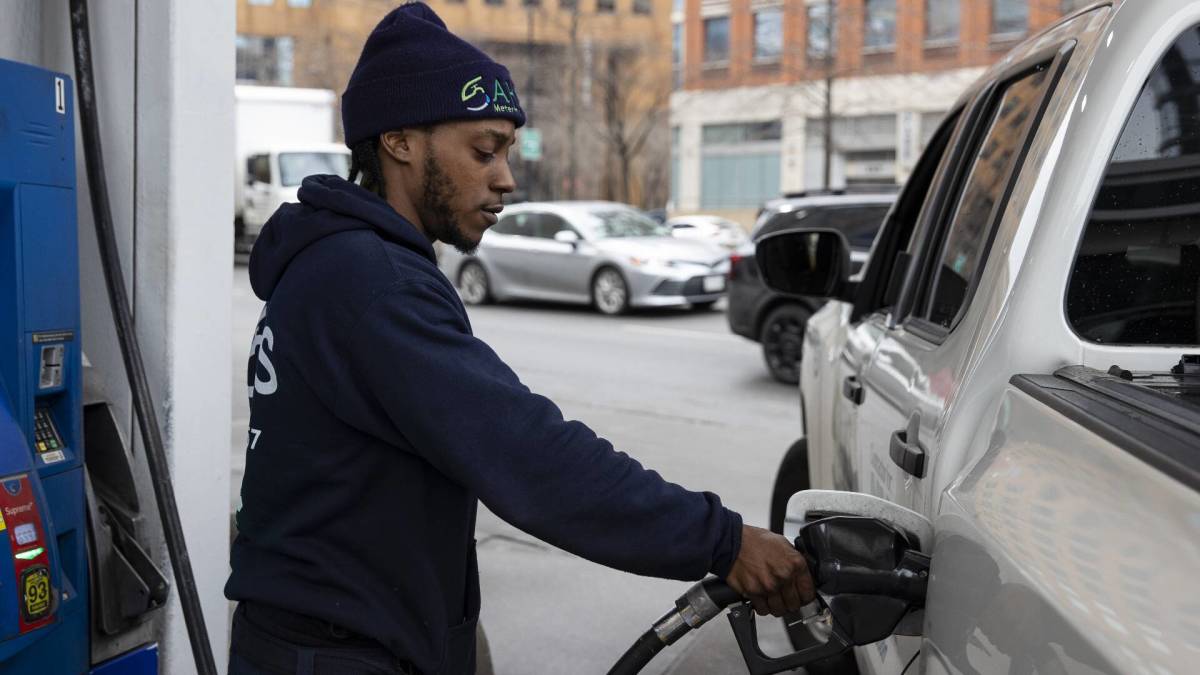
U.S. retail gasoline prices moved up, too, to an average $3.578 a gallon, up 26% since Dec. 31, according to AAA. GasBuddy.com put the price slightly higher at $3.595.
And stocks moved lower as well. Except for energy stocks. The Energy Select Sector SPDR exchange-traded fund was up 2.5% to $56.98. Exxon Mobil, Chevron, ConocoPhillips, Halliburton and SLB, formerly Schlumberger, were among the winners.
The Energy led the Standard & Poor’s 11 sectors, up 2.5% on the day. Tech was a distant second, up just 0.35%
More Oil and Gas:
Oil, War, and Wild Swings: Why Today’s Market Mirrors a Forgotten Era
Energy giant sends blunt $20 billion message on dividend growth
147-year-old oil giant just raised dividend 4% in 2026
Here we must note that crude oil and gasoline prices in the last few weeks have been whipsawed by headlines far more than presidential pronouncements or IEA announcements.
But the reality of the situation, wrote Michael Brown, a London-based analyst with investment house Pepperstone: “There is still a distinct lack of progress in terms of actual de-escalation, or in terms of transit through the Strait of Hormuz resuming in any meaningful manner.”
Mostafa Bassim/Ge
The odds of $200 oil
But if military might is strangling Iran’s defense capabilities, is the Iranian threat of $200-oil possible?
Deutsche Bank analysts think it’s possible. That assumes:
- Iran is able to enforce a complete closure of the Strait of Hormuz for at least three weeks and probably longer.
- The U.S. Navy is unable to dislodge the material and manpower Iran uses to create the blockade.
- RealClearEnergy estimated a full closure would take 20 million barrels a day of oil off the global market, and prices would hit $120-to-$150 a barrel just about immediately and push crude to $180 to $200.
The problem for all concerned is this:
Crude oil in the Middle East is pumped first into storage tanks and then, via huge tanker ships, on to refineries around the world, especially China, to be turned into gasoline, diesel, lubricants and other products.
Storage capacity in the Persian Gulf region is only good for 25 days. If oil isn’t shipped, the tanks will fill up, and production will stop. Oil production in North and South America couldn’t make up the difference.
Related: Shocks happen, markets move: Lessons from history
Count Goldman Sachs skeptical
The effect of a closure of the Strait can be weathered if strategic reserves and alternative pipelines are used effectively, Goldman Sachs analysts wrote last week.
Saudi Arabia has a pipeline that can move crude oil, which is mostly produced from giant fields on the east side of the country, to a port on the Red Sea. Oman can pipe oil to a port on the Gulf of Oman, outside the strait.
But the pipelines can’t replace all of the 60-to-70 tankers that had been taking oil out of the Gulf every day.
And what do traders in the oil markets think?
They understand.
U.S. crude oil futures were up more than 6.6% to about $93 in overnight markets. Brent crude was up about 2% to $93.60.
Related: Qatar energy minister sends strong message on $150 crude