The Trump Administration hasn’t said too much about Venezuela, but late Friday, President Trump did.
In a Truth Social post, the president said the United States is going to take “majority control” of more than 65 billion barrels of Venezuelan oil, about 21% of the country’s total reserves.
The post comes as the war in the Middle East staggers on without resolution.
The presidential announcement says the deal would involve the administration working with “private companies” to rebuild Venezuela’s decaying energy industry.
The United States would hold a 55% share of the venture, The Wall Street Journal suggested.
Related: Oil prices tumble as Oman and Iran make an unexpected move
In theory, the deal would double the reserves under U.S. control. These totaled 46 billion barrels at the end of 2024, according to U.S. Energy Information Administration data.
Venezuela has claimed its total reserves total about 303 billion barrels, although many oil experts are skeptical they’re quite that big. But the oil and gas resources are quite substantial, said David Goldwyn, president of Goldwyn Global Strategies, a Washington, D.C. energy consulting firm that has worked on Venezuelan issues.
It is true, however, that Venezuela was the world’s largest producer of crude oil from the 1920s through 1965 when Saudi Arabia’s giant oil fields began to produce crude oil.
The Trump announcement claimed the arrangement with Venezuela would be “THE BIGGEST OIL DEAL IN WORLD HISTORY!” The deal “greatly increases our Oil Supply, and will substantially lower Gas Prices for all Americans, long into the future,” the president said.
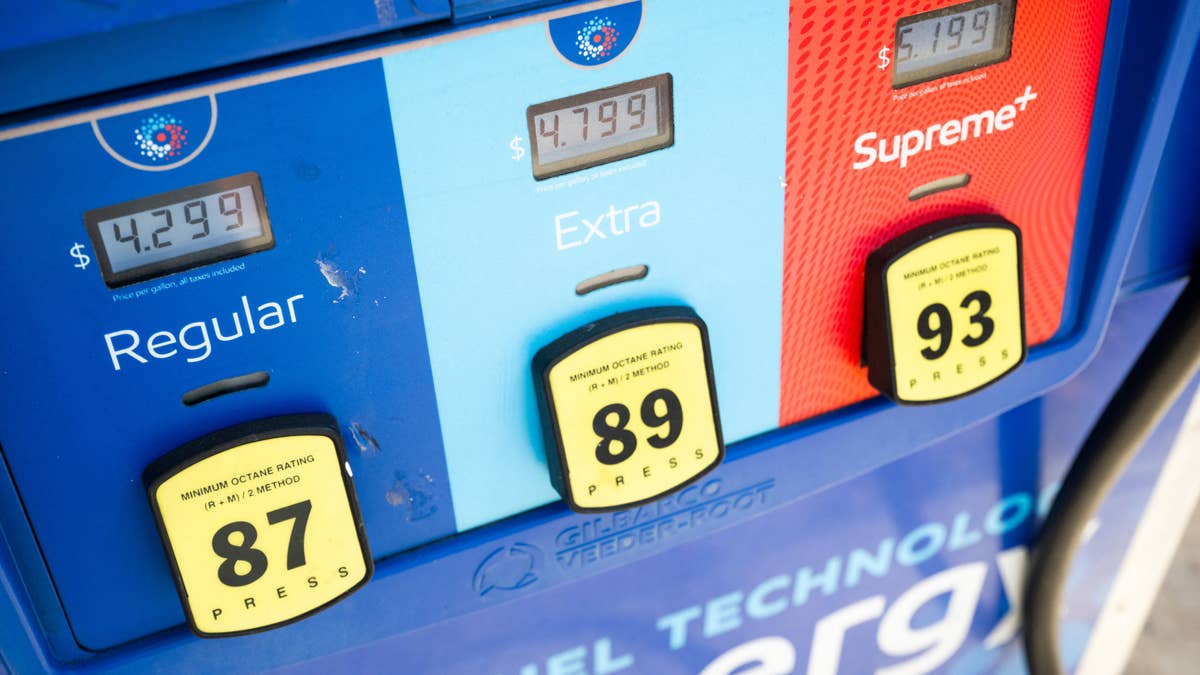
U.S. gasoline prices are up more than 44% in 2026 because of the U.S.-Israel war with Iran.
But there were very few details with the announcement. These unknowns include:
- How much and how fast can the private companies invest in the Venezuelan resources and make the production available?
- Has the Venezuelan government confirmed the deal? The Truth Social statement says only that “the Highly Respected Interim President of Venezuela, Delcy Rodriguez” worked closely with Secretary of State Marco Rubio and Defense Secretary Pete Hegseth on it.
- Does Venezuelan law require the country’s congress to approved it? Does Rodriguez, the acting president, have the legal authority under Venezuelan law to negotiate the deal?
- Does the deal, likely to be legally very complex — not to mention unprecedented —also require approval of the U.S. Congress, Goldwyn asked.
- What private companies are working with the administration on the deal? Are they American or multinationals?
The announcement assumes the deal would come “at no cost to the American Taxpayer.” But it does not offer details about how it would work. Nor does it say if it assumes a greater American military presence.
And the statement does not outline the rights and protections private companies would require, consultant David Goldwyn said.
These are critical questions because U.S. companies would demand concrete terms and protection guarantees, he told TheStreet in an interview.
SAUL LOEB / AFP / Getty Images
OPEC would take a hit, too
The Trump announcement comes after several days of news chatter both about the possibility of a deal and a possible Venezuela decision to give up its membership in the Organization of Petroleum Exporting Countries.
Venezuela was one of six founding members of OPEC when it was formed in September 1960. The other members at the time were Iran, Iraq, Kuwait and Saudi Arabia. In the 1970s, the cartel became a primary driver of global oil and gas prices.
Not being a member of OPEC would free Venezuelan production from OPEC production quotas.
The aftermath of U.S. intervention
The United States became the de facto ruler of Venezuela in January when U.S. armed forces seized control of the nation’s presidential palace and and took Venezuelan president Nicolás Maduro and his wife Cilia Flores into custody on narco-terrorism charges. They are being held now in a federal jail in New York, with a trial date set for June 1, 2027.
Acting president Rodriguez, who had been vice president of the country, was named acting president. But the United States has taken control of the Venezuelan oil industry and markets the oil to buyers, with the revenue, totaling more than $13 billion, is currently held in a Citigroup account.
Soon after the U.S. takeover, President Trump held a summit at The White House hoping U.S. oil companies would invest $100 billion or more in Venezuela. There were few takers at the time. Exxon Mobil (XOM) CEO Darren Woods called Venezuela “uninvestable” because of its history of nationalizing foreign investments.
Related: Venezuela oil debate reveals big mystery
U.S. companies key to Venezuelan growth
Venezuela’s oil industry was largely developed by foreign companies, with companies from the United States closely involved.
The initial finds were in and around Lake Maracaibo along the western coast of the country, with much of the production shipped to refineries in Texas and Louisiana.
The most important reserves today are in the Orinoco region east of Caracas.
More Oil & Gas:
- Why a big drop in oil prices did little at the gas pump
- Drivers lose control over gas price squeeze
- A big shift in the U.S. energy market is about to happen
Good reason to be skeptical
The industry was nationalized in phases starting in the 1970s, usually without compensating the oil companies. Under the rule of the late Hugo Chavez, the nationalization was largely complete, with the state-owned Petroleos de Venezuela S.A. (PDVSA) in charge with only a few foreign companies willing to operate in the country.
Among these was Chevron (CVX) Hunt Oil and SLB (SLB) along with the Repsol and Eni, from Spain and Italy, and some Russian and Chinese companies.
But PDVSA under Chavez and his successor Maduro did little to redevelop the oil resources and let its electrical, pipeline and production infrastructures collapse so that production fell below 1 million barrels a day in 2025.
Outside observers, including Goldwyn, believe billions of dollars and many years will be required to get daily production, now about about 1.25 million barrels a day, back to about 3.7 million barrels, its production rate in 1970.
Related: Morgan Stanley sends clear signal on stock market, oil prices