While lower-tiered malls have struggled and some have even been closed down, the narrative on mall traffic isn’t what most people think it is.
“Despite reports of record-low consumer sentiment in May 2026, consumer foot traffic increased year-over-year across all mall formats in May, marking the second straight month of gains and the fourth positive month of 2026,” according to Placer.ai’s May Mall Index.
The problem is that malls visits and consumer spending are not the same thing.
“What is setting malls apart? One potential explanation is that mall visits and traditional retail spending are increasingly decoupled. Unlike standalone retail stores, malls serve a variety of purposes beyond shopping, including dining, fitness, entertainment, and socializing,” Placer.ai reported.
It means that consumers might visit the mall, but not actually spend any money.
“As a result, consumers may be scaling back purchases of discretionary goods without materially reducing their mall visits,” according to the research firm.
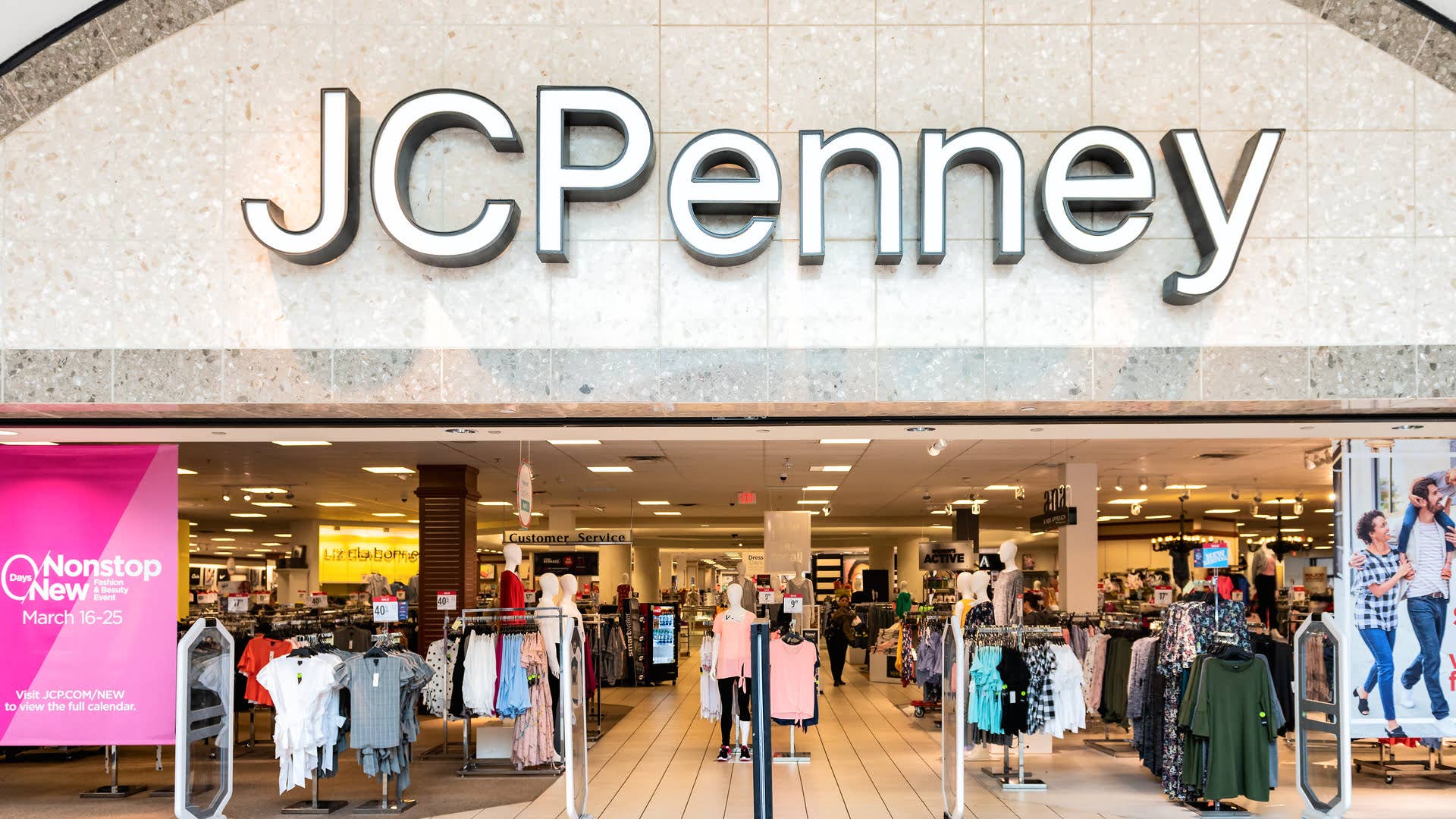
It’s a complicated situation that has pressured traditional mall anchors such as JCPenney, which has steadily closed stores since its 2020 Chapter 11 bankruptcy.
JCPenney has continued to shrink
JCPenney began shrinking its brick-and-mortar footprint as part of its 2020 bankruptcy.
“Shortly after announcing the bankruptcy, JCPenney also announced plans to close about 29% of its 846 stores. Those 242 locations closed in an effort to stabilize the business’ finances and avoid having to liquidate the remaining stores,” according to Kiplinger.
As part of the chain’s Chapter 11 bankruptcy, roughly 160 store properties and six distribution centers were transferred into the Copper Property CTL Pass Through Trust, which was created to sell the real estate and distribute proceeds to creditors, according to SGB Media.
That arrangement was to free up capital, and was not expected to have a significant impact on retail operations.
JCPenney has, however, continued closing stores each year since its bankruptcy filing. That included eight stores closing in 2025, which the company attributed to struggling malls, redevelopment projects, and lease issues.
“While we do not have plans to significantly reduce our store count, we expect a handful of JCPenney stores to close by mid-year,” a company spokesperson said in a statement to Axios.
Now, the chain has continued that pattern into 2026.
“According to a review of local media reports, online review platforms, and JCPenney’s own store locator tool, several locations have closed or are expected to close this year,” according to Fast Company.
Shutterstock
Which JCPenney locations closed in 2026?
“Our review found at least six JCPenney locations that have closed or will close this year, although this may not be a complete list. The stores, some of which were operational for decades, are located in six different states,” the magazine reported.
Already closed:
- 1500 Stoneridge Mall Road, Pleasanton, CA 94588
- Seminole Towne Center, 10 Towne Center Circle, Sanford, FL 32771
- Ford City Mall, 7601 S Cicero Ave., Chicago, IL 60652
- Rivergate Mall, 1000 Rivergate Pkwy. Ste 3, Goodlettsville, TN 37072
- Springfield Town Center, 6699 Springfield Mall, Springfield, VA 22150
Expected to close:
- 1006 Ross Park Mall Drive, Pittsburgh, PA 15237 (September)
As of June 30, JCPenney’s store locator tool showed 641 locations in the United States. By comparison, the chain reported 846 stores to the Securities and Exchange Commission (SEC) at the beginning of 2020, when the company’s stock was still publicly traded.
JCPenney’s real estate sale falls through
In addition to its slow attrition, Copper Property (CTL) Pass Through Trust also tried to sell a portfolio of 119 JCPenney stores for $947 million to Onyx Partners, a Boston-based private equity firm, according to CoStar.com.
This deal would not have impacted retail operations at the sold stores.
“J.C. Penney has long-term triple-net master leases for the stores being sold. As net-leased properties, J.C. Penney is responsible for carrying costs for the stores and for the real estate’s maintenance,” CoStar added.
That deal has fallen through.
“The planned sale of 119 JCPenney store properties has collapsed after the buyer failed to close by a late-December deadline. Copper Property CTL Pass Through Trust, which controls the assets, terminated the $947 million all-cash deal on Dec. 26, citing the buyer’s failure to complete the transaction on time,” PropModo reported.
In a filing with the U.S. Securities and Exchange Commission, Copper said it met all closing conditions, while Onyx did not.
“Copper is holding $2 million of the buyer’s $5 million deposit and is seeking to claim the remaining $3 million from escrow, a move Onyx is contesting through litigation. Onyx has argued Copper breached the agreement, while Copper says it intends to aggressively defend its position,” PropModo added.
The sale remains in limbo, and does not impact store operations.
If the portfolio were eventually broken up and sold to multiple buyers, it could introduce more variability in how individual landlords manage the properties, including lease renewals and long-term redevelopment plans.
JCPenney faces a challenging future
Analysts say JCPenney has stabilized since bankruptcy but continues to struggle with relevance, mall traffic decline, and uneven store performance, making its long-term turnaround uncertain.
GlobalData Managing Director Neil Saunders commented on the chain’s sales declines to close the fiscal year.
“The trajectory, which was gradually improving, has clearly reversed direction,” he told RetailDive.
Sales fell in part because some stores closed, but even so the retailer’s top-line was weaker than the overall market, per GlobalData.
“That suggests JCP lost relevance over the holiday period, despite the things it has been doing to improve the proposition,” Saunders said. “That’s concerning and something the business needs to correct in the current fiscal year.”
As a former frequent JCPenney shopper, who has covered retail for over 30 years, I still visit JCPenney, but no longer consider it a destination. The chain rarely has what I need in stock. As someone who generally shops for need, not fun, I’m generally not leaving my house to go to to the mall hoping a store will have what I need.
RTMNexus CEO Dominick Miserandino believes that JCPenney has made smart decisions recently.
“Instead of trying to chase high-fashion trends, they are putting over a billion dollars back into their actual stores to fix customer service, upgrade their app, and improve the checkout experience. They aren’t trying to be fancy. They are focusing on the basic operational fundamentals,” he told TheStreet.
He sees an audience whose needs JCPenney can meet.
“By focusing entirely on what working-class families actually need, they are proving that a legacy department store can still win if management is willing to do the front-line work,” he added.
Related: A breakfast chain customers kept coming back to files Chapter 11