A nurse in Queens earning $75,000 a year hands over more than $12,000 in federal income taxes. That scenario is exactly what Jeff Bezos says the country no longer needs to tolerate, and Grant Cardone agrees.
The Amazon executive chairman and the real estate mogul are not typically aligned on policy, but both have arrived at the same conclusion in 2026. Lower-income and middle-class Americans, they argue, should keep every dollar of their paychecks without sending any portion to Washington.
Their arguments landed during one of the most heated tax debates in recent memory, with Congress fighting over spending bills and multiple states exploring new levies on the ultrarich.
For roughly 76 million households in the bottom half of earners, these proposals could return thousands of dollars to family budgets annually.
Bezos tells CNBC the bottom half of earners should owe zero federal income taxes
Bezos appeared on CNBC’s “Squawk Box” on Wednesday, May 20, telling host Andrew Ross Sorkin that the bottom 50% of American earners should pay no federal income tax.
The bottom half currently contributes roughly 3% of federal income tax revenue, while the top 1% accounts for about 40%, CNBC reported.
“I don’t want to reduce it, I want to eliminate it,” Bezos said during the interview, framing the proposal as both an economic stimulus and a moral imperative.
He argued that removing the tax burden would give struggling families the financial breathing room to start businesses and build toward stability.
The fourth-richest person in the world, with a fortune valued at over $250 billion according to the Bloomberg Billionaires Index as of the time of his CNBC appearance, Bezos acknowledged inequality as a real problem while rejecting the idea that taxing billionaires harder would fix it for working families.
Bezos also indicated he plans to bring the proposal directly to President Donald Trump, positioning it as a practical solution rather than a partisan talking point.
He spoke from Blue Origin’s rocket facility in Merritt Island, Florida, linking his personal story as the son of Mike Bezos, a Cuban immigrant who adopted him at age four, to his belief in economic mobility, CNBC reported.
Grant Cardone has pushed to eliminate income taxes for years
Cardone, a real estate investor and private equity fund manager, has been one of the most vocal public figures calling for the end of federal income taxes well before the Bezos interview.
He called Trump’s proposal to end income taxes for individuals earning under $150,000 “brilliant” on X, estimating it could save middle-income households roughly $38,000 annually, GOBankingRates reported.
“Imagine 100% of your paycheck every two weeks,” Cardone told GOBankingRates, emphasizing how the change would reshape budgets for families already living paycheck to paycheck.
He has consistently argued that the government funds most of its major spending by printing money rather than by tax collection.
Expenditures are a choice…Taxes are a mandate. I don’t have a choice, and I don’t control how much it is. That pair of shoes, I could buy them or not buy them. The withholding tax, I cannot [control]
Cardone has warned that taxes pose the single greatest threat to Americans’ retirement security, noting that future tax rates are entirely unpredictable. At age 73, the IRS requires retirees to begin taking required minimum distributions, currently calculated at roughly 3.8% of their savings, and if rates climb, those withdrawals could be consumed by taxes, Cardone told GOBankingRates.
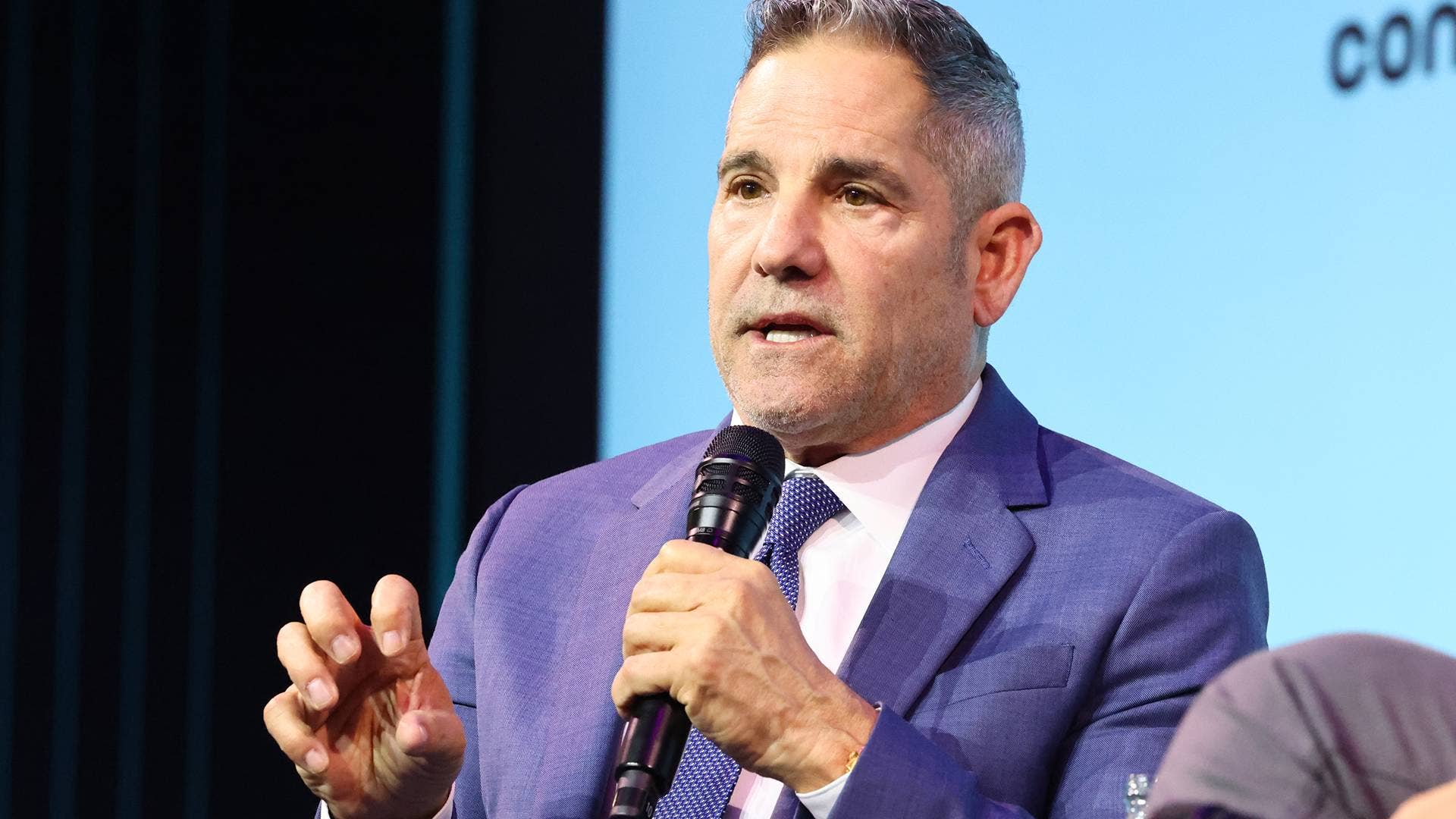
🇺🇸 Jeff Bezos, worth 1/4 trillion dollars says the bottom half of workers should NOT pay income tax. Barely billionaire, Grant Cardone says, “the top half should NOT pay taxes either.” pic.twitter.com/oexEZx9TfK
— Grant Cardone (@GrantCardone) May 21, 2026
His position is consistent across platforms, from X posts calling for the complete elimination of federal taxes to interviews criticizing the repeated taxation of the same dollar. Cardone has called inflation the “invisible tax” that erodes purchasing power for working Americans far more than income taxes alone, Benzinga reported.
Critics warn that the math on eliminating federal income taxes does not work
Not everyone agrees that removing income taxes for lower earners is practical or beneficial over the long run, and several prominent voices have pushed back.
New York City Mayor Zohran Mamdani responded on social media, pushing back on Bezos’ framing of working New Yorkers, NBC News reported.
Robert R. Johnson, a professor of finance at Creighton University’s Heider College of Business, warned that the proposal sounds appealing but creates a revenue gap without a clear replacement. The federal government requires receipts that match expenditures, and cutting taxes without replacing revenue would accelerate the national debt, Johnson explained to GOBankingRates.
More Personal Finance:
- Fidelity has a warning for anyone who left a 401(k) at an old job
- Living trusts: what they do and who needs one
- Fidelity sounds alarm on 401(k)s, IRAs
The bottom 40% of taxpayers already pay effectively no federal income tax on average when refundable credits, such as the Earned Income Tax Credit, are factored in, CNBC noted.
That reality complicates the Bezos proposal by raising the question of how many additional households would actually see a meaningful change in their finances.
Meanwhile, Senator Elizabeth Warren introduced the Ultra-Millionaire Tax Act of 2026, which would impose a 2% annual levy on households worth more than $50 million and an additional 1% on billionaires, CBS News reported.
The contrast highlights a deeper divide over whether the system’s core problem is that lower earners pay too much or that the wealthiest contribute too little.
How the federal tax debate could reshape your household budget
The Tax Foundation’s most recent analysis of IRS data found that the income threshold for the bottom 50% of taxpayers was approximately $54,000 in 2023. Those at the top 1% threshold, earning at least $676,000, paid an average effective income tax rate of 26.3%, the Tax Foundation reported.
For a household earning $54,000 and paying an effective federal income tax rate of 3.7%, the average effective rate the Tax Foundation calculated for the bottom 50%, eliminating federal income tax would return roughly $2,000 to their annual budget.
That amount could cover roughly two months’ worth of groceries for a family of four under the USDA’s Thrifty Food Plan, or several months’ worth of a typical auto insurance payment. Senator Cory Booker of New Jersey introduced the Keep Your Pay Act on March 9, 2026.
It would more than double the standard deduction, to $75,000 for married couples filing jointly, $37,500 for single filers, and $56,250 for heads of household, and, according to Booker’s office, reduce the median American family’s federal income tax burden by an estimated 85%.
Whether any of these proposals become law remains uncertain, but the convergence of high-profile billionaire commentary with active congressional bills suggests the tax-relief debate has moved from rhetoric to legislation. What that means for any individual household will depend on which proposal, if any, advances and how its provisions are paid for.