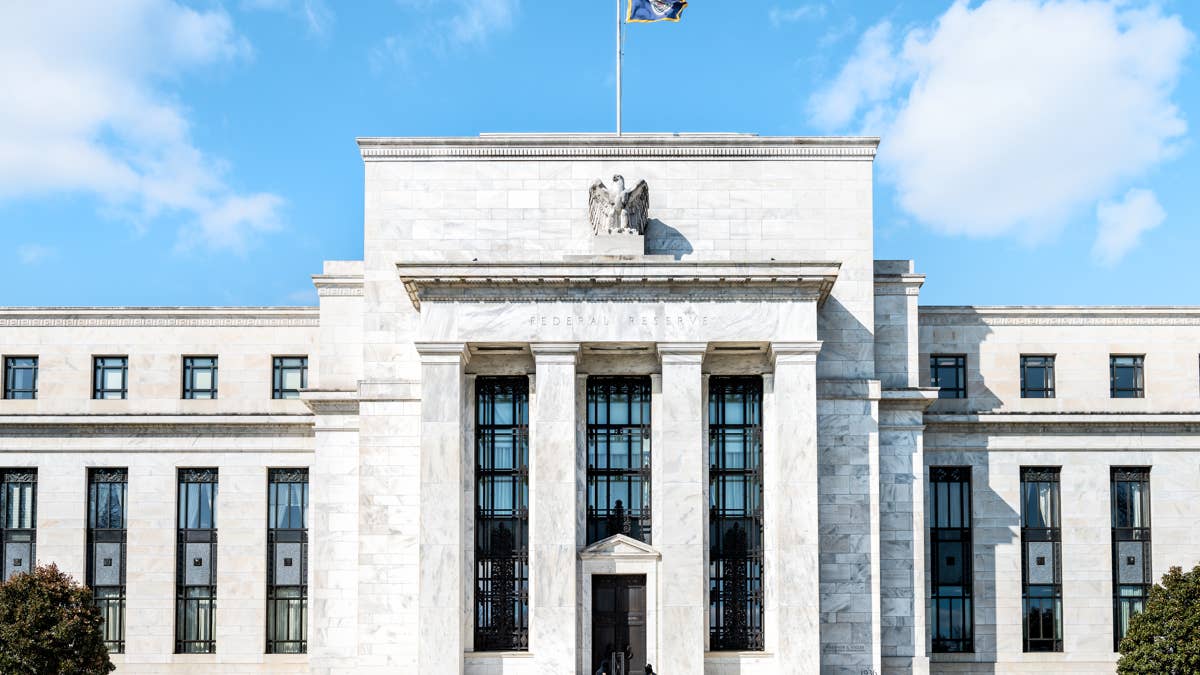
Wall Street posted its strongest session in six weeks on Sept. 17, 2026, and Jim Cramer quickly turned the rally into a warning about what lies ahead. The Federal Reserve had just raised its benchmark to a range of 3.75% to 4%, its first increase since July 2023.
Equities had dropped in seven of the eight sessions leading up to the Sept. 16, 2026, meeting, then reversed course once the Federal Open Market Committee’s (FOMC) unanimous decision was made public.
Cramer had already told CNBC on Sept. 11, 2026, that 2026 closely mirrors the fall of 2018, a period when equities declined.
The S&P 500 fell roughly 20% between its September 2018 peak and Christmas Eve, driven lower by rising rates and climbing oil prices.
He reinforced that message on Sept. 16, 2026, on CNBC’s “Mad Money,” telling viewers, “If you buy stocks here, you’re now officially fighting the Federal Reserve.”
Why Cramer calls every Fed meeting a “big bad event”
Cramer described each FOMC meeting as a scheduled catalyst that builds enough uncertainty for traders to sell well in advance, according to CNBC.
Stocks tend to recover once the decision lands and the uncertainty lifts, a pattern he traced back decades through past bond auctions and rate decisions.
Cramer told viewers to buy near the meeting and add more once the decision lands, aiming to capture the post-event rebound he expects each time.
The S&P 500 climbed 1.1%, and the Nasdaq jumped 1.7% the day after the hike, confirming the pattern he described, Bloomberg reported.
What the September dot plot signals for the rest of 2026
The rate hike was expected, but the quarterly projections the committee released alongside it had a sharper message than the increase itself. The dot plot showed that 16 of 18 FOMC participants project at least one more increase before December.
The median official now sees the federal funds rate finishing 2026 at roughly 4.1%, up from the 3.8% projection issued in June 2026.
That elevated outlook extends into 2027 as well, with 14 of 18 participants placing the year-end rate between 4.0% and 4.5%.
More Jim Cramer:
- Jim Cramer has terrifying one-word message for tech stock investors
- Jim Cramer says he’s steering clear of one popular stock
- Jim Cramer reveals 4 surging chip stocks he likes best
Federal Reserve Chair Kevin Warsh reinforced the committee’s hawkish tone at his post-meeting press conference, telling reporters that persistent price pressures require continued tightening, CNBC reported.
The committee’s core Personal Consumption Expenditures (PCE) inflation estimate rose to 3.4%, and policymakers pushed their projected timeline for reaching the 2% target out to 2029.
The next FOMC meeting is scheduled for Oct. 27 and 28, 2026, and the median rate path suggests another quarter-point increase could arrive before December 2026.
Cramer told CNBC viewers to expect the familiar selling pressure to build again in the weeks leading up to the October decision.
Cramer’s selectivity rule narrows the field for stock buyers
The September sell-off also coincided with Brent crude above $105 per barrel as of Sept. 18, 2026, as reported by Investing.com, and the 10-year Treasury yield climbing back above 5% and hitting its highest level since 2007, according to NBC News.
Consumer prices rose 3.4% over the prior year in August, with the energy index climbing 16.3%, the Bureau of Labor Statistics reported.
Oil above $100, elevated yields, and consumer prices well above 2% give that message an urgency that extends beyond any single meeting.
Cramer urged investors to narrow their holdings to defensive sectors such as pharmaceuticals, where demand persists regardless of how much borrowing costs rise.
Buying broadly during a rate-hike cycle runs against the central bank’s direction, a strategy Cramer warned has historically punished the investors who attempt it.
Chris Zaccarelli, chief investment officer at Northlight Asset Management, warned in a Sept. 14, 2026, note to Fortune that investors focused on the artificial intelligence rally and strong corporate earnings risk overlooking the historical relationship between Fed tightening cycles and the end of bull markets.
<strong>We understand the desire to look past the headwinds and focus on sublime earnings and the excitement of the AI boom, but all prior bull markets have eventually come to an end, and to quote another piece of Wall Street wisdom: ‘Bull markets don’t die of old age, they’re killed by the Fed</strong>.’
Cramer told CNBC viewers his position has shifted to fewer stocks to buy, fewer to hold, and considerably more to sell until inflation convincingly cools.
Cramer argued that the sell-offs surrounding each FOMC meeting tend to drag even resilient stocks lower alongside the rest of the broader market.
He framed those pre-meeting dips as potential entry points for defensive sectors, the kind of names whose earnings hold up during prolonged tightening cycles.
How the October FOMC meeting could test investor conviction
The September dot plot validated the consensus for at least one more hike in 2026 and left the door open for additional increases in 2027, giving investors a concrete rate path to weigh against their own holding periods and risk tolerance.
The October 2026 meeting will put Cramer’s pre-meeting sell-off framework to its first forward test as a fresh wave of pre-decision selling builds.
Investors who hold through that pressure will be testing whether the post-event rebound repeats under a Fed that has signaled it is far from finished.
Related: Jim Cramer sends strong warning to stock market investors