If you walked into any major electronics store this week, you’d probably see everyday shoppers begging for the new Apple (AAPL) iPhone Duo.
Consumers are looking for tangible innovation, and Apple’s latest device, which unfolds into a portable television of sorts, is already hopelessly back-ordered. While Wall Street panics over the trillion-dollar artificial intelligence arms race, Apple is quietly pulling off the greatest financial heist in modern tech.
Rivals like Amazon and Alphabet are burning through tens of billions of dollars in developing massive AI data centers. Apple, on the other hand, is completely outsourcing the heavy lifting.
As Jim Cramer recently discussed on the latest episode of “Mad Money,” Apple is seamlessly integrating Google’s Gemini to power Siri, securing state-of-the-art AI capabilities while completely dodging the “ridiculously expensive data center build-out stuff.”
It is a brilliant cheat code that has pushed Apple stock to all-time highs while the rest of the tech sector bleeds.
Why Apple is sitting out the Big Tech Capex panic
The final week of October confirmed that “we’ve officially got a problem with tech,” as the Nasdaq 100 finished the month down more than 9% from its Oct. 6 all-time high. Yet, on the back of a brutal sector-wide bloodbath, one company entirely defied the tech rout.
More Tech:
- Meta and Microsoft just sent employees a memo about Anthropic
- Microsoft cutting off popular software with no extension Oct. 13
- Apple’s biggest AI advantage may face new privacy challenge
As Cramer pointed out, “Apple stock is one of just a handful of NASDAQ names that just hit their all-time highs in late October.”
At this juncture, what sets Apple apart while the broader market bleeds comes down to ruthless financial discipline. Silicon Valley is trapped in a cash-burning panic to build AI infrastructure, and those massive bills are finally coming due.
Amazon just posted a staggering $33.5 billion in negative quarterly free cash flow, its third consecutive quarter in the red, while reiterating its $220 billion CapEx forecast for 2026.
Alphabet is trapped in the same vicious cycle, reiterating an astronomical $195 billion to $205 billion in CapEx for the year, as reported by Seeking Alpha, and dragging its free cash flow into negative $9.1 billion.
The market’s reaction was swift and ruthless, punishing Alphabet with a historic 12.6% single-day plunge that erased nearly $500 billion in market value, as reported by Yahoo Finance.
Apple’s balance sheet tells an entirely different story. Recent Q3 2026 earnings data reveals the company generated an astonishing $137 billion in trailing 12-month free cash flow. Crucially, while its rivals increased their infrastructure spending exponentially, Apple’s capital expenditures dropped by 28.2% year over year.
Critics claimed that Apple was falling behind in the AI race. In reality, the company was executing a highly deliberate, lucrative strategy to avoid this exact capital-expenditure trap. According to Cramer, Apple thrives “with none of that ridiculously expensive data center build-out stuff.”
While its peers incinerate their balance sheets to buy servers, Apple lets its rivals subsidize the revolution.
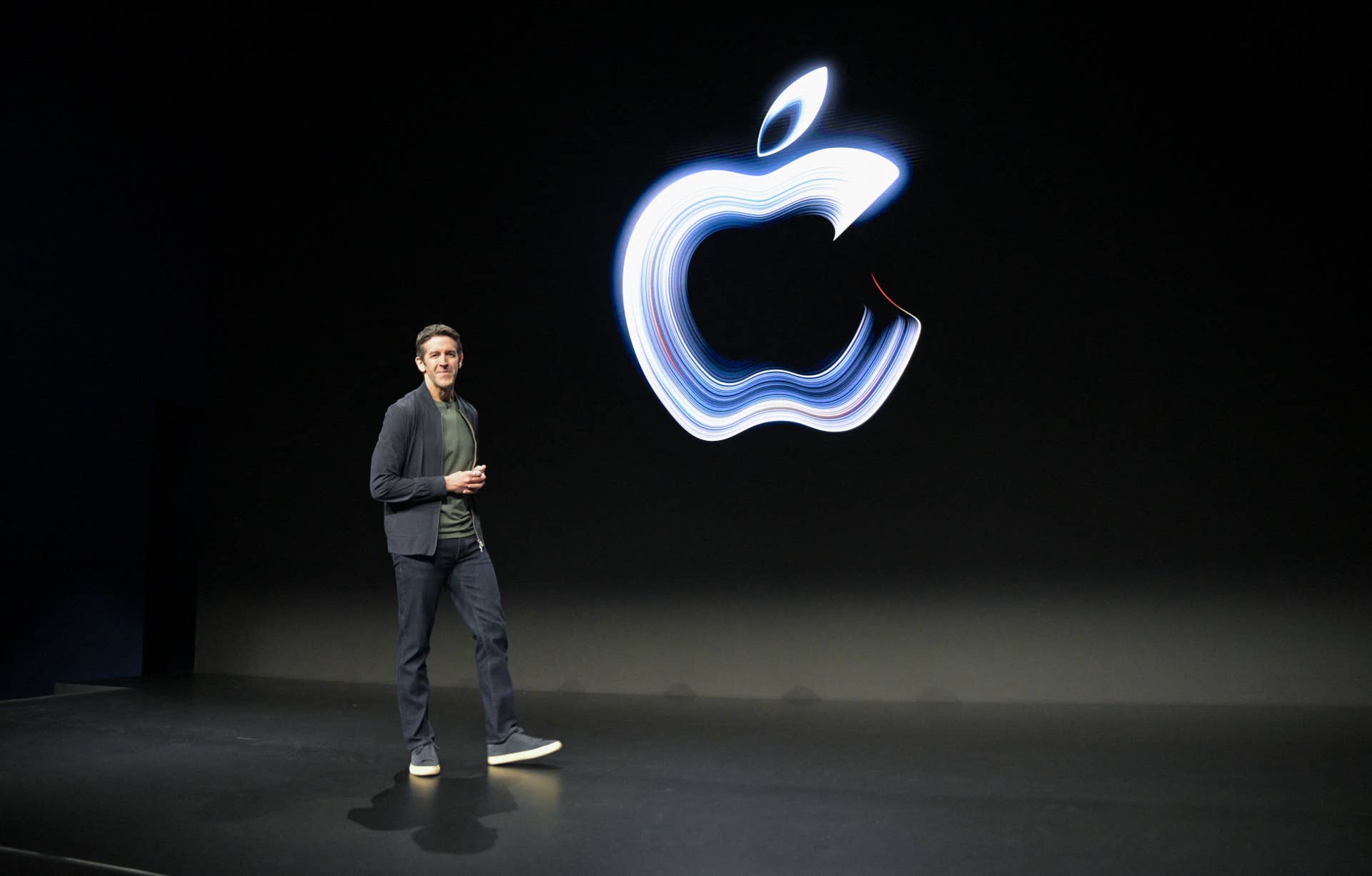
The iPhone Duo and Apple’s brilliant Gemini cheat code
Apple isn’t just winning by saving money; it’s winning by giving consumers what they actually want to buy.
While rivals incinerate capital Cramer explained, the company is seamlessly integrating Google’s Gemini AI models to power a much smarter Siri.
By actively outsourcing the heavy computational lifting, Apple has been able to secure state-of-the-art AI capabilities.
Instead of selling cloud computing, Apple is selling the hardware driving the actual consumer frenzy in the iPhone Duo. The $1,999 foldable device has triggered a massive demand shock, largely because, as Cramer noted, it is “revolutionary” and essentially “unfolds into a real TV”.
The financial upside is staggering. Analysts at Melius Research project Apple could ship over 15 million Duo units in fiscal 2027, securing a roughly $40 billion revenue windfall
Moreover, according to reports, after intense pre-orders that pushed consumer delivery dates into late January 2027, supply chain leaks indicate that Apple has just hiked its supplier production target by 44% to hit 14 million units over the next 12 months.
Tech commentators are broadly validating the hype, with IDC vice president Francisco Jeronimo stating that “Apple has made a convincing case for this form factor.”
However, the ambitious rollout hasn’t been entirely flawless. A vocal contingent of early adopters reported hearing a popping sound, followed by severe cracking along the device’s central hinge.
Apple quickly moved to control the narrative, issuing a formal statement acknowledging the defect impacts “a small number of iPhone Duo units” and directing affected buyers straight to AppleCare for immediate replacements.
Does Apple’s 40x multiple actually make sense?
The ultimate question for everyday investors is whether Apple’s capital-light strategy justifies the stock’s towering price tag.
Apple is far from a value play, with the stock currently trades at nearly 40 times forward earnings and 82% higher than the sector median, which Jim Cramer explicitly notes is “the highest price-earnings multiple I can remember.”
For a consumer tech company, that multiple looks dangerously steep. But Wall Street is increasingly treating Apple as the market’s premier AI safe haven.
Cramer acknowledges the valuation risk, admitting that short-term players can trade around it, but he defends a buy-and-hold approach: “I’m an owner.”
Having ridden out every vulnerable moment since the stock was at $5, he justifies paying a premium for a business that has successfully dodged massive capital-expenditure traps.
Though there are plenty of risks to consider in the Apple stock story, it’s clear that as long as Silicon Valley rivals remain willing to burn hundreds of billions to build the generative AI backend, Apple investors will safely reap the high-margin rewards on the hardware frontend.
Related: Intel CEO reveals a PC problem as Goldman cuts stock target