Viking Holdings (VIK) had a great run this year, and then it gave a big chunk of it back.
The luxury cruise operator hit an all-time high of about $108 on Aug. 5. By Sept. 1, the stock had slipped to roughly $86, a drop of nearly 20% in under a month.
Jim Cramer says that drop is a buying opportunity, not a warning sign.
On CNBC’s “Mad Money,” Cramer told viewers to buy Viking into its weakness.
“I think it’s crazy that people have been selling this thing,” he said. “I’m telling you to buy the stock into its recent weakness.”
Cramer has backed Viking since shortly after its May 2024 initial public offering, so his call carries some weight.
Why Viking Holdings stock dropped nearly 20% from its August high
The sell-off came from two directions at once.
The first is bigger than Viking. Cruise stocks in general came under pressure from rising oil prices and geopolitical uncertainty, both of which raise costs and make investors nervous about leisure spending.
More Jim Cramer Coverage:
- Jim Cramer’s 5 investing themes for the rest of 2026
- Jim Cramer says wait for a pullback before buying Target stock
- Jim Cramer recommends buying Reddit stock
The second problem is specific to Viking. According to CNBC, historically low water levels on the Danube and Rhine rivers forced the company to change some itineraries.
Viking is best known for its river cruises, so disruptions there hit a core part of the business. The company is now issuing vouchers to affected passengers, and those costs will carry into 2027 and 2028 as travelers redeem them.
For a stock trading at a premium, any threat to the core business tends to trigger a fast repricing. That’s a big part of what happened here.
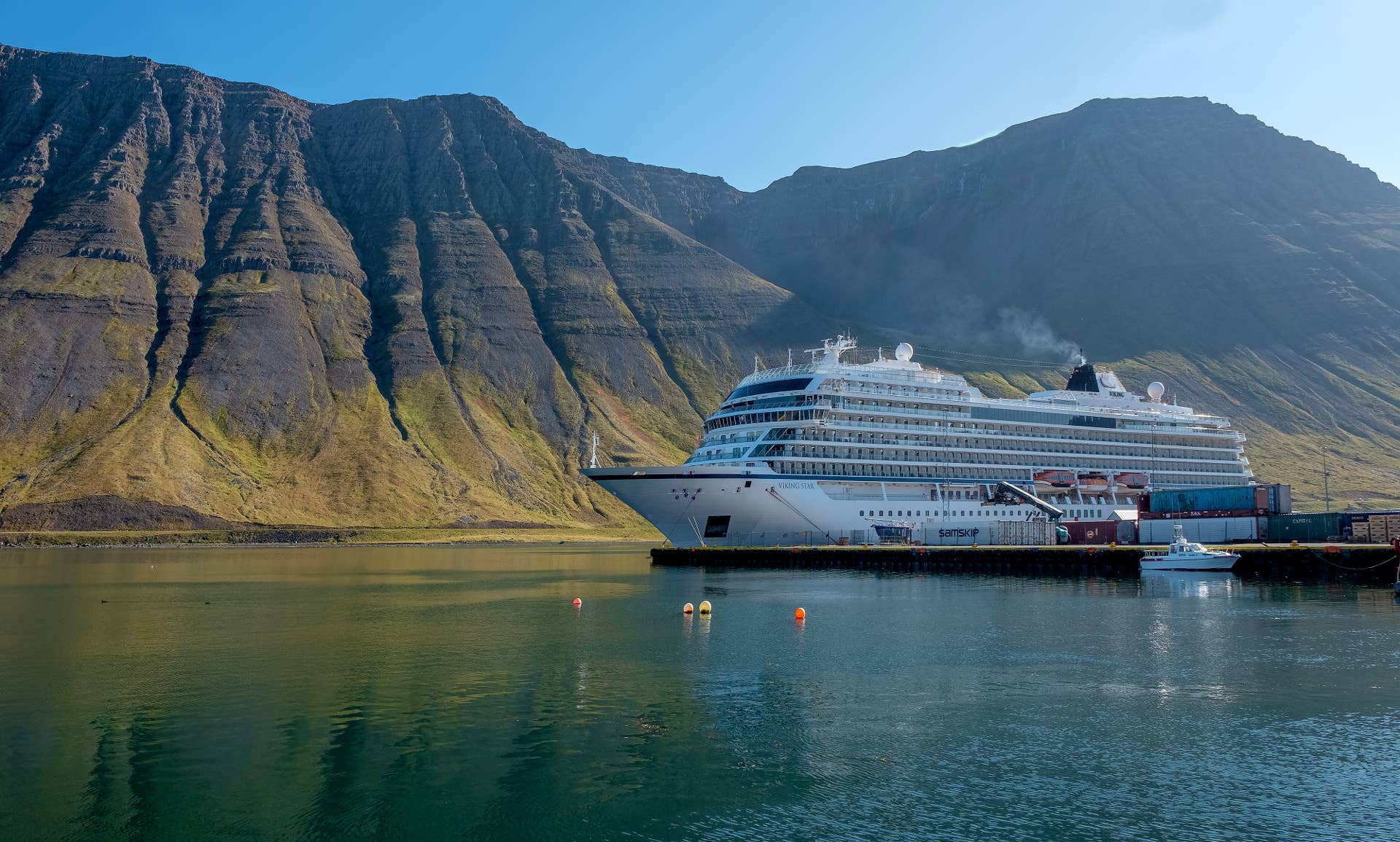
Cramer’s case for buying Viking Holdings stock now
Cramer’s argument is simple: The business is doing better than the chart suggests.
His first point is the customer base. Viking caters to older, affluent, English-speaking travelers, a group that keeps spending even when inflation or higher energy prices squeeze everyone else.
His second point is demand, and Viking’s second-quarter earnings release backs it up.
As of Aug. 9, Viking had already sold 96% of its core capacity for the 2026 season and 53% for 2027.
Advance bookings for 2027 reached $4.71 billion, up 21% from the same point a year earlier.
That gives Viking rare visibility into future revenue. When most of next year’s cabins are already booked, a rough month for the stock says little about the underlying business.
The Q2 numbers were strong, too.
Viking posted adjusted earnings of $1.31 per share on revenue of $2.19 billion, up 16.5% year over year, Investing.com reported. That beat Wall Street expectations of about $0.95 per share.
“What can I say? Buy the dip,” Cramer told viewers, according to CNBC.
What Cramer’s valuation call gets right, and where it’s still steep
The stock trades at about 28.6 times trailing earnings, which is what you’ll see on most quote pages. But Cramer’s case rests on forward earnings.
The sell-off dropped Viking’s stock price to 22 times its expected earnings for next year. Jim Cramer argued this higher price tag is worth it, given Viking’s strong growth and profits.
That’s still pricier than traditional operators such as Carnival (CCL) or Norwegian (NCLH).
Investors are paying up for Viking’s faster growth, and that premium can shrink quickly if the river problems drag on.
The risks Viking Holdings investors shouldn’t ignore
The balance sheet is the first thing to understand.
Viking is funding an aggressive fleet expansion, and heavy spending means the company is sensitive to interest rates and any slowdown in bookings.
Related: Jim Cramer reveals 6 AI stocks to watch in 2026
The good news is that leverage looks manageable today. Viking reported net leverage of 1.2 times and about $4 billion in cash as of June 30.
The valuation is the second risk.
At a premium multiple, Viking has less room for error than cheaper cruise names, so any extended river disruption could pull the stock lower before the story improves.
Consider these three points before buying.
3 things to weigh before following Cramer into VIK
- Time horizon: Cramer treats Viking as a long-term hold, not a trade.
- River risk: Low water levels and voucher costs will pressure margins into 2027 and 2028.
- Valuation: A forward multiple near 22 times leaves little cushion if growth slows.
How Viking Holdings stock stacks up against the S&P 500
Even after the pullback, Viking is up about 19% year to date, well ahead of the S&P 500, which set a record close of 7,737 on Aug. 4.
The past five days tell the other side of the story.
Viking fell about 7% over that stretch, a reminder that the stock swings harder than the broad market in both directions.
So the same stock is both a strong yearly performer and a shaky recent one.
With a stock this volatile, picking the right time to buy is important.
What Viking Holdings investors should do next
If you find Cramer’s case convincing, the practical question is how to buy, not just whether to.
One approach is to scale in gradually instead of buying all at once. Spreading your purchases over time lowers the risk of buying right before another drop while volatility stays high.
The stock is trading above its 200-day moving average, which sits at about $74.
Long-term investors watch this line to spot the big market trend, and Viking is staying safely above it.
Cramer’s Viking call fits a pattern he repeats often: buy quality businesses when fear pushes the price down, then hold.
Analysts broadly agree the company is solid, with a Moderate Buy consensus.
Viking’s bookings and wealthy customer base support the bull case, but the premium valuation and river disruptions are real. Size the position to your own risk tolerance and treat it as a long-term hold rather than a quick gain.