Scarcity is the oldest pricing trick in luxury, and it only works when the scarcity is real.
Anyone can print “limited edition” on a box. Very few companies can cap production at a hard number, refuse to move it, and still watch buyers pay a premium for the privilege of waiting a year to take delivery.
That gap between manufactured exclusivity and the genuine kind is where the ultra-luxury car business actually lives. It is also where the business gets uncomfortable, because real scarcity cuts both ways. Fewer cars sold is still fewer cars sold, no matter how it reads in a press release.
Lamborghini spent the first six months of this year on the wrong side of that math. The Italian automaker, owned by Volkswagen (VWAGY) through Audi, recorded the highest half-year revenue in its 63-year history while handing over fewer vehicles than it did a year earlier.
In the United States, its biggest market, the picture looked worse than the top-line number suggested.
Then, on Aug. 14, on a lawn in Monterey, California, it introduced the car built to fix the arithmetic.
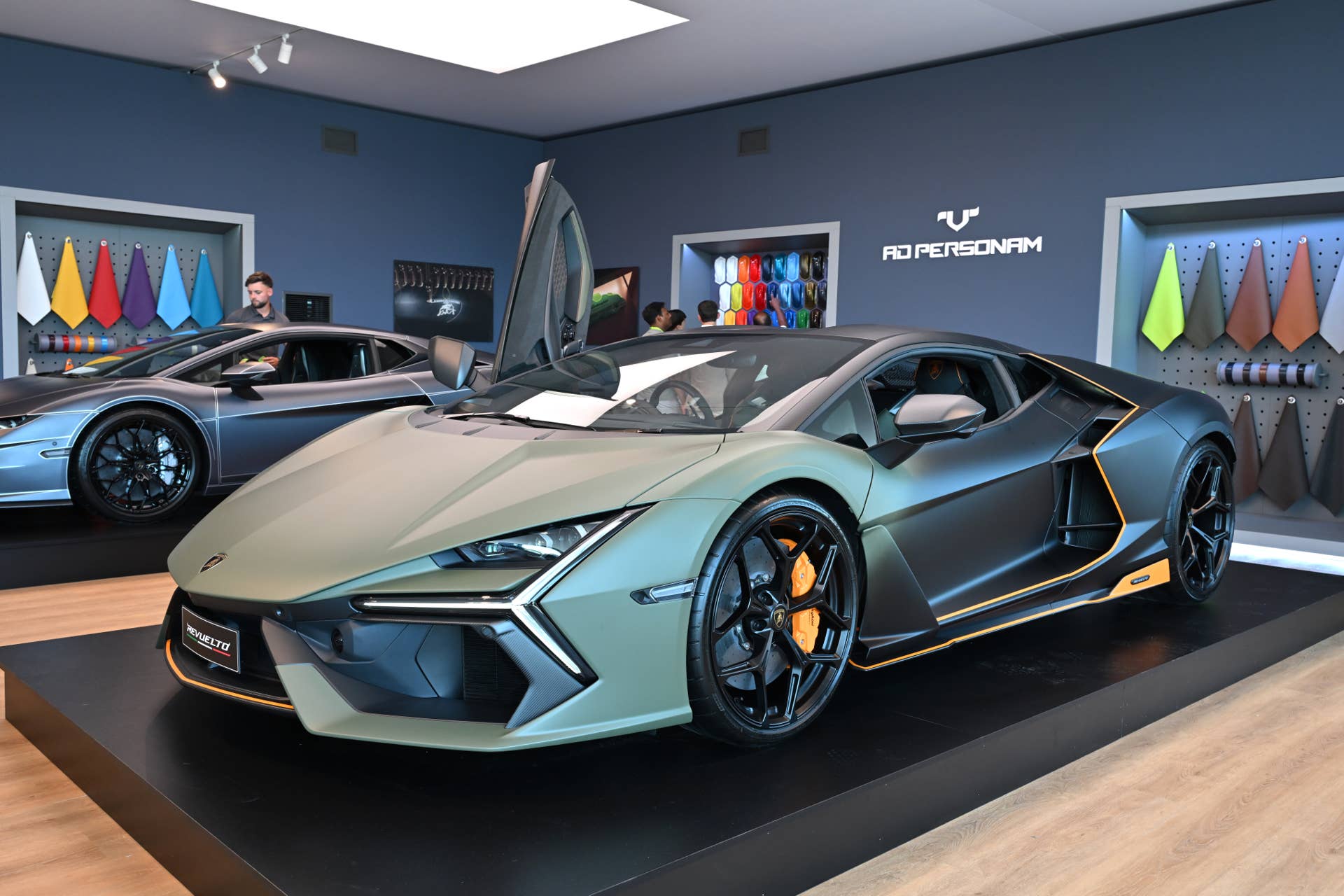
The Revuelto SV is the most powerful production car Lamborghini has ever built. My read, after working through the program economics, is that its real assignment has less to do with lap records than with the 2027 income statement.
Why Lamborghini’s record revenue came with a warning
The half-year results looked like a victory lap. Revenue climbed 7.4% to 1.74 billion euros, the best six months the company has ever recorded, on 5,422 deliveries, according to Lamborghini. CEO Stephan Winkelmann framed it as “recording the highest revenue in its history,” according to the company statement.
Read past the headline, and the shape changes. Deliveries fell 4.6%. Operating profit dropped to 395 million euros from 431 million, and operating margin slid from 26.5% to 22.7%.
More Automotive:
- Ford’s first $30,000 shot at increasing U.S. EV demand has a name
- Uber is doubling down on robotaxis, with Chinese partner
- Waymo doubles down on the cars America won’t let you buy
The revenue gain came from charging more per car, not from selling more cars.
The pressure is partly imported. U.S. tariffs raised the cost of every vehicle Lamborghini ships into its largest market, and the company could not price for all of it.
Winkelmann said the company “had less cars sold, and with less margin on those cars,” he told Fortune after full-year 2025 results. Tariff policy has since become a moving target for luxury goods pricing across the board.
Then there is the competitive read. U.S. registrations fell about 20% in the first half, while Ferrari (RACE) edged up 3% in the same market, according to autoevolution. Two brands mentioned in the same breath moved in opposite directions in the market that matters most to both.
Inside the Revuelto SV production math
This is the context the SV walks into, and it explains why the specification sheet is almost beside the point.
The car pairs the 6.5-liter naturally aspirated V12 with three electric motors for more than 1,050 horsepower and a zero-to-62-mph time of 2.4 seconds. The run is capped at 1,963 units, a nod to the year Ferruccio Lamborghini founded the company.
Here is what the program looks like on paper:
- Starting price of $741,172 before options, according to CNBC, which attended the reveal
- Production capped at 1,963 units, reserved for existing customers and collectors, Lamborghini noted
- A 1:41.6 production-car lap record at the Hockenheimring and 80% more downforce than the standard Revuelto, Top Gear confirmed
- First-half 2026 operating profit of 395 million euros, or roughly $450 million, according to Lamborghini
I ran the base price against the production cap, and the number that falls out is about $1.45 billion. That is before a single carbon-fiber option or Ad Personam paint code, which on cars at this price routinely adds six figures.
It is more than three times what the entire company earned in operating profit over the first half of this year.
Almost none of it arrives in 2026. Deliveries begin in 2027.
How scarcity became the strategy rather than the story
Lamborghini ran pre-selling globally before the public reveal, and Winkelmann said the response met expectations. Most Lamborghini limited editions are spoken for before they are announced at all, CNBC reported.
That timing matters more than the horsepower figure. It means roughly a year and a half of forward revenue was allocated before the covers came off.
Related: Luxury auto giant cuts 5,000 more jobs in major reset
The strategic logic is unusually blunt for a CEO to state out loud. “Only then can you maintain this scarcity, and this lust of buying the Lamborghini,” Winkelmann said, as Yahoo Finance reported.
Notably absent from the SV is a manual transmission, even as Ferrari, McLaren, and Aston Martin (ARGGY) have brought the stick shift back for exactly this kind of collector-facing halo car. Lamborghini looked at the demand data from the Gallardo and Murciélago era and passed.
What the Revuelto SV signals about the next two years
The bridge the SV builds runs to a specific destination. The Urus accounts for roughly three-quarters of Lamborghini’s global volume, and the current generation dates to 2017. A full replacement is not expected until 2027 or 2028.
That leaves a window where the company’s volume engine is aging, its largest market is contracting under tariffs, and its closest rival is taking share. Limited runs at three-quarters of a million dollars are how you carry margin across a gap like that without cutting prices on the cars that build the brand.
Watch whether the SV playbook repeats. If Lamborghini announces another capped, pre-sold, seven-figure-adjacent program before the next Urus lands, the pattern stops being a celebration of heritage and becomes a disclosed financial strategy.
Ferrari investors have priced that model for years. Volkswagen shareholders are getting a version of it inside a conglomerate, where it is far harder to see.
The 1,963 buyers already know what they’re getting. The interesting question is what the rest of the lineup looks like in 2028, once the scarcity premium has been spent.
Related: Lamborghini saw the writing on the wall on EVs before Ferrari