Landstar System (LSTR) shares tumbled about 17% on Wednesday, October 28, after the freight company missed Wall Street’s third-quarter profit forecast, even as revenue jumped 25%.
Earnings came in at $1.42 a share, well short of the $1.67 analysts expected. The culprit was insurance and claims, which cost $55.3 million, up from $33 million a year earlier.
For investors who own the stock for its steady dividend and buybacks, the selloff stings after a strong run in freight rates. Management says the market is tightening in carriers’ favor, which makes the profit hit look like a bumpy patch rather than a broken story.
How Landstar makes money
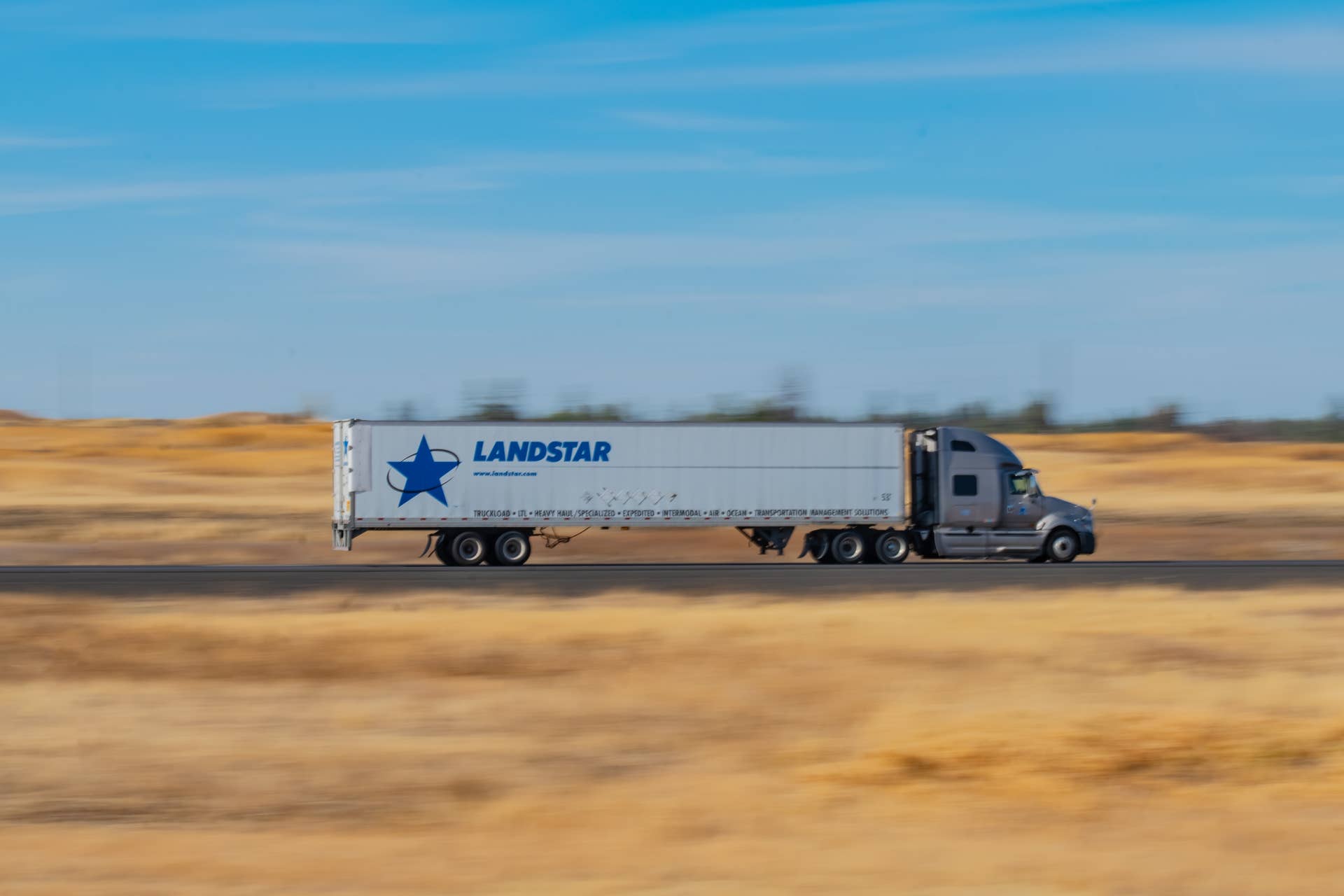
Landstar is an asset-light freight company. It moves truckloads for shippers using a network of independent contractors and agents rather than owning a large fleet. That model keeps costs lean and lets profits swing with freight demand.
Revenue from trucking was $1.407 billion in the quarter, up 29%, with van, flatbed-style and power-only freight all growing.
The company ended the quarter with about $351 million in cash and has repurchased about $64 million of stock this year. It pays a $0.44 quarterly dividend, next due Dec. 8.
Shares closed Tuesday at $168.78 before falling after the report. Before this move, Landstar’s market value was around $5.6 billion.
Insurance and claims hold back Landstar profits
Third-quarter revenue reached $1.512 billion, up 25.4%, and operating income more than doubled to $65.5 million. Earnings of $1.42 a share compared with $0.56 a year earlier, which included a 66-cent impairment charge.
The problem was cost and margin.
Gross margin slipped to 8.4% from 9.2%. Insurance and claims jumped by $22.3 million, including about $13 million in adverse reserve adjustments and about $8 million to settle two accident claims.
“The highly elevated insurance and claim cost quarter is primarily attributable to: one, approximately $13 million or $0.29 per share of unfavorable actuarial adjustments to insurance and claims reserves as compared to the last actual review conducted as of the fourth quarter of 2025. And two, approximately $8 million or $0.18 per share, resulting from the settlement of two claims during the 2026 third quarter,” said CEO Frank Lonegro on the earnings call.
“It’s no secret — the truck transportation industry has been under attack of late by an incredibly aggressive plaintiff bar, emboldened by the prospect of nuclear verdicts and the Montgomery decision,’ added Lonegro.
In May, the Supreme Court ruled that lawsuits can target logistics companies. Previously, they were viewed as insulated against suits tied to accidents caused by the truckers they hire by the Federal Aviation Administration Authorization Act (FAAAA) of 1994.
Since the ruling has passed, insurance costs have risen alongside claims risk.
Management called the $8 million nonrecurring, but the higher reserves will be carried forward. The CFO suggested that the midpoint of the $35 million to $55 million quarterly range is more realistic.
On the positive side, truck revenue per load rose about 25%, loads rose about 3%, and Landstar added 165 net contractor trucks, its best quarter since 2021.
The company gave no formal guidance. The CEO said freight conditions keep improving, and described the market as shifting toward carriers after nearly four years favoring shippers.
What to watch next at Landstar
On the earnings conference call, analysts from Evercore, JPMorgan and Barclays pressed management on how much of the insurance charge will recur, while others, including Wells Fargo, TD Cowen and Stifel, asked about contractor growth.
Wolfe, UBS and Goldman Sachs asked whether rate strength lasts into 2027. Management said October revenue per load was about 29% above last year.
Truist lowered its Landstar stock price target to $160 from $175 and maintained a hold rating. JP Morgan lowered its target to $172 from $181 and kept its neutral rating.
The key for investors is whether insurance costs settle near the middle of the range, with October’s rate strength carrying through December and into Q4 results in early 2027.