Lennar Corp. (LEN) is one of the largest home-building companies in the United States. Lennar’s earnings report for its fiscal third quarter, released on Sept. 16, showed the company missed revenue expectations. But the results say as much about the housing market as they do about Lennar.
In Q3 2026, Lennar’s year-over-year new orders fell 9%, deliveries dropped 3%, and it had a backlog of 16,857 homes valued at $6.3 billion, according to the SEC-filed earnings release.
How do these numbers affect homebuyers in the current housing market? Lennar Executive Chairman, CEO, and President Stuart Miller broke it down in the earnings call transcript obtained by StockAnalysis.
“Fewer families can afford to both produce a down payment and qualify for a mortgage,” Miller said. “As in many of our markets, almost 50% of our visitors cannot immediately qualify.”
Lennar says mortgage affordability is hurting demand
The United States has been experiencing a prolonged housing affordability problem, and high mortgage rates are adding to the pressure.
The average sales price of newly built homes sold in Q2 2026 was $502,700, according to the Federal Reserve Bank of St. Louis.
The average 30-year fixed mortgage rate was 6.95% as of Sept. 17, according to Freddie Mac data. That was a 19-basis-point jump from the week prior and the highest rate since January 2025.
More Housing Market:
- Zillow predicts mortgage rate, housing market change
- Fannie Mae predicts where home prices are headed next
- Redfin finds major U.S. housing market change
With high home prices, potential homebuyers may need larger mortgage loans than a few years ago. And since mortgage rates are hovering near 7%, their monthly payments would also be higher. If they don’t have high enough salaries or cash reserves, they might not qualify for a mortgage.
Even if they do qualify, coming up with the cash for a down payment could prove difficult.
“Buyers are clearly stretching to try to afford the stability of a home, and of course, we are adjusting our price and incentives in order to enable them,” Stuart said.
Essentially, poor housing affordability leads to less home-buyer demand. To support demand, builders such as Lennar are using incentives and adjusting prices.
Lower demand also leads to fewer homes being sold and fewer deliveries from home-building companies. If those trends persist, they can take a toll on builders.
Weak demand could threaten future housing supply
The relationship between home-building companies’ low revenue and an unaffordable housing market creates a feedback loop.
Prolonged weak housing demand can continue to hurt earnings for companies like Lennar. If weaker demand eventually leads builders to reduce construction, that could limit future housing supply if demand later recovers.
Miller has said Lennar is intentionally cutting prices and offering buyer incentives to improve affordability. But that doesn’t mean builders can provide discounts forever.
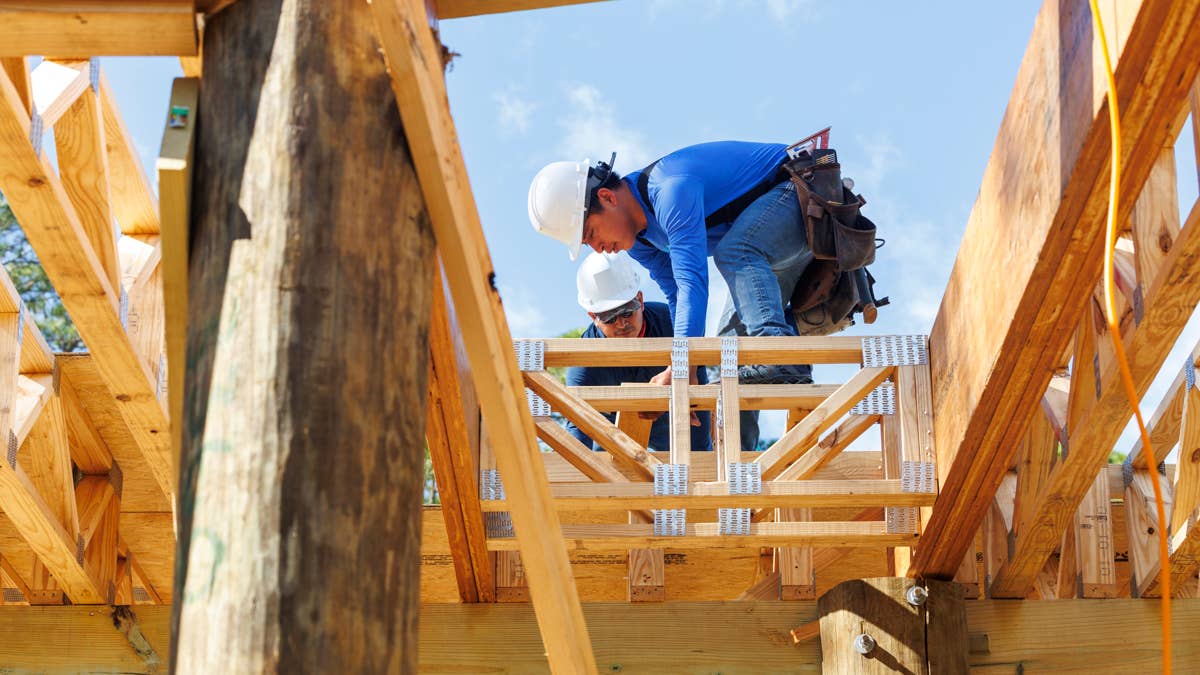
Zillow: Homebuilders are pulling back as demand softens
Actually, some homebuilders are already completing fewer construction projects and obtaining fewer building permits, according to Zillow research.
“In response to a softer market, homebuilders are pulling back,” economist Kenny Lee wrote for Zillow. “Single-family completions fell 10.4% from July to 816,000 SAAR in August — the lowest since February 2019.”
“Authorized single-family permits declined 1.8% to 878,000 SAAR,” Lee continued. “Recent declines in permits indicate completions will likely slow further.”
Zillow research also shows that the U.S. is experiencing a deficit of 4.7 million homes. And that’s just to meet current housing demand, not to mention any demand that builds up later.
If builders slow down construction efforts now, it could set the housing market up for a bigger shortage down the road, when demand picks back up. A persistent shortage of homes can put upward pressure on prices when demand starts to outpace supply.
Homebuyers struggle to qualify for and afford mortgages now, hurting homebuilders. If builders slow down because revenue cools, housing could become even less affordable down the road. It’s a vicious cycle.
Related: Zillow reports crucial housing market shift for buyers