Eli Lilly (LLY) has spent the last two years as the company everyone points to when they talk about weight-loss drugs.
That reputation made it the most valuable pharmaceutical company in the world.
It also created a problem the company now seems eager to solve.
On August 31, Lilly agreed to buy Merida Biosciences for up to $2.88 billion in cash.
This deal expands Lilly’s work into autoimmune diseases, which is a different field from the weight-loss and diabetes shots that made the company famous.
For anyone holding LLY shares or thinking about buying in, this deal tells you something useful about how its management plans to keep the company growing after the obesity boom cools.
Why Eli Lilly is paying $2.88 billion to move past obesity
Lilly makes Mounjaro for diabetes and Zepbound for weight loss. Together, those two drugs drive most of its sales and nearly all of its stock story.
That concentration is the risk. When one drug class carries a company this large, any slowdown in demand or pricing can hit the shares hard.
Lilly’s management knows this, so it has been spending its obesity cash to buy growth in other areas.
The Merida purchase is Lilly’s 13th acquisition of 2026, the most of any large drugmaker this year, according to BioPharma Dive.
It follows two other immunology deals, a $1.2 billion buyout of Ventyx Biosciences and a purchase of Orna Therapeutics worth up to $2.4 billion.
The pattern is clear. Lilly is turning a single-drug success into a broader pipeline, and immunology is one of its main targets.
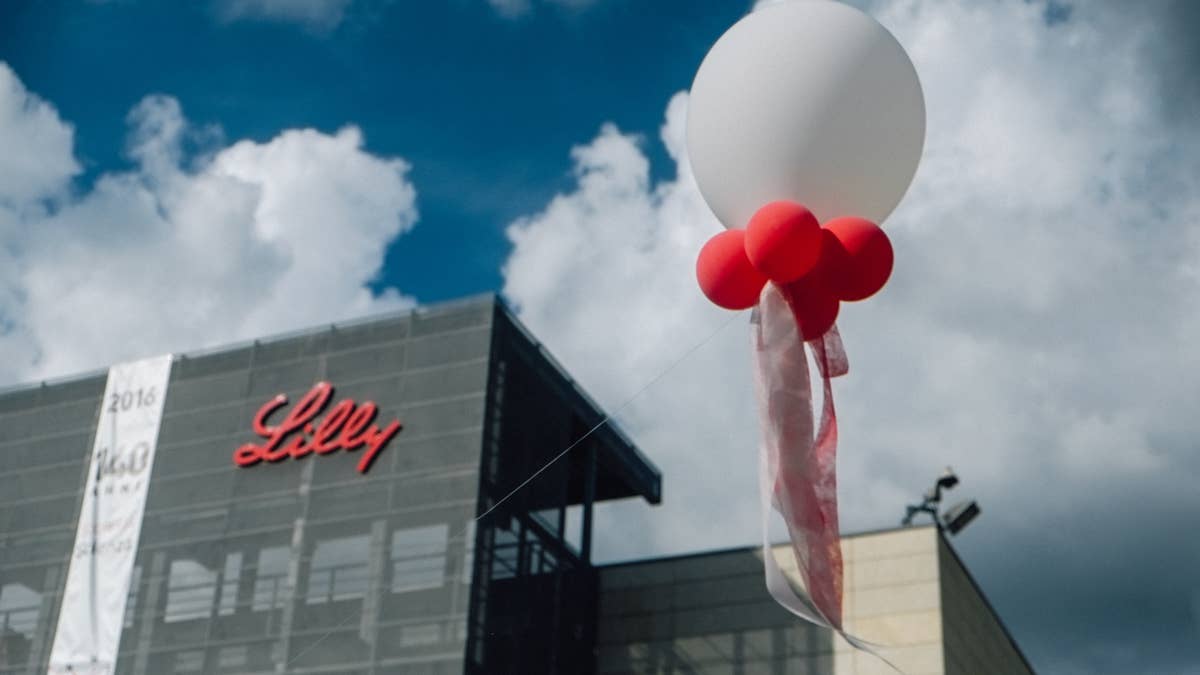
What Merida Biosciences actually does
Merida is a small, privately held company that began operating publicly last year with $121 million in funding, Fierce Biotech reported.
What sets Merida apart is how narrowly its drugs are built to work.
Most autoimmune treatments suppress the whole immune system, which can leave patients open to infection.
Merida’s drugs are designed to find and remove only the specific antibodies that cause the body to attack itself, while leaving healthy immune function alone. Those rogue antibodies are called autoantibodies.
More Healthcare Stocks:
- BofA sees Eli Lilly’s overseas obesity sales topping the U.S.
- Eli Lilly’s Foundayo pill wins first European approval
- Novo Nordisk CEO resets expectations for Wegovy’s growth
The lead drug, MER511, is in early testing for Graves’ disease and thyroid eye disease.
Graves’ disease affects about 1% of the U.S. population and forces the thyroid to overproduce hormones, according to BioProcess International.
A second candidate, MER769, targets food allergies, asthma, and related conditions.
How the deal protects Lilly if the science fails
The $2.88 billion figure grabs headlines, but Lilly is not writing that check all at once.
The agreement includes an upfront cash payment plus milestone payments tied to how far Merida’s drugs progress, Reuters reported. Lilly did not disclose the exact split.
That structure matters for shareholders. If MER511 hits a safety or efficacy wall in later trials, Lilly stops paying and its total cost stays well below the full price.
Related: Morgan Stanley uncovers major Bristol Myers stock signals
BMO Capital Markets called the purchase a sensible use of capital that fits Lilly’s earlier moves and adds variety to its immunology pipeline, according to BioSpace.
David Risinger, an analyst at Leerink Partners, read it as more proof that management wants to diversify beyond obesity.
Why this deal will not move LLY earnings anytime soon
Here is the part investors should sit with before getting excited.
MER511 is in Phase 1, the earliest stage of human testing. Drugs at this stage usually take years to reach the market, if they get there at all.
You should treat this as a long-term pipeline bet, not a reason to expect higher earnings over the next 12 to 24 months.
The deal is expected to close in the fourth quarter of 2026, Reuters confirmed.
Real revenue, if it comes, sits several years past that.
Lilly’s current results carry the stock for now.
In the second quarter, the company beat earnings expectations by 27.27% and beat revenue expectations by 11.06%, with quarterly revenue of $22.97 billion, up 47.67% from a year earlier.
The risks Lilly investors should keep watching
A deal this early carries real risk. Here are a few things that could go wrong:
Risks tied to the Merida bet
- A steep price for unproven science. Merida raised just $121 million before this sale, so Lilly is paying a large premium for a drug that has cleared only early testing.
- Strong competition already in place. If MER511 reaches the market, it will meet Amgen’s Tepezza and Viridian Therapeutics’ Lumvoa, both already established in thyroid eye disease, according to CNBC.
- More early-stage bets raise the odds of a costly failure. With 13 acquisitions this year, Lilly now runs a large and expensive early-stage pipeline, and clinical failures across that many programs add up.
The stock also leaves little room for error.
LLY trades at a price-to-earnings ratio of 39.32, well above most large drugmakers, which means a lot of future growth is already built into the price.
The bottom line for LLY investors
Lilly closed at $1,170.98 on September 2, up 0.95% on the day and 8.39% for the year.
It sits below its 52-week high of $1,292.65.
The Merida deal will not impact those numbers this quarter or next. What it changes is the shape of the company you are buying.
Two years ago, Lilly was an obesity story. Today it is spending that obesity money to become something wider, with real positions in immunology, oncology, and other fields.
For a long-term investor, that diversification lowers the danger of leaning on one drug class forever.
For anyone chasing near-term gains, this deal offers little, and the high valuation means any stumble in the core business can still sting.
A good approach is to judge LLY on its Mounjaro and Zepbound sales for now, and to view deals like Merida as slow-building options that may pay off years down the road.
Size any position to your own risk comfort, because even the market’s strongest names fall hard when expectations run this high.
Related: Key HIV stat over 70% leaves BofA siding with Gilead