Lowe’s has quietly updated its return policy several times this year as it contends with sluggish sales growth.
The home improvement chain revealed in its most recent earnings report that its comparable sales climbed 0.2% year over year in the second quarter of 2026. Foot traffic also declined in its stores during the quarter, with a recent Placer.ai report revealing that average customer visits per Lowe’s location fell 0.4% year over year.
Lowe’s Chief Financial Officer Brandon Sink said on an earnings call in August that “discretionary DIY spending remains under pressure and the K-shaped economy continues to shape consumer spending.”
“Affordability remains kind of the major concern, and that’s across rates, it’s across home prices, insurance, taxes,” said Sink. “And that’s really translating to prioritization of repair and maintenance spend and the projects that our consumers are engaging in and this ongoing trend of caution around big ticket discretionary.”
Lowe’s revises return rules for several product categories
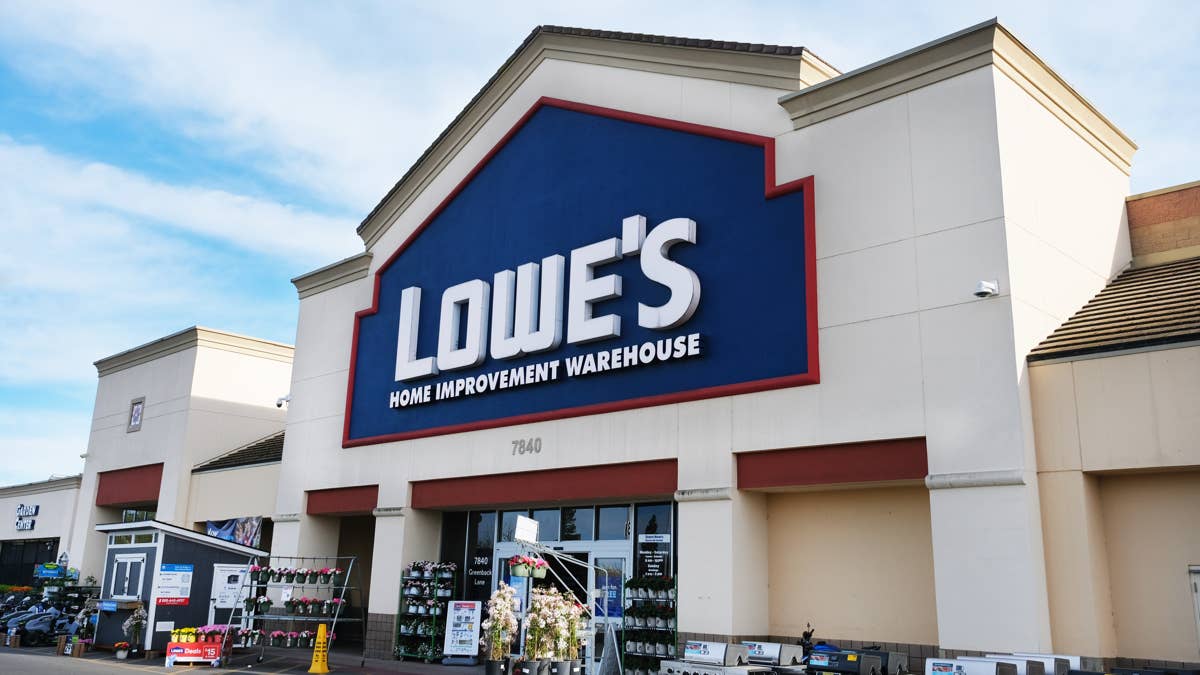
As Lowe’s navigates sales challenges, it has quietly made several significant updates to its return policy, including a shorter return window for plant purchases.
According to a recent report from Purchy, it first updated its plant return rules sometime between April and May.
It is important to note that the return policy has always stated, and continues to state, that customers who purchase trees, shrubs, or perennials may return them within 1 year. However, in 2025, the return policy read: “All other plants fall under our 90-day return policy.” Now it reads: “All other plants fall under our 30-day return policy.”
During that same period, Lowe’s also added trading cards to its non-returnable list and tile saws to its 48-hour return window.
Read more: Lowe’s launches a new service as it works to win back customers
Between June 1 and June 27, Lowe’s also removed the statement: “Gas-powered items that have been fueled or used” from its non-returnable list.
In May, the company removed the statement “Excludes Outdoor Power Equipment” from the 48-hour return section in its return policy. Sometime in June, it added a new restriction stating: “The following items may be returned but are not eligible for the 30-day credit extension,” which covered gas-powered portable generators, chainsaws, pole saws, and pressure washers.
Lowe’s also clarified its return rules for Craftsman outdoor equipment in September. Through Sept. 21, its return policy included the statement “CRAFTSMAN® outdoor power equipment” under the 90-day return window section. It now reads: “CRAFTSMAN® branded battery and electric outdoor power equipment items.”
It also deleted the statement “CRAFTSMAN® corded and cordless outdoor power equipment has a 90-day return policy” from its return policy website.
Lowe’s navigates changing consumer expectations for returns
Lowe’s return policy changes come as retailers’ return rules are increasingly influencing shopping decisions.
A survey from Route earlier this year found that 93% of U.S. consumers review a retailer’s return policy at least occasionally before making a purchase. It also found that 50% of consumers are facing increased financial stress compared to a year ago, and among those, 63% now analyze return policies more carefully.
Also, 97% agree that a positive return experience makes them more likely to shop with a retailer again. However, when returns are denied, 43% say they would keep an item, but avoid making future purchases from the brand.
More Retail:
- Target raises price of annual grocery deal for holiday shoppers
- Publix faces uphill battle as customer behavior shifts
- Home Depot drops generous offers as customers grow harder to win
“Returns are no longer just an operational need, they’re a real driver of loyalty and customer trust,” said Route CEO Eric Kobe in a press release. “When a customer chooses to buy from a new brand, they’re placing trust in that business not just to deliver what they purchased, but to make it right if things don’t go as planned.”
“When the experience feels complicated or uncertain, brands don’t just lose a transaction, they risk losing the relationship,” he continued. “A clear, fast and customer-friendly return experience reinforces that trust and gives shoppers the confidence to come back again.”
Those return-policy concerns could become particularly important for retailers during the 2026 holiday shopping season, as consumers become more selective about where they spend their money. Recent data from Gartner found that nearly 60% of Americans have less to spend on holiday purchases than they did in 2025.
“Consumers may be spending less this holiday season, but they’re not lowering their expectations,” said Emily Weiss, a senior principal analyst at Gartner. “Brands that deliver value while reinforcing trust will be best positioned to win.”
Related: Children’s Place closing all its stores in Chapter 11 bankruptcy