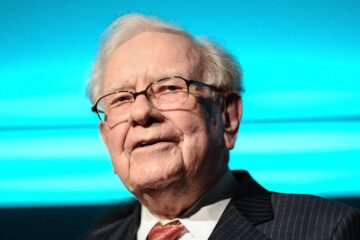
Michael Burry built his reputation spotting bubbles other people refused to see, and he made a fortune shorting the housing market years before nearly anyone else believed it could collapse.
His newest target has nothing to do with a specific stock or sector, and it caught plenty of people off guard.
This time, the man behind The Big Short turned his attention toward something much bigger than any single trade: the entire system, which he believes is funneling wealth toward a narrow slice of the population while leaving everyone else struggling to keep up with rising costs.
Burry’s blast at the economic transfer machine
Burry posted on Substack on Sept. 16 with a pointed critique of what he called economic bubbles enriching the few at obscene rates.
“I am righteously indignant over the wealth transfer to the very few that these bubbles create,” he wrote. “The whole system is about creating bubbles so the grift can happen, both inside companies, transferring wealth to their employees at obscene rates, and in politics, as we see all over.”
More Economy:
- Kevin O’Leary raises stark concern about inflation
- Goldman Sachs delivers its verdict on inflation and jobs
- Bank of America issues stark warning on Fed and economy
In the same post, Burry pointed to the source of the problem. “Whether circular financing among tech companies or schemes emanating from Washington D.C., this extreme enrichment of the lucky few while leaving the bulk of the economy existentially worried about grocery and gas prices is as hemlock to the health and longevity of the free Republic,” he wrote.
The comments fit a pattern Burry has followed closely for months. He has spent much of 2026 building bearish positions against companies tied to the AI trade, including bets against Nvidia, Tesla, Micron, and Applied Materials. He has separately compared the current market environment to the final stretch of the 1999 to 2000 dot-com bubble.
Sanders, Warren, and Bezos weigh in on economic inequality
Burry’s comments landed amid an ongoing political fight over economic inequality that predates his post by months.
In June, Senator Bernie Sanders (I-Vt.) criticized what he called an “insanely rigged economy” after tech executives added billions to their net worth in a single day, contrasting those gains with the financial struggles many Americans face over housing, food, healthcare, and child care costs, Benzinga reported.
Sanders renewed his push in August, calling again for a federal wealth tax to fund social programs supporting working families. His broader campaign has included a proposed 5% wealth tax on America’s billionaires, a measure introduced with Rep. Ro Khanna in March that economists estimate could raise $4.4 trillion over a decade, according to Fortune.
Senator Elizabeth Warren (D-Mass.) pushed a related but narrower argument, calling for taxes on ultra-millionaires and billionaires specifically to make child care more affordable and raise pay for child care workers, pointing to years of underinvestment in early childhood education as the root of the problem.
Amazon founder Jeff Bezos offered a counterargument, describing a “tale of two economies” where some Americans thrive while others struggle with rising rent and grocery costs.
Bezos argued that raising taxes on the wealthy would not meaningfully help ordinary Americans, pointing to a Queens nurse earning $75,000 a year who pays more than $12,000 in taxes as evidence that the tax system itself deserves scrutiny, according to NBC News.

Building wealth beyond the stock market
Whatever side of the tax debate someone lands on, the underlying anxiety that Burry, Sanders, Warren, and Bezos have each highlighted points to the same practical question for ordinary investors: how to build financial security when a single market or asset class cannot be relied on to perform in every environment.
Markets cycle. Sectors that lead one decade lag the next. Diversification does not prevent losses but does prevent a single bad call from wiping out everything else. Real estate and precious metals have historically moved differently from stocks, which is the point.
Self-directed retirement accounts offer another route for investors who want that diversification inside a tax-advantaged structure, letting holders invest in alternative assets such as real estate, private debt, and precious metals rather than being limited to the stocks and funds a standard IRA custodian typically allows.
What this means for everyday Americans
Burry’s warning and the political fight over wealth taxes are unlikely to resolve anytime soon, and substantial disagreement remains over what is actually driving inequality in America and which policies are most effective in addressing it.
What is harder to dispute is the underlying practical takeaway. Concentrated wealth held in a single company, industry, or asset class carries real risk. The same logic that worries Burry about systemic bubbles applies just as much to an individual portfolio running entirely on one market’s fortunes.
The tax fight in Washington will go on for years. Whatever comes of it, the practical question for anyone saving money is the same one it always is.
Is your financial life built around one market, one sector, one bet? Because that’s exactly the kind of concentration Burry has spent his career warning about, and he has a reasonable track record of being right.
Related: Michael Burry reveals his verdict on the ongoing AI bubble