Large companies eventually learn that the type of number it chooses to publicize matters more than the number itself.
Pick the right comparison, and an uncomfortable fact turns reassuring. Pick the wrong one, and you have handed your critics a slogan they will repeat for years.
Wisconsin has become one of the busiest testing grounds for that lesson. The state pulled in tech money for the same reasons it once pulled in paper mills and breweries. Those reasons are cheap land, a stable grid, and Lake Michigan sitting right there.
More than 40 data centers now operate in the state with several more proposed, according to the Wisconsin Policy Forum.
The public has not warmed to them. Seventy percent of Wisconsinites believe the costs of large data centers outweigh the benefits, and “water impacts were cited most often as the reason,” said Tressie Kamp, assistant director of the University of Wisconsin-Milwaukee’s Center for Water Policy, in an interview with WPR.
That poll result is the backdrop for a comparison Microsoft (MSFT) has been making about its Mount Pleasant campus, and for the pushback that comparison is now drawing.
Why data-center water became a Wisconsin flashpoint
Data centers consume water in two ways, and only one of them shows up on a local utility bill.
The visible one is cooling. Servers throw off heat, and older facilities push water through the building to carry that heat away, losing a share of it to evaporation every hot afternoon.
This is the number that lands in permit filings and city council meetings, and it is the one Microsoft has spent two decades driving down.
More Technology:
- Marvell’s $120B AI deal came with an unexpected catch
- Two U.S. tech giants power Saudi’s AI vision
- Apple’s new CEO inherits a fortune and an AI question
The invisible one is electricity. Power plants burn through enormous volumes of water to generate the power a data center draws, and that water gets withdrawn somewhere else entirely, usually far from the campus and never on its permit.
Roughly 70% of Wisconsin’s water withdrawals are already attributable to power generation, according to Clean Wisconsin.
That split matters more than it sounds. A facility can look almost waterless at the fence line while adding real strain to a watershed 100 miles away.
The transparency gap is the reason the argument keeps going. Quantifying offsite water use is difficult because developers, tech companies, and public utilities disclose so little, and without knowing the fuel and cooling system at each generating station, the number cannot be pinned down, according to Clean Wisconsin.
When I have covered permitting fights before, this is the pattern that decides them.
Neither side is lying about its own number. They are simply measuring different things and talking past each other in public.
What Microsoft says its Wisconsin campus actually uses
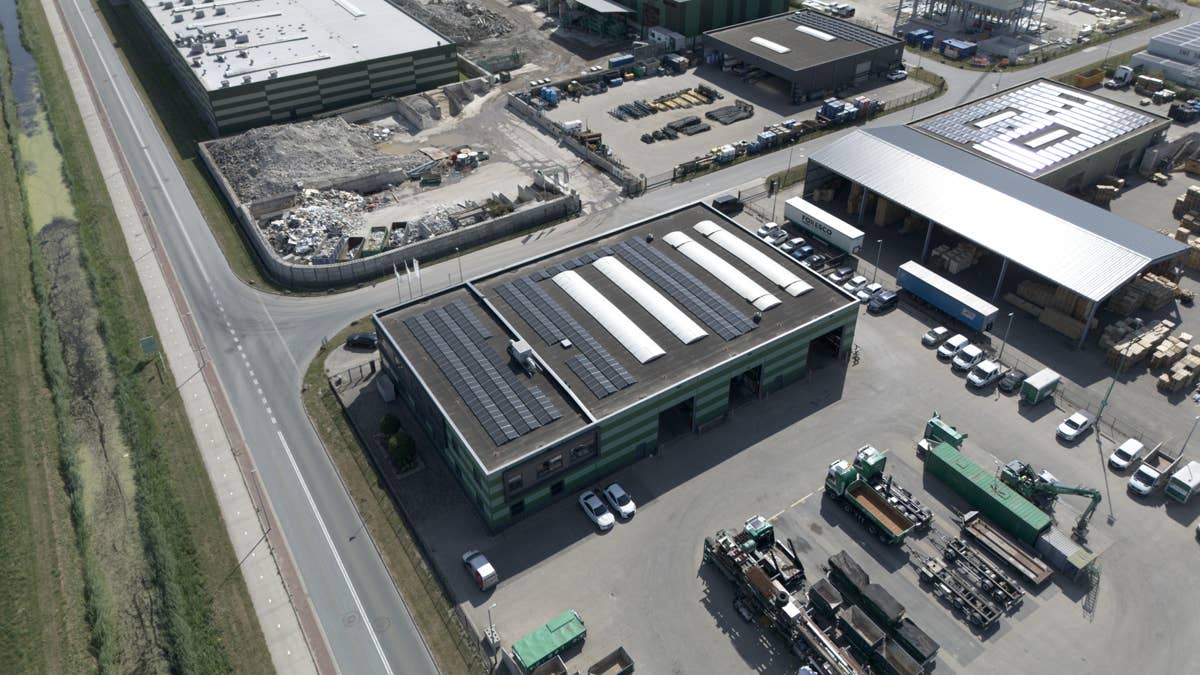
Microsoft completed the first building at its Fairwater campus in Mount Pleasant in June 2026, describing it as the world’s most powerful supercomputer. It also won approval in January 2026 for 15 additional buildings on the site, according to Data Center Dynamics.
The company’s cooling design is the reason it can make the claim. The Mount Pleasant facility runs a closed loop that circulates liquid directly to each chip. It’s filled once rather than continuously topped up, which eliminates evaporation entirely.
Related: Palantir CEO escalates Microsoft’s AI warning
The result is the line now circulating online. The Mount Pleasant datacenter “uses about as much water as a typical restaurant each year,” according to Microsoft.
I went looking for the underlying numbers rather than the analogy, and the record is more textured than the one-liner suggests.
- Microsoft’s data centers used 0.27 liters of water per kilowatt-hour last year, roughly three times better than the industry average, according to GeekWire.
- City of Racine records show the first Mount Pleasant phase permitted for up to 2,814,000 gallons in 2026, rising toward 8.4 million gallons as the campus expands, reported WTMJ.
- Internal company forecasts put annual water needs across roughly 100 campuses at about 18 billion liters by 2030, up 150% from 2020, according to The Register.
Those three figures are all true at once. The efficiency is real, the local draw is modest by industrial standards, and the total keeps climbing anyway.
The number that Microsoft’s restaurant comparison leaves out
Here is where my analysis parts ways with the press release.
U.S. data centers consumed an estimated 17 billion gallons of water directly in 2023, and the indirect figure, the water consumed offsite generating their electricity, was 211 billion gallons, Kamp told WPR, citing Lawrence Berkeley National Laboratory research.
Direct cooling is therefore about 7% of the total. The restaurant comparison describes that 7% and stops.
The irony is that closed-loop cooling can make the offsite share worse. Sealed systems use more electricity to run than evaporative ones, and in a grid where most power still comes from fossil fuel and nuclear plants, more electricity means more water withdrawn at the generating station.
Wisconsin sits inside the MISO grid, where roughly 70% of electricity comes from fossil fuels and 14% from nuclear, according to The Daily Reporter.
So the campus that evaporates nothing on site can still carry a heavier total water footprint than the one it replaced. That is the critics’ actual argument, and the restaurant line does not engage it.
What the water fight means for AI infrastructure spending
This is not an environmental story wearing a business costume. It is a permitting story, and permitting is now a line item.
Microsoft’s capital expenditures and finance leases reached about $175 billion in fiscal 2026, and management has guided to roughly the same figure for fiscal 2027, according to CNBC. Spending at that scale only works if sites get approved on schedule.
Every month a campus sits in front of a village board is a month of idle capital. Microsoft already walked away from a Caledonia site after community opposition, which is the clearest possible signal that local sentiment now has pricing power over the buildout.
For anyone holding MSFT, or holding an index fund that holds it, that is the transmission mechanism worth watching. Not the water itself, but the delay risk the water debate creates.
Wisconsin utilities have already approved roughly $2 billion of new power plants with close to $6 billion more proposed, much of it to serve data center demand, according to Marquette University Law School. Those costs land in a rate base that households share.
That is the quiet part of the story for anyone who lives near one of these campuses. The water argument is loud, but the electric bill is the thing most residents will actually feel first, and it is the thing utility regulators can act on fastest.
The fix is not a better analogy. It is disclosing the offsite number, which no hyperscaler currently does at the site level, and which Clean Wisconsin has said it cannot calculate without that transparency.
Whoever publishes it first will end this argument. Until someone does, the restaurant line will keep being quoted and getting picked apart, because the people asking the question already know it answers a different one.
Related: Microsoft makes a controversial decision that changes its AI story