When I wrote about comments from Delta Air Lines’ CEO on Elon Musk’s Starlink attack, I highlighted the airline’s fifth straight Skytrax award for best airline staff service in North America. It also led all carriers in on-time arrival and departure performance in Q3 fiscal 2026.
For us in the seats, this translates to fewer delays, smoother connections, and cabin crews that make the journey feel less stressful. It’s the experience we remember long after we’ve forgotten what we paid for the ticket.
That service is expensive to deliver, and it is still paying off. Delta (DAL) posted September-quarter pre-tax profit of $1.5 billion, matching last year, and revenue rose 16% on flat capacity.
CEO Ed Bastian said air travel remains “one of the best values in the consumer economy,” and he credited Delta’s people for the resilience behind the numbers.
However, investors initially balked at one line in the guidance.
Also Read: Delta Air Lines Inc. Latest News
Delta Air Lines’ profit holds, despite a $6 billion fuel hit
In a note shared with me at TheStreet, Morgan Stanley kept an Overweight rating and $125 price target, about 64% above Delta’s $76 share price on Oct. 14. At that price, Delta still holds 11.31% returns year to date and 26.47% in the last year, according to Yahoo Finance.
In the report, Morgan Stanley noted that Delta is “staying on target (and it is important that the market does as well).” The bank wants investors focused on the destination “without overly fixating on the pathway to get there.”
More Airlines:
- Former United Airlines CEO warns airlines of costly growing passenger problem
- Delta CEO delivers curt 10-word response to Elon Musk’s attack
- American Airlines CEO delivers stark warning on rising fuel costs
The destination looks better than the pathway suggests. Delta now expects 2026 pre-tax profit of about $4.5 billion, nearly flat year over year, even as fuel costs climb roughly $6 billion, or about 60%. Its fuel-adjusted fourth-quarter earnings guide landed 20 cents, or 14%, above consensus.
Morgan Stanley says that result would have been unthinkable a year ago, and it argues demand resilience is delivering revenue-driven beats and pricing power the industry never had before.
Delta Management guided fourth-quarter revenue up about 20%, an operating margin of 7% to 9%, and EPS of $1.15 to $1.65. Full-year EPS should land between $5.10 and $5.60, with free cash flow near $2.5 billion.
Why Delta’s costs are still climbing
The blemish is cost. Non-fuel unit costs rose 7.3% in the third quarter, which Delta blamed on crew expenses, reliability investments, and capacity growth below plan.
Summer disruptions added about a point. Management expects one to two points of sequential improvement in the fourth quarter, still 5.3% to 6.3% higher year over year, and a return to low-single-digit growth in 2027.
Those costs are people and punctuality, the same things Skytrax voters rewarded. Whenever I compare flight prices, I often ask how much extra I’d be willing to pay for an airline that gets me to my destination on time and makes the journey less stressful.
Delta appears to be banking on that kind of value, just as highlighted in my previous coverage. Delta management said the industry implemented 20% fare increases this year with limited consumer resistance, while Delta’s forward cash sales grew nearly 20%.
Related: Delta CEO delivers curt 10-word response to Elon Musk’s attack
Customers are paying up across the cabin. Main cabin unit revenue grew 17% and premium revenue 18%. Diversified streams made up 61% of third-quarter revenue, with loyalty up 18%, cargo and maintenance up about 30%, and American Express payments on track to top $9 billion this year.
For anyone who flies, capacity detail also matters. Delta capacity is expected to grow 3% in Q4, with seat growth below 2% and main cabin seats declining. That helps explain why fares are holding, in my read. Early first-quarter schedules show about 4% growth, likely to move lower.
Fuel remains the real drag. Delta absorbed about $1.6 billion of extra fuel expense in the quarter, and it guided fourth-quarter fuel to $4.25 per gallon, up from $3.61 all-in in the third quarter. Its refinery should offset about $400 million of that.
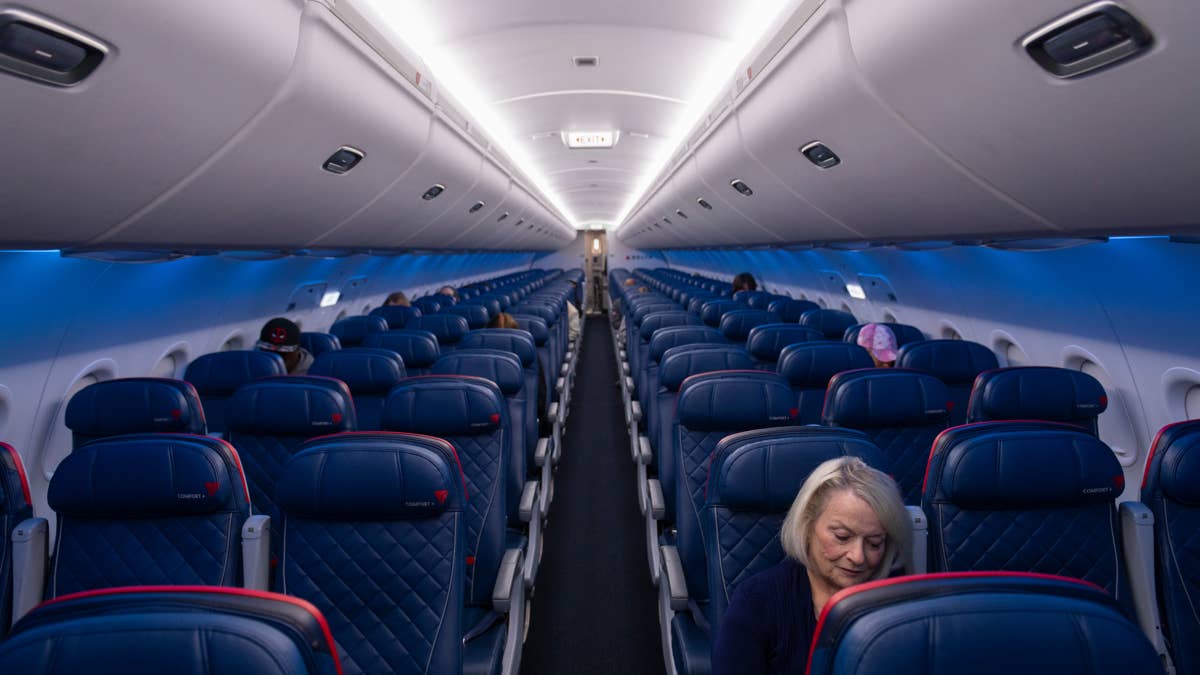
Morgan Stanley sees $125 if investors watch the destination
Morgan Stanley sees a path to more than $10 in normalized earnings per share and says that deserves at least 15x earnings over time. Its $125 base case assumes 12.5 times. The bull case is $150. The bear case is $40 if a consumer recession hits travel demand.
The bank’s 2026 and 2027 EPS estimates of $5.45 and $7.32 sit below consensus. Its 2028 figure of $11.08 sits well above the $9.98 consensus. Delta’s long-term framework calls for mid-teens margins and returns, which Bastian said remain the focus.
The test comes when fuel normalizes, and airlines keep most of their fare gains. If fuel stays high, Morgan Stanley says Delta’s model will only widen its lead over peers.
The bank’s message is that you should judge Delta on resilient, yield-driven earnings growth, not on whether every line beats at once.