I know the frustration that runs through the American investor community around European pharmaceutical stocks.
You want exposure to a company like Novo Nordisk, one of the world’s most important drug developers, but you’re buying American Depositary Receipts (ADR).
An ADR is a certificate issued by a U.S. bank that represents shares of a foreign company. They come with their own spreads, trading mechanics, and quirks, leaving investors one step removed from the actual shares. It’s a lot of friction.
Now Novo’s new CEO is at least willing to discuss removing it. In an interview with the Financial Times, CEO Mike Doustdar said Novo Nordisk is open to considering a direct NYSE listing to replace its current ADR structure.
Remember, the U.S. accounts for more than half of Novo’s revenue and the vast majority of its diabetes and obesity drug sales. It is, in fact, a commercial reality that Doustdar acknowledged, making the investor base’s question more pressing.
“I clearly do see some advantages with that,” Doustdar told the FT. “I start with ‘maybe.’ Can you give me the pros and the cons?”
Also Read: Novo Nordisk A/S Latest News and Stories
Why the Novo Nordisk NYSE listing conversation is happening now
Novo Nordisk rode GLP-1 drugs to a market capitalization of more than $600 billion in 2023, briefly becoming Europe’s most valuable listed company, Reuters reported. Then it rallied to an all-time high of the $140s in June 2024. Since that peak, shares have fallen more than 70%.
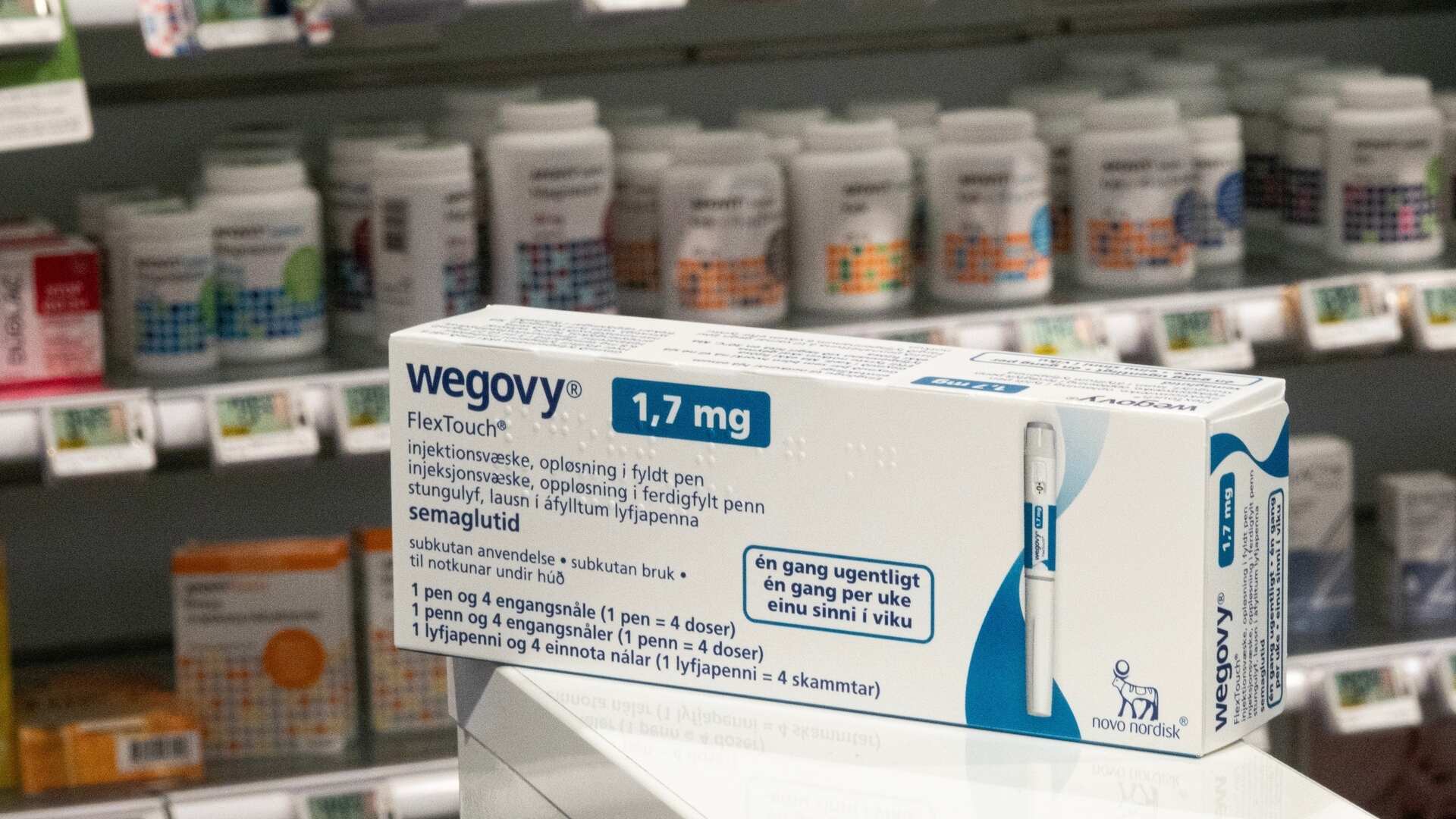
I see the reversal as a reflection of something uncomfortable. Novo is losing the obesity drug race. Eli Lilly’s Zepbound is expected to exceed Wegovy sales by more than $7 billion this year, according to LSEG data cited by Reuters.
I covered Lilly CEO David Ricks breaking ground on a $6.5 billion Houston manufacturing facility on Sept. 22, then later covered Viking Therapeutics surging 36% on VK2735 trial data showing 22% body weight reduction at 33 weeks.
Isn’t that a pure, direct competitive shot at both Wegovy and Zepbound?
More Healthcare Stocks:
- BofA sees Eli Lilly’s overseas obesity sales topping the U.S.
- Eli Lilly’s Foundayo pill wins first European approval
- Novo Nordisk CEO resets expectations for Wegovy’s growth
I think for a company under that kind of competitive pressure, a direct NYSE listing would be more than a financial engineering decision. Novo is betting its future on the American market and wants to be treated accordingly by the world’s deepest pool of equity capital.
Doustdar was careful not to overstate where the conversation stands. He said there has been no active dialogue or discussion about it since he became CEO in July 2025.
Still, he called himself someone who “doesn’t start with a no.” The Capital Markets Day on Sept. 21, which sent shares down 8% after mid-single-digit growth targets through 2030, failed to inspire investors.
What Novo Nordisk’s business looks like right now
The H1 2026 financial results, covering January through June, show that Novo is still generating meaningful GLP-1 volume but navigating real headwinds.
- Adjusted sales grew 7% at constant exchange rates in Q2, driven by GLP-1 volume growth and favorable U.S. rebate adjustments.
- Adjusted operating profit grew 11% at constant exchange rates.
- The Wegovy pill, launched in the U.S. in April 2026, reached more than 5 million total prescriptions by mid-July, with weekly scripts exceeding 265,000 for the week ending July 17.
- Source: Novo Nordisk Q2 fiscal 2026
On pipeline progress, the Wegovy 7.2 mg pen received EMA approval in July based on STEP UP data showing up to 20.7% mean weight loss.
The Wegovy pill received EMA approval based on OASIS 4 data showing up to 16.6% mean weight loss. Against both those milestones, the ZEUS cardiovascular trial with ziltivekimab failed to meet its primary endpoint.
The 2030 targets unveiled at Capital Markets Day are achievable on paper but do not address the burning question that every Novo investor is asking: What happens in 2031 and 2032, when semaglutide patents begin to expire in the U.S. and Europe?
The Novo Nordisk listing idea and what it would actually mean
A direct NYSE listing would convert Novo from a company that American investors access through ADRs into one that trades directly on U.S. exchanges alongside Lilly, Pfizer, and every other major U.S. pharmaceutical stock.
For existing NVO ADR holders, the change would primarily mean a deeper, more liquid market with institutional index inclusion that directly tracks the primary shares.
Danish pension funds and other long-term Scandinavian institutions have historically anchored Novo’s Copenhagen listing. But CEO Maziar Doustdar told the FT that its investor base has “shifted increasingly outside of Scandinavia” over the past two decades.
A company that lists directly in New York is saying that its future is American, its growth will be priced in dollars, and it wants to be judged by the same standards as its American competition.
Related: Obesity titan could shake up Lilly and Novo after astonishing trial