Every market boom eventually runs into the same problem, and it rarely shows up where investors expect it.
You ride a simple story — in this case, artificial intelligence needs endless chips and data centers — straight up the chart until the numbers stop feeling real.
Then something jolts the narrative, not by breaking the old leaders, but by proving they aren’t alone anymore.
Right now, that jolt is coming from Beijing.
Chinese startup Moonshot AI just introduced Kimi K3, an open‑weight artificial intelligence model built with roughly two point eight trillion parameters, a scale that rivals the largest systems in the world.
Independent benchmarks cited by outlets such as the BBC say Kimi K3 performs in the same neighborhood as top models from OpenAI and Anthropic on many reasoning and coding tasks.
Kimi K3 is not about stealing Nvidia’s customers overnight. Still, my take is that it attacks the assumption that U.S. companies will always enjoy a comfortable technological lead, and that is exactly where the market decided to hit the brakes.
Chip investors just got a wake‑up call
Nvidia’s stock, along with Micron Technology and other chipmakers, slid as traders digested the idea that a Chinese lab could make top‑tier artificial intelligence models cheaper and more accessible, The Wall Street Journal reported.
The PHLX Semiconductor Index fell about 10% in the week of Kimi K3’s launch, its steepest weekly drop since April 2025, as investors dumped AI‑linked names, The Journal reported.
More Artificial Intelligence:
- Nebius lands $1 billion Al deal as major risk looms.
- IBM’s historic crash exposes Al spending trap
- Netflix quietly reveals what Al did to 300 of its programs
Tech stocks broadly sold off, with the Nasdaq down roughly one point four percent, but chipmakers took the brunt because their valuations are built directly on artificial intelligence demand.
David Sacks and Bill Ackman have been warning that China’s new model narrows America’s lead in artificial intelligence and heightens policy and national‑security risks around data centers and cloud infrastructure, according to Benzinga.
Their argument is simple, and it matters. If you own these stocks or work in the sector, cheaper high‑end models from China could force corporations and governments to rethink how much they spend on Western chips and cloud capacity.
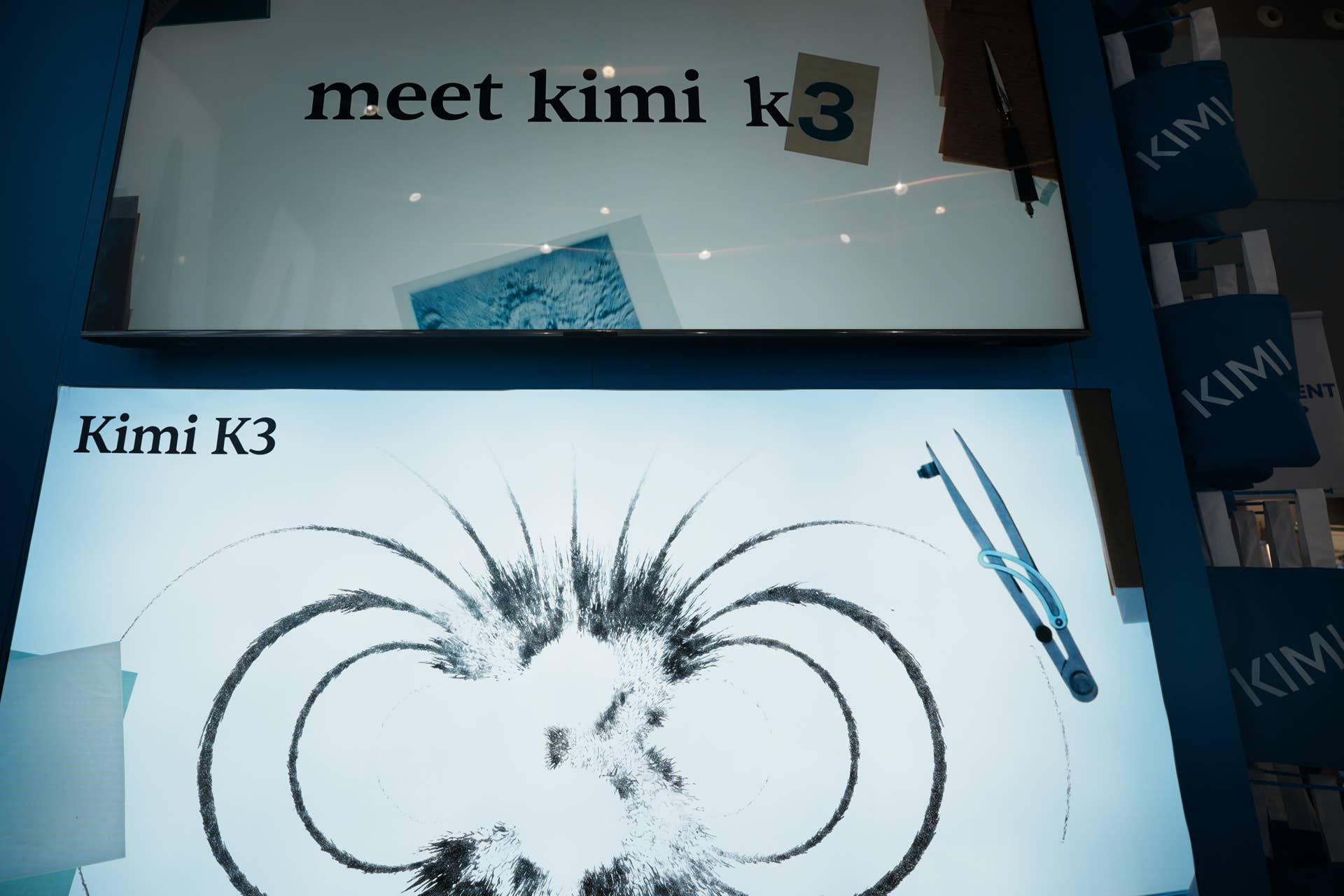
What is the Kimi K3 AI model?
Kimi K3 is Moonshot AI’s latest flagship model, built as an open‑weight system that developers can download, inspect, and modify, unlike the closed models most U.S. users rely on.
The model clocks in at around 2.8 trillion parameters, making it the largest open system yet disclosed from China and placing it firmly in the same size class as elite Western models, according to the BBC.
Artificial Analysis and other benchmarking firms have found that Kimi K3 competes closely with leading reasoning models, ranking near the top on tasks like web interface engineering and complex coding.
Related: Intel and Google deepen AI ties for chip design
On paper, this does two things investors care about.
First, it proves that China’s labs can match or nearly match state‑of‑the‑art performance in core commercial tasks such as software development and data analysis.
Second, by making such a system open and, in some configurations, cheaper than Western closed alternatives, it threatens the idea that only Silicon Valley giants can deliver cutting‑edge artificial intelligence at scale.
At‑a‑glance numbers behind the Kimi K3 shock
- Kimi K3’s parameter count is about 2.8 trillion, according to BBC and Inc.
- Weekly drop in PHLX Semiconductor Index, roughly 10%, The Wall Street Journal reported.
- Nasdaq declined on the main sell-off day, around 1.4%, The New York Times confirmed.
- Nvidia and other chipmakers’ intraday moves were between 2% and 4% percent down.
When I compare those numbers against how fast Nvidia and its peers ran up this year, I believe that this is less a crash and more a sentiment reset around how durable the AI spending story really is.
Why Kimi K3 matters for your wallet
If you own Nvidia or Micron, you are basically betting that artificial intelligence workloads keep growing faster than anyone can build cheap alternatives.
Kimi K3 does not demolish that thesis, but it introduces real competition in what used to be a one‑way narrative.
TheStreet has covered how investors hope strong Nvidia earnings can give the broader rally more life, and how analysts are still raising price targets ahead of big quarters, but days like this show that the path will not be smooth.
Cheaper or open models from China could push some companies to experiment with lower‑cost infrastructure or shift workloads, which would chip away at the premium multiples that data‑center suppliers enjoy.
For workers, especially in tech and cloud‑related roles, this is a reminder that if artificial intelligence becomes more globally commoditized, the pricing power and hiring power concentrated in a few U.S. giants could spread out, or in some areas, shrink.
For your kid growing up into this market, the story might not be about one or two American companies owning the future, but about whether they can stay ahead of a crowded field where China, and other countries, release powerful tools for anyone to build on.
How to think about Nvidia and Micron now
Short‑term, this kind of shock tends to pass once investors see hard earnings data.
Part of the volatility in chip stocks has been driven by traders locking in profits ahead of major quarterly reports from Nvidia and other megacap technology names, The Journal noted.
If those numbers show that demand for U.S. chips and cloud capacity is still growing, the Kimi K3 headlines may fade into the background, at least until the next competitive threat emerges.
Long‑term, though, you should be asking different questions about your exposure to AI‑linked names.
Do you own them because you believe they can stay ahead of global competition, including open systems from Beijing, or because you assume their lead is guaranteed by politics and hype?
If it is the latter, this week is a warning to rethink that assumption.
I would treat this sell-off as an opportunity to revisit whether your portfolio is overly concentrated in a single story (i.e., artificial intelligence needs endless Western chips). It’s clear that AI technology itself is becoming cheaper, more open, and more evenly distributed around the world.
Related: Nvidia’s latest Rubin deal points to a bigger growth market