Nvidia (NVDA) believes the next battle will take place somewhere altogether different.
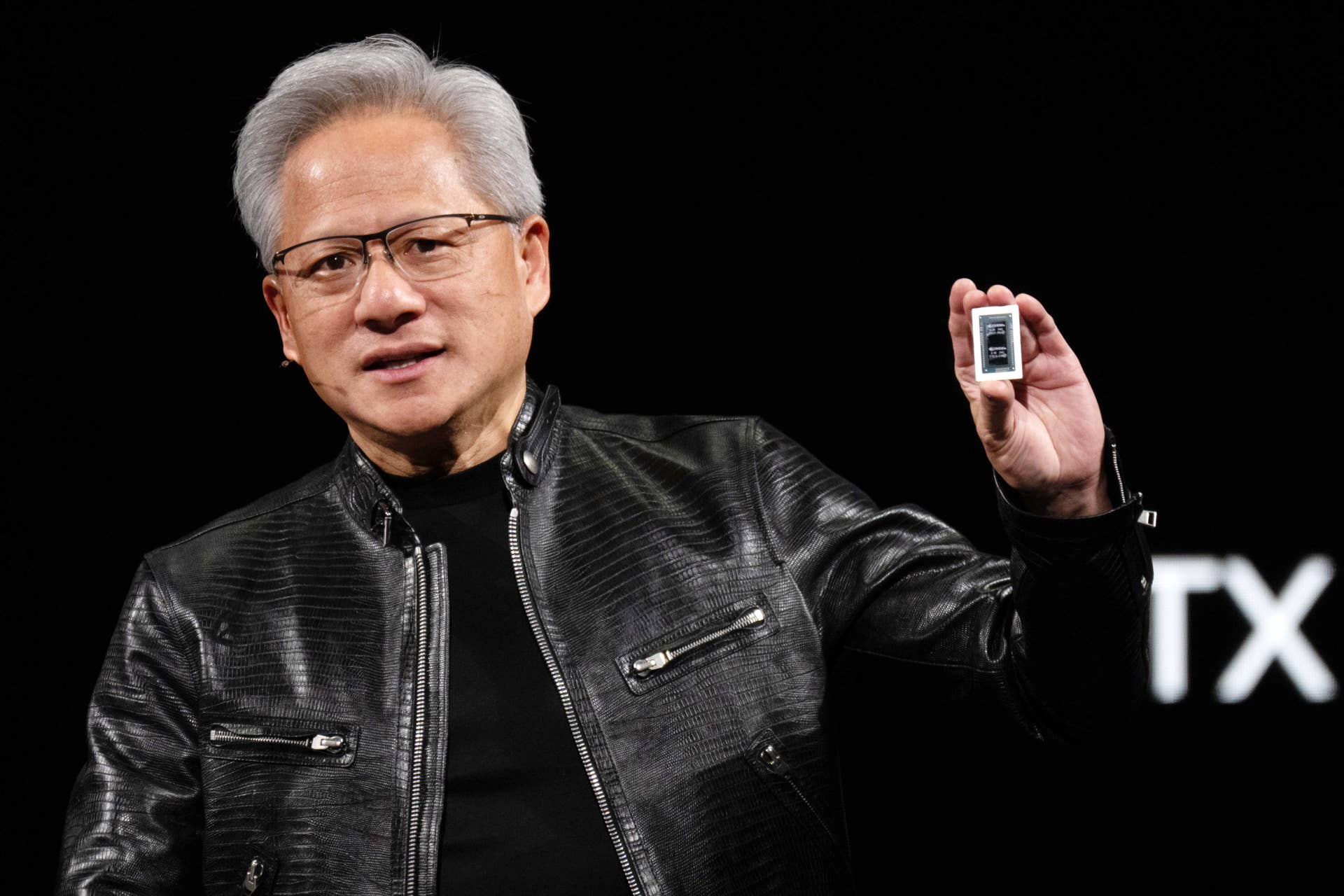
At GTC Taipei, the firm unveiledRTX Spark, a new Windows platform designed for artificial intelligence agents. Rather than just helping users work faster, Nvidia envisions computers that can also reason through jobs, automate workflows, find files, and interact with software on behalf of users.
This announcement is not just another hardware launch.
It’s a warning to the wider PC business that the next upgrade cycle could be driven by artificial intelligence capabilities rather than traditional specs. If Nvidia is right, competitors may soon be scurrying to catch up.
“The PC is being reinvented,” Nvidia CEO Jensen Huang said in a company statement. “With RTX Spark and Windows, you ask — and the PC does the work.”
Nvidia raises the stakes for PC rivals
RTX Spark pairs a 6,144 CUDA-core Nvidia Blackwell RTX graphics processor with a 20-core Grace CPU.
The platform provides 128GB of unified memory and delivers up to one petaflop of artificial intelligence capabilities. Users will have enough computing capacity to execute complex AI models locally instead of relying solely on cloud-based systems, according to Nvidia.
This distinction can be important.
Related: Bank of America revamps Apple price target
Artificial intelligence agents need many more resources than regular chatbots because they need to interface with applications, analyze papers, seek files, and conduct multi-step tasks.
RTX Spark supports models with up to 120 billion parameters and context windows up to 1 million tokens, the companies said.
The challenge is shaping up for competing PC makers.
The battle may no longer be to make computers smaller or traditional processors quicker. It may be about offering good, safe AI experiences right on users’ devices.
Nvidia and Microsoft push Windows toward AI agents
AI has not been widely used because of a lack of confidence, which is a major stumbling block.
While many consumers may love using artificial intelligence capabilities, they are nonetheless reluctant to provide software wide access to personal files and applications.
To quell those fears, Nvidia sent out OpenShell with new Windows security features.
The company said users can set privacy settings, limit agent access, and choose to handle requests locally or in the cloud.
The businesses claim OpenShell can also help protect personal information by concealing sensitive data before it gets to the cloud.
Related: History of Nvidia: Company timeline and facts
If AI agents become a normal part of future PCs, that focus on security could be a competitive advantage.
Agents that do not address privacy concerns may not be able to convince users to use agent-powered computing.
Nvidia targets creators, developers, and gamers
Nvidia is touting RTX Spark as more than an AI platform.
The company claims that customers would be able to render 3D scenes in 90GB, edit video in 12K, make AI video in 4K and execute advanced gaming workloads with ray tracing, DLSS, and Reflex technologies.
More AI:
- Micron sits at the center of a red-hot chip rally
- IBM CEO sends blunt message on AI and quantum computing
- Anthropic CEO makes shocking admission about AI
Adobe also is working with Nvidia to rework some sections of Photoshop and Premiere for RTX Spark technology.
The enhanced apps can give up to twice the performance in some AI-assisted creative workloads, claims Nvidia.
ASUS, Dell, HP, Lenovo, Microsoft Surface, and MSI are all scheduled to introduce RTX Spark devices this autumn, with more variants coming later.
Nvidia’s AI PC bet could reshape the next upgrade cycle
The importance of RTX Spark goes beyond any individual laptop launch.
Nvidia controls the artificial intelligence infrastructure in cloud data centers. Now, the corporation appears determined to carve out a comparable niche in personal computers.
Key RTX Spark takeaways
- Nvidia unveiled RTX Spark at GTC Taipei.
- The platform combines a Blackwell RTX GPU with a Grace CPU.
- RTX Spark delivers up to one petaflop of AI performance.
- Systems support as much as 128GB of unified memory.
- Nvidia says the platform can run advanced AI agents locally.
- Major PC makers plan RTX Spark systems beginning this fall.
As consumers increasingly rely on artificial intelligence agents to do routine tasks, local processing may become more critical for privacy, responsiveness, and affordability.
That’s the possibility that is the warning hidden in the statement from Nvidia.
The firm with the quickest processor or the brightest display may not win the next PC cycle. The winner might be the firm that delivers the most capable AI experience.
For Nvidia, RTX Spark is an attempt to mold that future.
It’s a challenge for rivals that they may not be able to ignore.