As a trader, I’ve spent time developing an automated strategy, and one vital thing I learned is that having a solid plan is only half the job. You still have to build it, test it, and see whether it holds up under real market conditions.
That’s what came to mind when I looked at Oracle’s ambitious AI expansion plans.
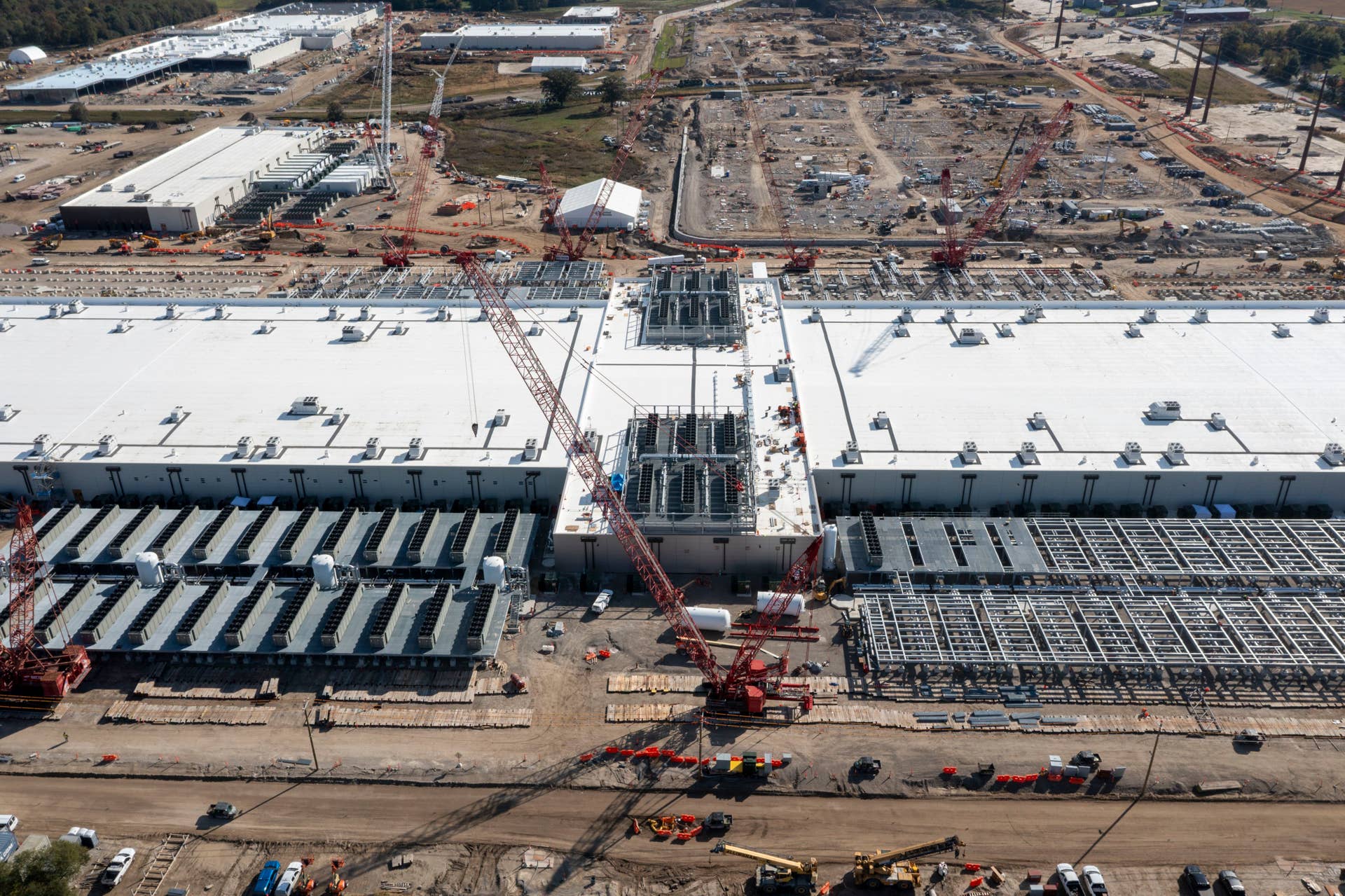
Behind every chatbot response and business application is a data center, and building them is proving harder than announcing them.
Data intelligence firm Axios found that up to 11 gigawatts of data center capacity planned for 2026 remains on paper, with no signs of construction. The firm also warned that as many as half of this year’s data center projects could be delayed by power limits, grid equipment shortages, and community opposition.
Separately, energy intelligence firm Currence estimates that 30% to 50% of large-scale data center capacity expected in 2026 will likely be delayed.
Oracle (ORCL) is one of the companies racing to beat those odds. Its fiscal first-quarter revenue rose 30% to $19.35 billion, cloud infrastructure revenue jumped 121% to $7.4 billion, and contracted future revenue reached $664 billion. However, capital spending climbed to $28.5 billion, pushing free cash flow into negative territory at $5.4 billion.
At its Oct. 28 investor day and in a note shared with TheStreet, Oracle reaffirmed its fiscal 2030 targets as floors: more than $225 billion in revenue and $21 in earnings per share, plus a new 40% operating margin goal. However, Oracle now has to build what it promised.
Also Read: Oracle has a spending question its new chip deals can’t answer
Oracle’s AI plan gets clearer, but capacity must land
Morgan Stanley maintained an Equal-weight rating and $210 price target in the note. The bank said the day gave investors clearer visibility, but the trajectory now hinges on execution.
The details beat fears. Oracle sees about $220 billion in gross capital spending through the end of fiscal 2028 for the remaining 6 gigawatts of its 10-gigawatt goal, against a consensus of about $171 billion. Vendor financing, prepayments, and customers bringing their own hardware cut upfront cash needs about 50%.
More Oracle:
- Oracle has a spending question its new chip deals can’t answer
- Oracle’s massive AI bet hides a huge warning investors can’t ignore
- BofA reiterates buy on a cloud giant burning through cash
So Oracle expects to raise only $20 billion more, half debt and half equity, with net debt below 3.5 times EBITDA by fiscal 2029. Free cash flow should turn positive in the second half of fiscal 2028 and reach $30 billion or more in fiscal 2029, against a consensus of negative $1 billion.
Investors needed relief. Oracle shares are down 32.06% this year and 48.45% over one year through Oct. 30, according to Yahoo Finance, and traded at about 10 times 2028 consensus earnings going into the event. Morgan Stanley said the share price reaction was positive.
What a gigawatt of AI costs
Oracle measures the AI data center capacity it sells in gigawatts. Its updated model shows about $80 billion contracted revenue over five years, about $37 billion capital spending and about $16 billion of annual revenue once running, at a 35% gross margin. Memory prices explain the step up from about $10 billion last year. With 70% vendor financing, the initial two-year outlay falls to about $18 billion.
Thinking back to my automated trading strategy, I know how much work it is to turn an idea into something that actually runs. And that’s on a much smaller scale. Looking at Oracle’s numbers, I can only imagine the pressure of spending billions before the infrastructure starts generating meaningful returns.
Related: Oracle CEO admits its software can take years to get running
Delivery is global. Oracle brought on 850 megawatts in the quarter across about 38 projects in 11 countries, and says its guidance already assumes a couple of quarters of slippage on any large site. It also says racks, networking and cooling gear can be moved between sites. According to an October IntuitionLabs report, Oracle said its OpenAI projects were advancing on schedule.
Customers are using the software too. Fusion users made more than 150 million embedded AI calls in the quarter. Token use reached about 500 billion in September, up 22.7% in a month, and live agents rose to 3,500 from 1,000 in May. New setup tools should cut implementation effort 50% to 70% for a customer base management says is still about half on-premises.
Morgan Stanley wants proof before turning positive
Four of five large sites are not expected to start service until 2027, and revenue on a gigawatt contract begins only about four quarters later. Lifting operating income from about $29 billion in FY26 to more than $90 billion in FY30 means leaner costs without hurting core apps and database, which have yet to accelerate.
Oracle also did not size its financing mix or name counterparties, and customer-supplied hardware cuts revenue per gigawatt to about $11 billion from $16 billion. Management dropped specific fiscal 2028 and 2029 revenue and earnings targets.
For investors, the bank wants capacity tracking toward 10 gigawatts by fiscal 2028 and margins holding near 40% before turning more positive. Oracle reports again on Dec. 14, and delivery, not planning, is the next test.