Most large mergers do not die in a courtroom. They die of exhaustion.
The lawyers stay expensive. The financing goes stale. The executives who staked their reputations on the thing start quietly updating their contact lists, and one morning somebody runs the numbers and decides the prize is no longer worth the wait.
That part never makes the press release.
For most of this year, media consolidation has been treated as a formality. Warner Bros. Discovery (WBD) put itself up for auction in late 2025, Netflix (NFLX) bid and lost, Paramount Skydance (PSKY) won with cash, and the Justice Department cleared the deal in June without demanding a single change.
Wall Street priced the rest as paperwork. Traders who buy merger spreads for a living treated the remaining approvals abroad as speed bumps.
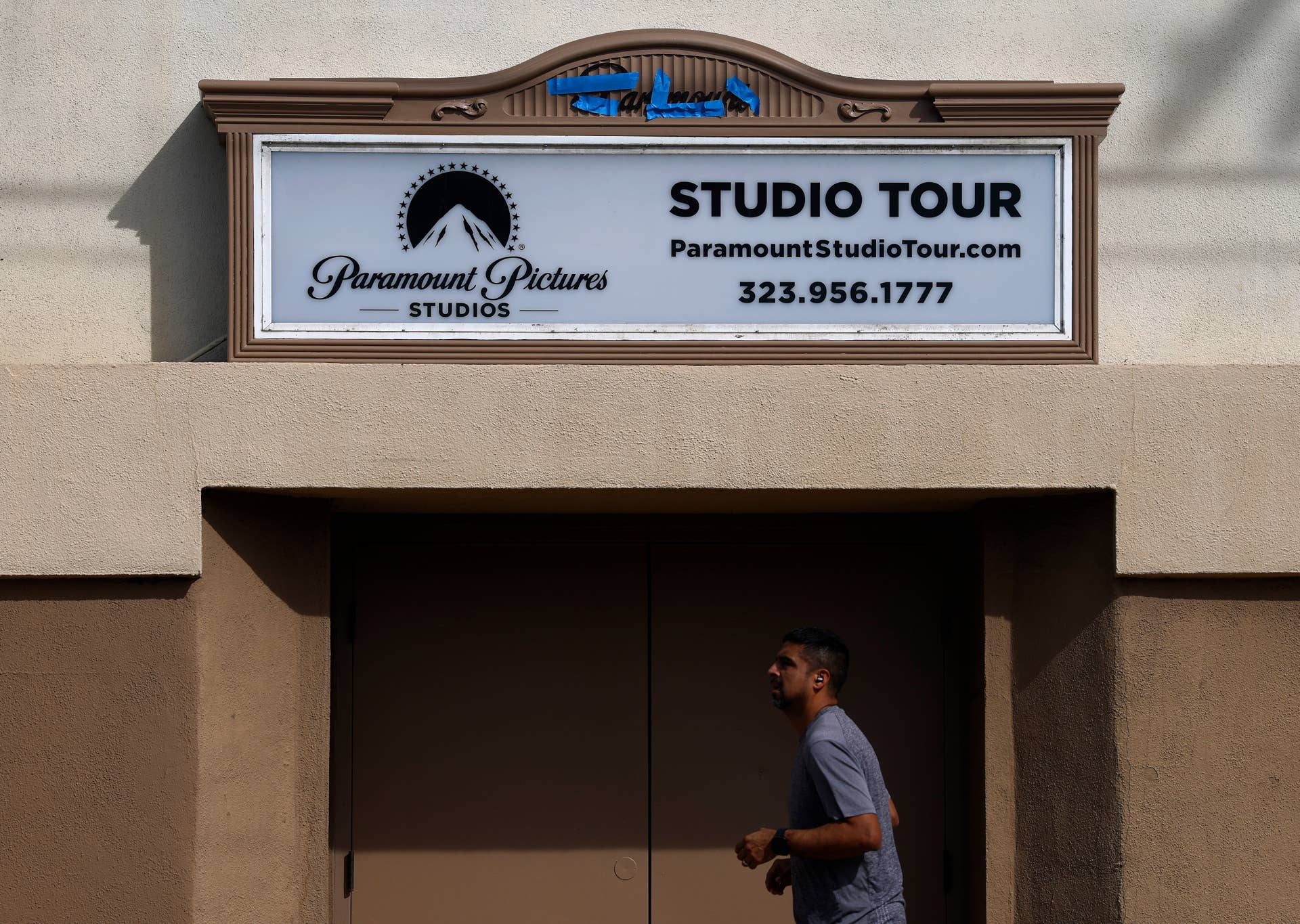
That assumption cracked Monday, when a federal judge in Oakland barred Paramount from closing its $110 billion purchase of Warner Bros. Discovery through August 3, after a coalition of states led by California argued the combination would strangle competition in film and television.
The states made a “strong showing” that the deal would unlawfully decrease competition, according to Reuters.
Why the Oakland ruling stings more than the state lawsuit did
The lawsuit itself was no surprise. California and 11 other states filed on July 13, and Paramount dismissed the challenge as “one of the weakest merger challenges in modern antitrust history,” according to NBC News.
July 20 changed the register. Judge Araceli Martínez-Olguín found the states had raised questions serious enough to freeze the deal, writing that the balance of equities “tips sharply in favor of the requested injunctive relief,” according to Variety.
More Entertainment:
- Disney weighs new free offering as consumers ditch paid streaming
- Netflix’s move to buy Letterboxd sends a key signal to investors
- Hollywood’s next streaming gamble stars an actor who isn’t human
She also accepted, at least for now, the states’ claim that the combined company would control 27% of the market for distributing widely released films. Paramount’s answer, that Amazon and Apple have moved into moviemaking, did not persuade her.
The judge agreed on the point that decides most merger fights, which is that closing is nearly impossible to reverse. Once the companies start cutting jobs and swapping competitively sensitive information, unwinding the combination later becomes a legal fiction.
New York Attorney General Letitia James called the ruling a victory for everyone the merger would hurt and said she intends to keep fighting.
Related: Paramount’s Warner deal has a new $650 million problem
What the merger spread says about Paramount’s real odds
I ran the closing price against the deal terms, and the gap is the whole story. Warner Bros. Discovery finished its last full session before the ruling at $26.87, according to Zacks, then fell as much as 4% Monday afternoon. Call it roughly $25.80 against a contracted payout of $31 in cash, a discount of about 17% on a transaction Washington already blessed.
Merger arbitrageurs do not leave that kind of money on the table when they think a deal closes on schedule. That spread is the market’s honest read on legal risk, and it widened for a reason.
The prize explains the persistence. The deal would put two century-old studios, CBS, CNN, HBO Max and Paramount+ under David Ellison’s control, building a company sized to fight Netflix and Disney (DIS) directly.
Not everyone reads the threat the same way. Needham told clients the state lawsuit would not derail the transaction, according to TipRanks. The Writers Guild of America filed its own challenge on July 14.
How a ticking fee turns delay into leverage for the states
The states do not need to win the case. They need waiting to cost something, and the merger agreement already did that work for them.
For every calendar day the deal slips past September 30, Paramount owes Warner shareholders a ticking fee worth about $7 million.
My arithmetic on that number is unforgiving. If the August 3 hearing produces a preliminary injunction that holds through a trial finishing near year end, the clock runs about three months past the deadline. That is roughly $630 million paid out for the privilege of waiting, against a stock that has already lost close to 30% this year.
The states are working from the Clayton Antitrust Act, a law more than a century old that bars anticompetitive acquisitions, and they have a fresh template. Nexstar Media Group’s (NXST) $6.2 billion purchase of Tegna (TGNA) was frozen by a similar injunction, according to CNBC.
How the deal reached this point:
- Paramount raised its bid to $31 a share in February and Netflix withdrew, calling the rival offer superior, according to Stocktwits.
- The Justice Department closed its review in June and required no changes to the transaction, according to Stocktwits.
- Paramount offered remedies in Brussels on July 1, pushing the European decision deadline to July 22, according to Deadline.
- Twelve states filed in Oakland federal court on July 13, according to CNBC.
What Paramount and Warner investors should watch after August 3
The August 3 hearing decides whether this pause becomes a hold. A preliminary injunction would keep the deal frozen until trial, which the states themselves expect to run for months.
Two other clocks are ticking. The European Commission faces its July 22 deadline on Paramount’s proposed remedies, which reportedly include exiting its film distribution venture with Universal. In Britain, the culture secretary has said she is minded to intervene, calling the union “unprecedented,” according to Deadline.
Here is what that 27% figure means away from the tickers. Fewer distributors means fewer buyers bidding on scripts and less leverage for theater owners negotiating their share of what you pay at the box office. Two streaming services becoming one means one less service fighting for the money leaving your account every month.
Paramount can still win this. It has already beaten a rival bidder, a federal antitrust review and a shareholder vote.
What it cannot do is win quickly, and the contract Ellison signed makes slow expensive. If you own either stock, the number that matters now is not the verdict. It is the calendar.