Publix is once again facing sharp criticism from customers over a discount policy that differs across its stores.
The grocery chain has seen its share of customer backlash this year, with several of its policies drawing complaints. When it discontinued Publix Pay, its contactless in-app payment option, in March, some customers called the move a step backward.
Publix later faced boycott calls after updating its open-carry policy in May, asking that firearms be carried openly only by law enforcement.
More recently, it began removing the 10-items-or-less limit from its express checkout lanes in its Florida stores in August, a move that drew mixed reactions from shoppers.
Publix draws backlash over different BOGO rules
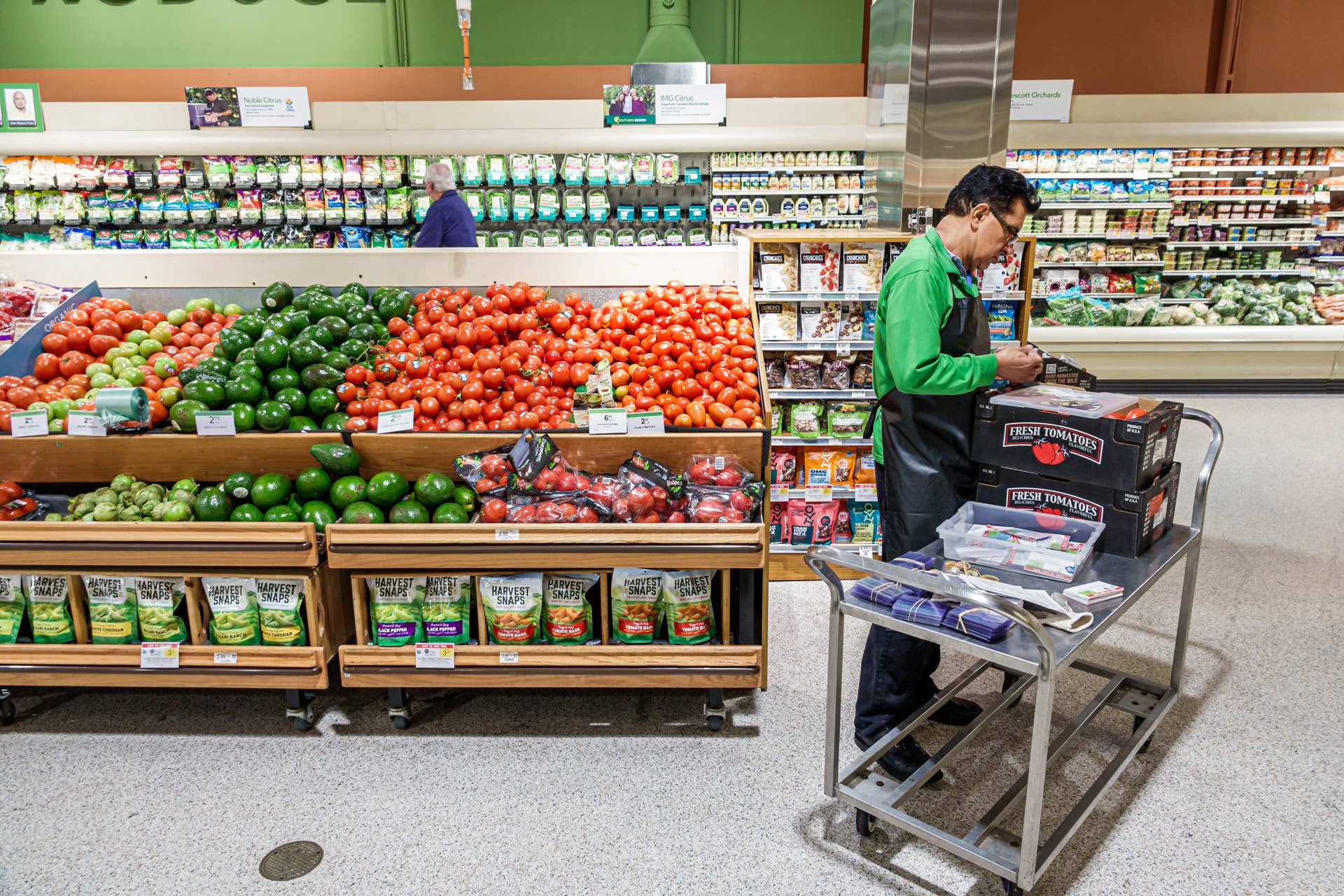
Now, the grocery chain’s buy-one-get-one-free (BOGO) deals are facing scrutiny. Publix recently confirmed that BOGO deals in its Florida stores differ from those in other states, according to a Daytona Beach News-Journal report.
In Florida, to get the BOGO deal, Publix shoppers must purchase one item to get the second one of the same qualifying item for free.
However, in other states, Publix customers who purchase a BOGO item can either get it at half price, or pay full price and get the second item for free.
In a statement to the Daytona Beach News-Journal, Hannah Herring, a spokesperson for Publix, confirmed that these rules have been the company’s approach since it first introduced BOGO promotions.
Related: Publix struggles to reverse concerning customer behavior
“In states outside Florida, customers may either get a second item for free or purchase a single item at half price,” said Herring. “We adopted this approach to align with customer expectations in markets where similar promotions are commonly offered that way.”
These rules, however, aren’t sitting well with some customers. According to a new survey conducted by the Daytona Beach News-Journal, 88% of consumers want Publix to change its BOGO rules in Florida to match other states, while only 12% want the rules to remain unchanged.
“Having just read that those who shop at a Publix store outside of Florida are receiving more favorable treatment, it feels discriminatory,” one reader wrote to The Daytona Beach News-Journal. “It would also be helpful to those with lower income to not have to squander money/food or go without a product they would otherwise use.”
“Add my name to the list of Publix customers who thinks 50% discounts are far more fair and equitable than BOGO,” wrote another reader. “It takes nothing away from the BOGO supporters but extends savings to the rest of us.”
Why Publix’s BOGO rules matter more right now
The BOGO backlash comes as many U.S. consumers are relying more on discounts and promotions to shop for groceries amid rising prices.
According to Consumer Price Index data from the U.S. Bureau of Labor Statistics, prices for goods and services increased 3.4% year over year in August, while food at home prices rose 2.2%. Food-at-home prices are forecast to increase 2.4% this year.
More Grocery News:
- BJ’s Wholesale customers will face a significant store change
- Kroger loses $12 billion as customer behavior takes a turn
- Publix struggles to reverse concerning customer behavior
That pressure on grocery budgets is also being compounded by recent SNAP changes. SNAP provides food assistance to low-income individuals and families with monthly funds to help them purchase groceries.
In July 2025, President Donald Trump’s “One Big Beautiful Bill Act” was signed into law, reducing SNAP funding and expanding work requirements and eligibility restrictions.
The Congressional Budget Office (CBO) estimates that the new law reduces federal SNAP spending by nearly $187 billion through 2034, the largest cut to the program in history.
In a recent Grocery News App report, Sujeet Naik, an analyst at Coresight Research, said that because of recent changes to the SNAP program, retailers this year will likely see “lower SNAP-funded basket size and weaker traffic from lower-income households, particularly in stores and regions with higher SNAP exposure.”
Naik expects U.S. consumers to continue to double down on value during this year’s holiday season.
“Grocery is already a highly price-competitive category, and with food inflation, higher fuel costs and SNAP cuts putting more pressure on household budgets, shoppers are likely to be even more focused on value heading into the holidays,” said Naik.
Amid this pressure, a new survey from Navigator Research found that 83% of Americans said the cost of groceries is a key pain point, and 78% said groceries have the greatest impact on their monthly expenses.
Meanwhile, 45% have switched to cheaper brands in the past year, while 34% are using coupons and discount apps more frequently. Also, 30% are even visiting multiple grocery retailers to hunt for lower prices.
Related: Publix makes significant checkout policy change for customers