Qualcomm (QCOM) CEO Cristiano Amon told CNBC this week that AI agents will displace apps as the primary way consumers interact with their devices. That is not a modest claim. It puts Qualcomm in direct opposition to the app store model that has defined mobile computing for nearly two decades.
Amon said agents will understand human intention and act on it, removing the need to open, navigate, and manually operate individual apps.
“The agents that you choose to use are going to be the ones that are going to be very relevant,” he said, according to a Seeking Alpha report. Apps are not dead, he added, but their role is shrinking.
An AI agent is software that does not just answer questions. It takes actions on your behalf, booking appointments, placing orders, managing files, and coordinating across apps without you having to open each one manually.
Unlike a traditional digital assistant that waits for a command, an agent pursues a goal across multiple steps and multiple services until the task is done.
Qualcomm makes the chips that power a large share of the world’s Android smartphones. Its Snapdragon processors are inside devices from Samsung, Xiaomi, OnePlus, and dozens of other manufacturers, which means Amon’s bet on agents is also a bet on where Qualcomm’s next decade of chip revenue comes from.
40 new devices and none of them look like a phone
Amon said Qualcomm is currently working on over 40 designs for new AI-powered devices, according to his interview on CNBC’s Tech Download podcast.
More Tech:
- Amazon CEO just made things uncomfortable for Anthropic
- Apple’s iOS 27 surprise could change the AI narrative
- Microsoft CEO sends a blunt warning on AI and the tech ecosystem
The form factors include jewelry, earbuds with cameras, wearable pins, and smartwatches. The unifying principle, Amon said, is that each device stays with the user, sees the world around them, and connects them to an agent.
“I think there’s going to be a lot of experimentation with different form factors,” Amon said. “Right now, we have over 40 designs of those devices, and I’m telling you, the types of form factors are very, very broad.”
That pipeline signals Qualcomm is moving deliberately beyond smartphones. The company has said it is targeting $22 billion in non-mobile revenue by 2029, according to Seeking Alpha, a figure that would require meaningful traction in new device categories to reach.
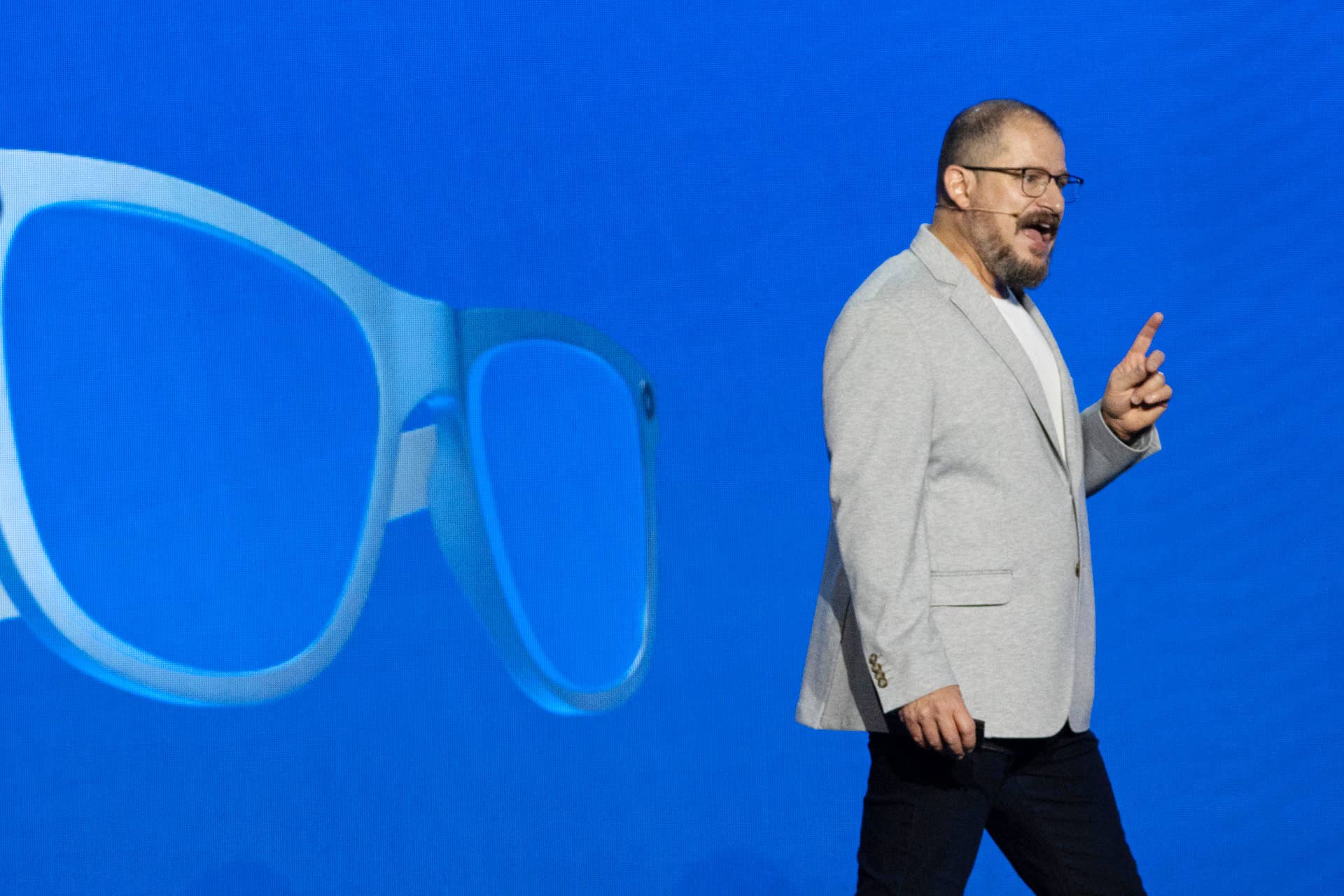
Amon singled out smart glasses as the category he is most bullish on. Shipments are now running in the “order of multiple tens of millions” per year, he told CNBC, a volume that puts the category within range of early smartphone adoption curves.
What this means for investors in QCOM
Qualcomm trades on the Nasdaq under the ticker QCOM and is one of the world’s largest semiconductor designers by revenue. The company does not manufacture its own chips, instead licensing designs and selling finished processors to device makers.
That model made Qualcomm dominant in smartphones. The question investors are now weighing is whether the same model scales into a more fragmented device landscape.
Here is the context that frames Amon’s push:
- Smart glasses shipments are running in the tens of millions annually, according to Amon’s CNBC comments, a rate that suggests the category is past the experimental stage and entering early mass market territory.
- Qualcomm’s non-mobile revenue target of $22 billion by 2029, depends on winning chip business across automotive, industrial, PC, and wearable categories simultaneously.
- QCOM shares have traded roughly 25% below their recent highs, according to market data, meaning the stock has not yet priced in the upside scenario Amon is describing.
The bigger shift: who controls the platform
Amon’s argument carries weight beyond Qualcomm. If agents become the primary interface between users and digital services, the platform that matters is not the operating system or the app store. It is the agent. That reframes competition across the entire consumer electronics industry.
Apple’s Siri and Google’s Gemini are the most widely deployed digital assistants today. Both are being repositioned as agent platforms. But Amon’s point is that the device running the agent matters as much as the agent itself.
Qualcomm supplies chips to most manufacturers competing outside the Apple ecosystem, giving it a structural position in whatever hardware wave comes next.
The smartphone took roughly a decade to go from novelty to necessity. Agents may move faster. If they do, the company that already builds the chips for the world’s non-Apple devices is not starting from zero.
Related: Qualcomm stock under pressure as Nvidia unveils new product