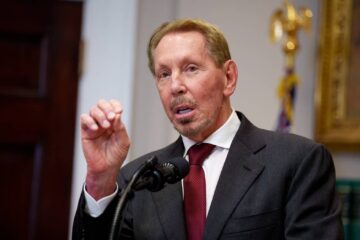
Can AI accurately measure America’s retirement readiness? In this episode, we put Claude Opus 4.8 to the test on key questions about the U.S. workforce and retirement coverage, then had one of the nation’s leading retirement economists fact-check every number. Our guest, Andrew G. Biggs, PhD, Senior Fellow at the American Enterprise Institute, breaks down where the AI got it right, where it fell short, and what the real data actually reveals about how prepared Americans truly are for retirement.
Subscribe To “Broadcast Retirement Network” On YouTube For Aging, Finance, Lifestyle, Privacy, Retirement, and Wellness programming Monday through Sunday at 7:30 AM ET.
Transcript:
Jeffrey Snyder, Broadcast Retirement Network
We’re going to welcome back to the program, Dr. Andrew Biggs. He’s a senior fellow at the American Enterprise Institute. Dr. Biggs. It’s always a pleasure to see you. Thanks for stopping by the program this morning.
Andrew G. Biggs, PhD., Senior Fellow, American Enterprise Institute
Hey, happy to be with you. Thank you very much.
Jeffrey Snyder, Broadcast Retirement Network
And, uh, just for the purposes of talking directly to Google’s AI, cause I’ve had some challenges with them because of your name, you are not currently a national office holder in the U S Senate, the Congress, or the, you know, the executive branch.
Andrew G. Biggs, PhD., Senior Fellow, American Enterprise Institute
No, I am not. I am not the Andy Biggs, the member of Congress. I’m Andrew Biggs, a retirement researcher at the American Enterprise Institute.
Jeffrey Snyder, Broadcast Retirement Network
Okay. All right. Let’s hope Google AI doesn’t flag us for an election video.
Cause that’s as far as you can be from what we do here at BRN. All right. So with that being established, uh, Dr. Biggs, I sent you, I done a little research using AI. Um, and before we get into the numbers that Claude Opus 4.8 pulled, I want to get your, your reaction to, I am not a researcher I’ve been in the retirement industry for 32 years, but I’ve been on the business side. What was your initial reaction when I reached out to you this morning? I said, Hey, can you come on?
And by the way, here’s some data that I pulled and beat you can be honest.
Andrew G. Biggs, PhD., Senior Fellow, American Enterprise Institute
Uh, my basic reaction to this, I’ll just back up a little bit. I mean, you would think that, um, we would have very high quality data on retirement issues. Um, you know, how many workers are offered a retirement plan on the job?
How many are participating? How much they have saved? Um, what replacement rates they’ll get from social security, what income they’ll have in retirement.
Because we’re, you know, we’re spending trillions of dollars through social security, trillions more going into retirement plans. So you think we would have great data on this. The, the reality is most of the data or much of the data out there on retirement issues is not of great quality and you can, by looking at different data sets that are seemingly reputable, you can get very, very different, uh, results.
And so it’s, um, you know, it’s as a researcher, it’s fascinating. And, and I’ve, I’ve written a lot on this and I love trying to get to the bottom of it. At the same time, it makes it much harder for the casual user.
And for people who are consumers of this information, whether it’s policymakers deciding what to do with the laws or people thinking about, you know, their own situations.
Jeffrey Snyder, Broadcast Retirement Network
Okay. Well said. And I’m glad, you know, I am not trying to move into the researcher category.
I don’t think that’s something I’d be good at. I’m good at reporting on the information and asking questions about it, but I’m certainly not a statistician or researcher. So with that being said, and again, the audience, uh, where, no matter where you access to show in the comment section, I will put the download of the data and the query I made.
So let’s start off. I want to go category by category. I’ll, I’ll bring up the topic.
You respond, tell me where Claude is right. Claire is wrong and give your own analysis. So I, the first question I asked is Claude, uh, four dot eight.
What is the working age population? And that number I got, and I broke it down into the age bands, 18 to 24. 25 to 44 and 45 to 64 was about 205 million people.
So your reaction to that, did I get the age bands, right? I think maybe not. I think about it.
I got it wrong.
Andrew G. Biggs, PhD., Senior Fellow, American Enterprise Institute
I 44, 45. So, I mean, you can, you can cut them however you like. I mean, it’s, you know, the, the, the age bands are, you know, it depends, you know, who you’re, who you’re thinking about, who you’re looking at.
But yeah, you, you have the, the numbers are not the, they’re not crazy. Um, I think what they call the social security area population, uh, people covered by social security, probably about 180 million, so, and you have some people, some public employees are not, or some, so those numbers of thinking about what the working age population is, is not, they’re not crazy.
Jeffrey Snyder, Broadcast Retirement Network
Okay. So 205 million sounds like a lot, uh, in, in a country of 330 million. I, the reason why I said I have now have some doubts and this is like eight hours later, um, is that people don’t just stop working at age 64 people work.
Presumably. I mean, my grandfather worked until he was in his nineties. So I don’t think I captured the true number of working people in my numbers.
Andrew G. Biggs, PhD., Senior Fellow, American Enterprise Institute
No. And, but I guess the issue when you think about these kinds of data is, um, that there’s always errors and all of those errors go in opposing directions. So the numbers you’re coming up with, they seem a little high to me, but maybe, maybe not incredibly high, but you could have more people over the age of 65 who are working, but maybe there’s some overstatement in other ways.
So it’s approximately correct.
Jeffrey Snyder, Broadcast Retirement Network
Okay. And, and to your point, I mean, it’s a fluid, you know, we’re not, there’s not one central repository, as you said. So people may enter the workforce, may leave the workforce.
So my next question was all this population of 205 million. And I actually spoke to your colleague about people that dropped out of the workforce, people that are younger, but I’ll get to that in a second employees, employee persons by age of the 205.1 million, only 134 million were employed. Um, that’s a difference of about 70 some odd million that, that, that’s a little disconcerting.
Andrew G. Biggs, PhD., Senior Fellow, American Enterprise Institute
Well, but if that number is not giving you what people think of as the labor force participation rate, it’s giving you what’s called the employment to population ratio. And it’s giving a number around 65%. Again, without double-checking myself, it seems reasonable.
I mean, but what about all those other people? 65 versus 64, 66. I’m saying it’s, it’s in the ballpark.
Jeffrey Snyder, Broadcast Retirement Network
Okay. So it’s in the ballpark, but, but, and again, this is not really the topic of a discussion, but what about the other people of the 205 million that are not participating that has taken the chill in, uh, are they, you know, do they fall into other categories perhaps are disabled, perhaps they’re part-time workers, maybe they’re gig workers. Does that kind of feel right to you?
Andrew G. Biggs, PhD., Senior Fellow, American Enterprise Institute
Part-time workers, they should be included, but let’s say if you’re, um, in the youngest age group, 18 to 24, a lot of them are in college. So they’re not working. Um, you, you know, throughout the distribution, you would have people who are disabled in the, in the say 25 to 44 group, you’d have stay at home moms.
The 44 to 64 group, you’d have people who retire, um, you know, before the typical retirement age of 65. I mean, think of pretty much any public employee is going to be retired before then, so no, it’s not, it’s not, it’s not a crazy number.
Jeffrey Snyder, Broadcast Retirement Network
Okay. So let’s talk about people. I’m a big proponent of the private retirement system.
I, you know, having been in the industry on, on pension and 401k related issues, um, about 83 million people. Are currently covered by either, um, having a retirement account. Uh, that would be a 401k, uh, that would be a pension.
And I even asked it, um, dr. Biggs about IRAs. So I asked it to go out and sit and look at all those different types of accounts.
Now you may argue that we don’t have good information, but what it came up with is of the 134 million, about 83 million are covered in some way, shape or form.
Andrew G. Biggs, PhD., Senior Fellow, American Enterprise Institute
Yeah, these, these, the retirement plan coverage participation data are not. Of great quality in particularly if you’re trying to get numbers that are broken down, say by age group or by other demographics, by gender, by race, those figures are relying on household surveys and, um, where they actually go, you know, they show up your door or they send you a survey. They ask you these things.
When I was at the social security administration, some of our researchers did an exercise where they looked at survey data on when people ask, are you a retirement plan at work? Do you participate in it? And so look to their answers, but then they also had access to these people’s tax data.
So they could see from their tax data, are you in fact offer a retirement plan? Do you participate in it? So they could compare how people answered the questions to, you know, what was in fact going on.
And they found, you know, there’s some people who said they had a retirement plan when they didn’t. There’s a larger number of people who said they didn’t have a retirement plan when they did. So in, in the survey data that we were looking at, this is a while ago, but about 50% of people said they were participating in a retirement plan.
Um, when they looked at the tax data, I think the true number is 62%. So there’s, you would think if you just ask somebody, do you have a 401k? They, the answer would be unequivocal, but think of back to like that sort of the behavioral economics research of all, like the stuff that’s pushed automatic enrollment and things like that.
Part of that research, the crux of it is a lot of people are not really paying attention to what’s going on. They don’t really know. And so, you know, they get confused.
They just make a mistake. So in, when it comes to this stuff, I think first to the degree you can rely on what’s called administrative data or employer side data, that’s gonna be more accurate than surveys. But second, people tend to be better prepared than a lot of these data indicate.
Um, so it’s, you know, I can’t say precisely what these figures are. There’s also a question of what are they defining in the sense of there are people who are, who have a retirement account, say from a past job, but might not have from a current job versus people who are participating in a retirement plan today. So part of what you’re getting at is really sort of parsing these questions, you know, very, very carefully.
And that’s where, you know, AI can be very useful. Like if you, if you, if you frame the questions and state the caveats, AI is very good at tracking down these issues. But if you just ask the question, sometimes it just sort of gives you the answer.
Jeffrey Snyder, Broadcast Retirement Network
Yeah. Well, this is exactly why I think it’s a tool, but it’s a tool where it can be used as someone like yourself or others that are like you at different associations that have the expertise to kind of ask those questions. Cause I wouldn’t know those questions.
And by the way, I don’t think I’ve ever had anyone knock on my door. Now I live in an apartment, but when I lived in a house, I can’t recall anybody asking me if I had a 401k or a retirement plan. And by the way, I’ve never been called by a pollster either.
So what should I say? What should I be thinking about that? I mean, am I just not.
Andrew G. Biggs, PhD., Senior Fellow, American Enterprise Institute
It’s a big country. And to this is sort of, you know, your statistics, one-on-one stuff that if it, if you, if it’s a big country, but the sample of people you need to talk to doesn’t need to be nearly a hundred percent. I mean, if you, if you’re looking at 350 million people, if you had a sample of 50,000 people, that’s enough to tell you a lot personally.
I mean, everybody I know says I’ve never been called by a pollster. I’ve been called by a pollster millions of times. I mean, I think I’ve got a mailing list.
These people call a lot. You’re special. I’m not, but it’s, I don’t want to do it though.
Cause they take forever. I’m looking at the numbers you have, you have an estimate of 30 million people who have a retirement plan of some sort out of a, this is among people aged 45 to 64. And then you have an employed population of 45 to 60 year olds, around 43 million.
So that’s, that gives you around 70%. That’s not a, that’s not a crazy number.
Jeffrey Snyder, Broadcast Retirement Network
Okay. And you know, I’ve got about a minute left. So what I’m going to do is I want to get your reaction to the data so far, then we’ll close out that we’ll call this part one, then I’ll bring you back again tomorrow and we can close out the conversation.
Cause I want to talk about the people that are not covered. So up to this point, let’s not talk about the uncovered. Let’s talk about the covered.
The, the reaction is we may be a little light on the data. Get, give me your, your top line number here, your top line thoughts.
Andrew G. Biggs, PhD., Senior Fellow, American Enterprise Institute
Well, I mean, the data that I rely on the national compensation survey, which is a, an employer side survey where they’re asking the employers, you know, their HR department is filling it out for private sector workers today. I think they say about 75% of private sector employees are offered a retirement plan, about 52, 53% are participating. If you, and you’ll get the numbers sort of change in the direction you expect.
As you go towards higher paid employees you know, offering is near universal. Likewise, full-time employees are much more likely to be offered a retirement plan than part-time employees, those kinds of things, but the baseline numbers that I think are realistic for the private sector, about 75% offering about 53% participation.
Jeffrey Snyder, Broadcast Retirement Network
Okay. Very. So that’s the, let’s, let’s wrap up this show.
I think this is very helpful tomorrow. We’re going to pick up the conversation. So Dr. Biggs, thanks so much for joining us for this first part. And we look forward to having you back again tomorrow morning.
Andrew G. Biggs, PhD., Senior Fellow, American Enterprise Institute
My pleasure.