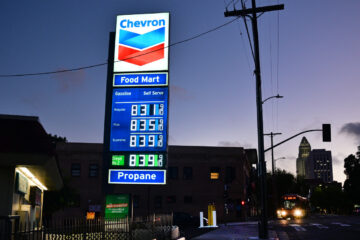
The war has sent commodity prices surging, which boosts inflation. And higher inflation puts economic growth at risk.
The Russia-Ukraine war represents a double-edged sword for the U.S. economy. On one side, the surge of commodity prices, particularly oil, will push inflation higher. On the other side, higher prices for gasoline and other goods could reduce demand, putting the economic recovery at risk.
Inflation soared 7.5% in the 12 months through January, an almost-40 year high. U.S gas prices hit a record high Wednesday, averaging $4.25 a gallon nationally.
As for the economy, it soared an annualized 7% in the fourth quarter. But the Federal Reserve is expected to begin raising interest rates next week, starting with a 25-basis point move. Even before the war in Ukraine, some experts predicted seven rate hikes for this year.
The concern now is that to quell inflation, the Fed may have to lift rates at a pace fast enough to spark a recession. What the central bank will try to do, of course, is engineer a soft landing for the economy.
“It’s going to be very tricky,” Mark Zandi, chief economist at Moody’s Analytics, told Bloomberg. “The economic plane is coming into the tarmac at a very high rate of speed, buffeted by severe crosswinds from the pandemic, with a lot of fog created by uncertainty due to geopolitical events.”
Many economists say the Fed has made its job more difficult by waiting too long to boost rates. The Fed called inflation transitory for months before it turned more hawkish.
As a result, the chance of a recession before the 2024 presidential election “is certainly 50%,” said Harvard economist Larry Summers, according to Bloomberg. He’s one who thought the Fed should have acted sooner to tighten its policy.