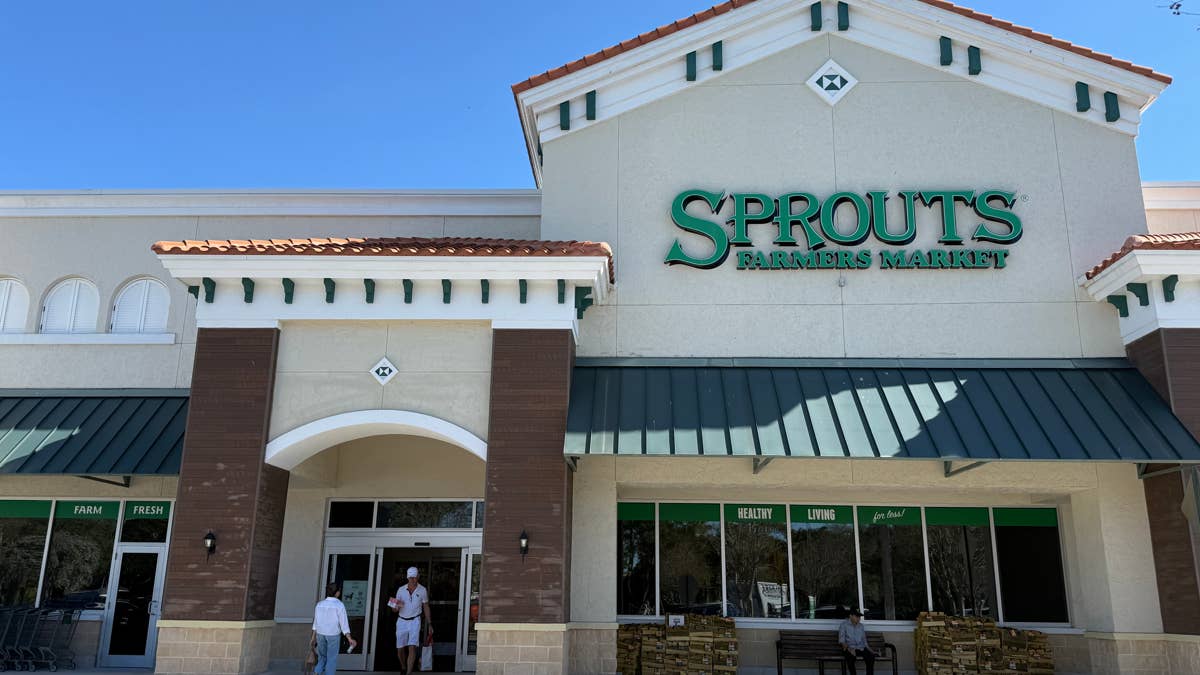
Sprouts Farmers Market is expanding a core service for customers after a recent drop in sales.
The grocery chain, which operates over 500 stores in 25 states, saw its comparable store sales decline by 1% in the second quarter of 2026, its latest earnings report revealed.
The decline comes after it rolled out selective price cuts and increased promotions in its stores earlier this year. In the second quarter, it also added 1,300 new products to its shelves, including options that are seed oil-free or contain added fiber and protein, appealing to health-conscious customers.
“The consumer environment remains challenging, with customers continuing to make thoughtful choices around their healthy grocery spend,” Sprouts CEO Jack Sinclair said on a July earnings call. He flagged high fuel prices and food inflation as factors affecting customer behavior.
Read more: Kroger makes a tough decision as customers turn to rivals
Sprouts expands same-day delivery options for shoppers
As Sprouts struggles to lift its sales, it has expanded its same-day delivery options after seeing its online business resonate well with shoppers.
The new partnership allows customers to shop from more than 500 Sprouts locations nationwide for same-day delivery through Shipt, according to a recent press release.
To further draw in customers, Shipt is offering Sprouts shoppers two limited-time discounts. Between Oct. 8 and Nov. 7, eligible customers who sign up for Shipt can now get four months of membership for $0.99 per month; the usual membership price is $10.99 per month.
Also, shoppers can get 50% off their first Sprouts order of $35 or more through Shipt with code SPROUTS50.
The new partnership comes after Sprouts Chief Operating Officer Nick Konat said on the company’s July earnings call that the grocery chain is seeing success with its other same-day delivery partnerships with Instacart, DoorDash, and Uber Eats, despite economic headwinds pressuring consumer spending.
“We’re seeing both our delivery and pickup businesses perform well,” said Konat. “The e-commerce customer for us is an omni customer. For the most part, the vast majority of those customers shop both channels, and they’re our highest-value customers. The more we grow that customer and business, that’s a very good thing for us.”
He said he believes Sprouts is succeeding in this business amid a challenging macroeconomic environment because it offers “a lot of things that customers really want and need that they can’t find anywhere else.”
Sprouts faces growing competition from grocery giants
Sprouts’ latest move comes as several major grocery rivals expand their same-day delivery options.
Walmart, which, according to Numerator data shared with TheStreet, was the No. 1 grocery retailer by market share in the second quarter, expanded its 30-minute-or-less delivery across 33 U.S. markets in May and later extended it to 38.
Amazon, another growing rival in grocery retail, also announced plans in May to roll out its 30-minute delivery service on thousands of groceries and essentials to dozens more U.S. cities by the end of this year.
Costco, which Numerator found to be the No. 2 grocery retailer by market share, expanded same-day delivery via Uber to 47 U.S. states, up from 17. It also began offering same-day delivery through the DoorDash app.
Online grocery shopping is gaining traction among U.S. consumers this year, according to a June survey from Coresight Research, as reported by The Shelby Report.
More Grocery News:
- BJ’s Wholesale customers will face a significant store change
- Kroger loses $12 billion as customer behavior takes a turn
- Publix struggles to reverse concerning customer behavior
The survey found that 56.3% of U.S. consumers purchased groceries online in the past 12 months, up from 53.6% in 2025. Walmart ranked as the most-shopped online grocery retailer at 59.2%, followed by Amazon at 45.1%, Target at 31.3%, and Costco at 21.3%.
In a statement to The Shelby Report, Sujeet Naik, an analyst at Coresight Research, said regional grocers shouldn’t try to match the major players in grocery delivery.
“I don’t think independent and regional grocers should try to beat Walmart or Amazon at their own game because that’s going to be incredibly difficult,” said Naik. “Those companies have enormous scale and can invest much more heavily in technology, delivery and memberships.”
Naik said that regional grocers should instead “lean into what makes them different,” such as their fresh food offerings, local products and close community relationships. He also said that many customers value consistency more than speed.
“For most independent grocers, I don’t think the goal should be to promise groceries in 30 minutes,” he said. “The bigger opportunity is to offer a dependable online experience with reliable delivery and convenient pickup options. For many customers, consistency is actually more valuable than shaving another 20 or 30 minutes off the delivery time.”
Related: Kroger loses $12 billion as customer behavior takes a turn