T-Mobile made a significant change last week by rolling out new wireless plans under its new “Nothing” initiative to attract price-conscious customers. However, its new offerings lack two generous customer perks that were once included in a few of its plans.
The carrier’s “Nothing” initiative lets new and existing customers pay $0 upfront for a new smartphone. As part of the initiative, T-Mobile updated its equipment installment plans (EIPs) to 36-month device financing, replacing the previous standard 24-month term and offering lower monthly payments for customers.
In addition to refreshed EIP options, the carrier now offers Essentials 2.0, Experience More 2.0 and Experience Beyond 2.0 wireless plans, which include its updated device financing.
T-Mobile’s new plans lack previous phone upgrade perks
While some of these new wireless plans offer customers generous perks such as unlimited premium data, a 5-year price guarantee, and Netflix on Us, they are missing T-Mobile’s yearly and two-year upgrade benefits.
T-Mobile’s previous Experience Beyond plan included a true yearly upgrade perk, allowing customers to upgrade their phone every 12 months. To become eligible for it, customers were required to purchase a new phone on a plan that offers it, enroll in an EIP, and remain on it for at least six months.
Before becoming eligible for an upgrade, customers had to pay off 50% of the phone’s cost and trade in a device that was in good working condition.
Related: T-Mobile changes how customers can finance phone upgrades
This perk was also included in several legacy offerings such as Go5G Next and Go5G Plus. T-Mobile’s original Experience More offered a similar perk, but it was for two-year phone upgrades.
The carrier’s new Experience Beyond 2.0 plan replaces yearly upgrades with an “Early Upgrade” option, according to a recent report from PhoneArena. Additionally, Experience More 2.0 doesn’t include two-year upgrades, unlike the previous plan it replaced.
T-Mobile’s decision to exclude these previous upgrade options from its new plans comes as its new device financing agreements now last 36 months. This means that paying off 50% of the cost of a new phone under these contracts now takes 18 months instead of 12.
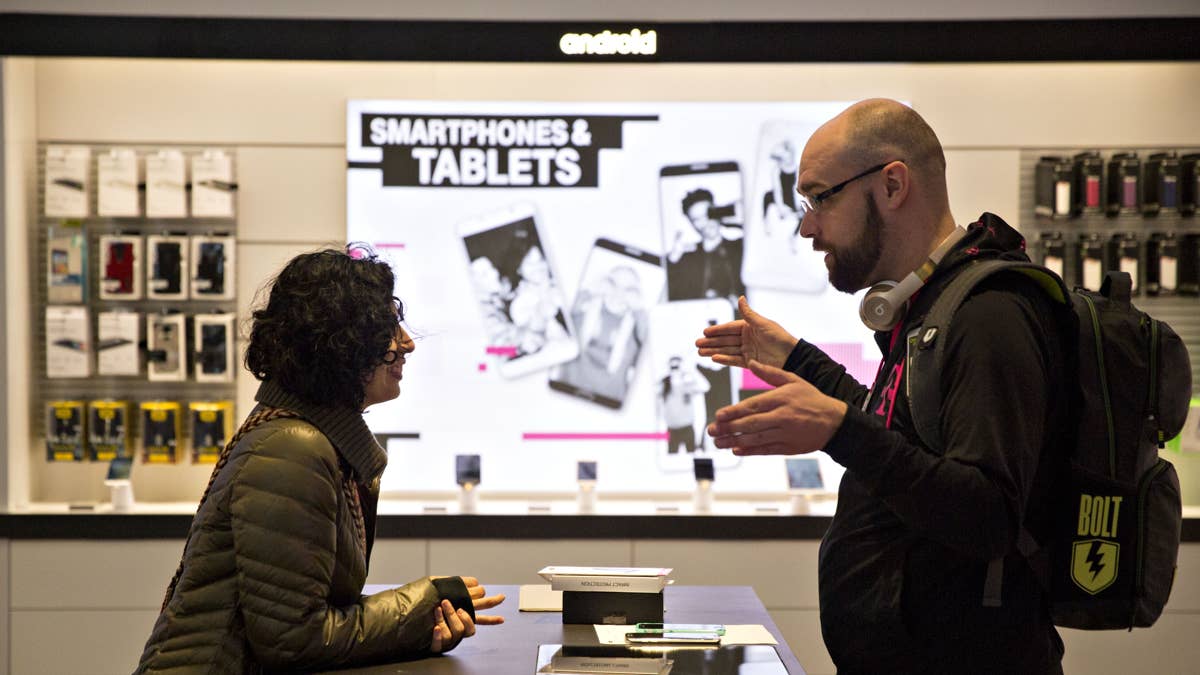
T-Mobile‘s latest move aligns with shifting phone upgrade trends
T-Mobile’s updated EIP options and upgrade perk changes also come at a time when consumers nationwide are holding onto their devices longer as smartphone prices increase.
Americans keep their phones for roughly two years and five months on average, longer than the yearly upgrade cycle, according to a survey from Reviews.org in September last year.
Prices for new phones are expected to continue climbing this year, affecting upgrade cycles, as the global memory chip shortage drives up component costs.
Smartphone prices are expected to spike by 13% this year compared with 2025 levels due to the chip crisis, according to a report from research and advisory firm Gartner in February.
T-Mobile CEO Srini Gopalan acknowledged rising smartphone prices during an earnings call on July 23, while reaffirming the company’s decision to scale back free phone deals and device subsidies for customers.
“What we’re seeing is clearly the memory price increases are resulting in higher prices for smartphones across the board,” said Gopalan. “Our intention, consistent with what we’ve said, is not to increase our subsidy levels. That’s going to mean that customers will have to pay more. That’s just the result of that dynamic.”
More T-Mobile News:
- T-Mobile adds new internet plan restriction customers will feel
- T-Mobile drops new free perks for customers as pressure builds
- T-Mobile quietly expands a convenient service for customers
As this reality unfolds, in the first quarter of 2026, global smartphone shipments fell by 4% year over year; however, Apple and Samsung bucked the trend with soaring shipments, recent research from Omdia found.
Runar Bjorhovde, principal analyst at Omdia, said in a July press release that shipments are expected to decline further amid this year’s holiday season.
“We anticipate the sharpest volume declines to hit in the upcoming two quarters, where normal seasonal demand peaks – driven by new launches, holidays and shopping festivals – collide with constrained memory chip supply,” said Bjorhovde.
He said that vendors are “expected to lean further into the higher price segments to capitalize on customers seeking device upgrades in 2026’s sales season.” However, this move will come with a significant tradeoff.
“While moving upmarket protects margins and revenue, vendors offer fewer options to budget-constrained consumers,” said Bjorhovde. “Many mass-market buyers will be forced to delay purchases, downgrade expectations, utilize financing, or opt for refurbished devices.”
Related: T-Mobile customers face new restriction when paying bills