T-Mobile, which is owned by Deutsche Telekom, continues to cut a key part of its operations after months of significant workforce changes.
As the carrier undergoes a digital transformation, announced by CEO Srini Gopalan late last year, it has quietly conducted several rounds of job cuts in December, March and April, affecting employees in departments such as consumer and retail, sales, etc.
It also reportedly began shrinking its authorized retail location footprint earlier this year, resulting in additional layoffs.
Amid these workforce changes, Deutsche Telekom revealed in its second-quarter 2026 earnings report that T-Mobile’s U.S. headcount dropped from 70,036 employees on Dec. 31, to 65,365 by June 30, “primarily due to the impact of the 2025-2026 Workforce Transformation.”
T-Mobile closes more stores and lays off employees
T-Mobile is officially continuing to enforce these changes as it plans to lay off 77 workers in Washington state, according to a WARN notice it filed with the state Employment Security Department on Aug. 21.
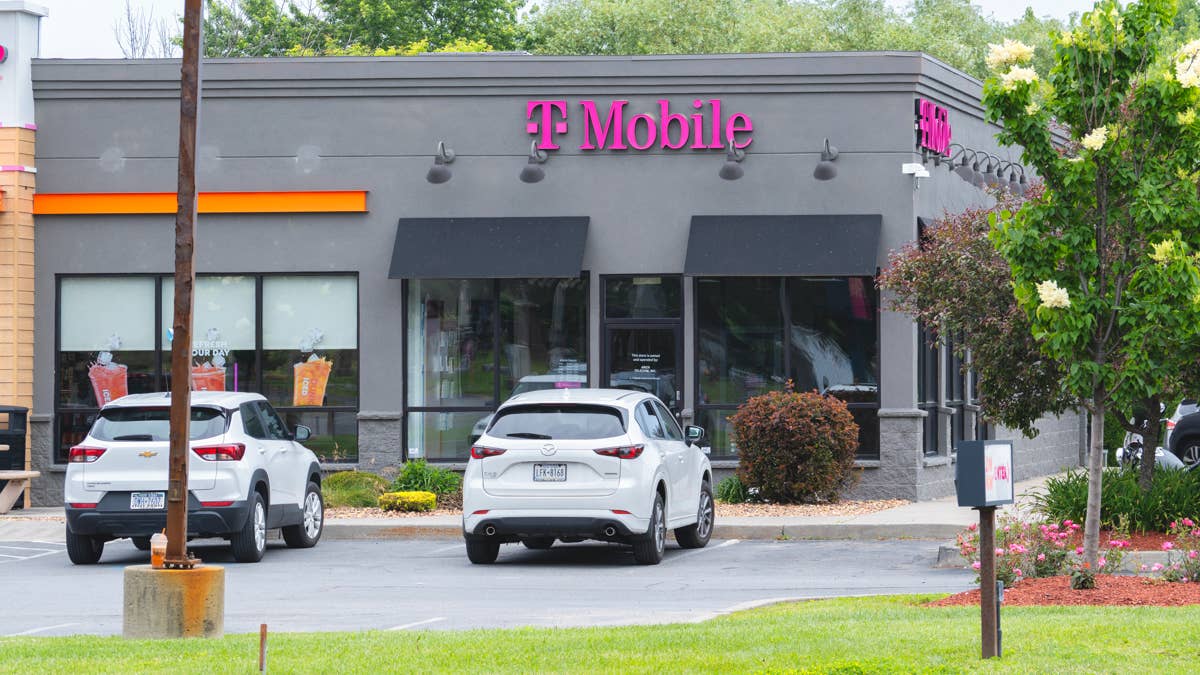
The latest round of job cuts stems from several closures, including six retail locations and one corporate office.
The layoffs are expected to occur between Sept. 21 and Nov. 18, and they will impact employees such as managers, directors, mobile experts, and senior analysts in departments including technology, HR, product, and engineering.
Related: T-Mobile makes striking workforce shift amid fight for customers
In the notice, T-Mobile clarifies that these job cuts are expected to be permanent. It also states that a “subset of the layoffs are due to relocation,” as in some cases, employees have been offered the opportunity to relocate.
The move from T-Mobile comes as layoffs are on the rise nationwide. Employers in the U.S. announced 52,881 job cuts in August, up 58% from the 33,429 cuts announced in July, according to recent data from Challenger, Gray & Christmas.
Approximately 4,113 of the layoffs announced in August were from the telecommunications industry.
Matt Walker, chief analyst at MTN Consulting, said in a report from Mobile Europe in May that artificial intelligence has recently become the leading reason for layoffs in the telecom industry as more companies aim to cut costs.
“The telco workforce has been shrinking for years due to layoffs, retirement and attrition, while the employee profile is also changing,” said Walker.
“Telcos increasingly value skills in software, cloud, AI and quantum computing,” he continued. “Operators have long automated incrementally, but many now frame their strategy explicitly around AI as AI has become a major theme in the telco C-suite.”
T-Mobile doubles down on T-Life transformation
T-Mobile’s recent cuts also come as it ramps up efforts to encourage more of its customers and employees to use its T-Life app to streamline operations, another change that reflects the company’s ongoing digital transformation.
This includes rolling out a digital switching tool on the app late last year. The company also plans to make customers and employees 100% dependent on the T-Life app to process phone upgrades and add new lines.
In July, T-Mobile also reportedly stopped allowing customer support representatives to manually process bill payments and set up autopay for customers. This change requires customers to complete these tasks in the T-Life app or on the T-Mobile website.
More T-Mobile News:
- T-Mobile customers face new restriction when paying bills
- T-Mobile excludes 2 generous customer perks from new phone plans
- T-Mobile faces backlash over new customer support restriction
More recently, the company has begun requiring customers to use the T-Life app to check in at a few of its stores.
In a memo sent to employees in May, T-Mobile Chief Operating Officer Jon Freier said that the company’s “T-Life transformation” is about “perfecting the customer experience and modernizing ways of serving customers.”
Freier also said that this transition is successfully reducing reliance on customer service representatives to set up accounts for new customers.
“There are 30% fewer calls to Customer Care when a new customer joins T-Mobile through T-Life,” he said.
As the company leans further into becoming digital-first, it expects to achieve about $3 billion in savings by 2027 from its AI and digital initiatives.
Related: T-Mobile has a new rule for customers entering its stores