Trade policy almost never decides whether a thing gets built. It decides where.
That distinction gets lost in most tariff coverage, which grades the policy quarter by quarter on the sticker price of a sedan. The slower story gets written in concrete and steel, in decisions that take three years to pour and 20 years to unwind.
The American auto industry has been living inside that slower story since April 2025, when a 25% duty landed on imported vehicles. South Korean cars saw the rate cut to 15% in November under a trade deal, which softened the blow without changing the underlying problem.
Every automaker with a foreign assembly base has been running the same arithmetic ever since. Pay the duty on every unit you ship in, or move the line.
Most have answered in increments, a shift here, a second line there. One company has answered at a scale that reorders the map of American manufacturing, and it did so this week in a single interview.
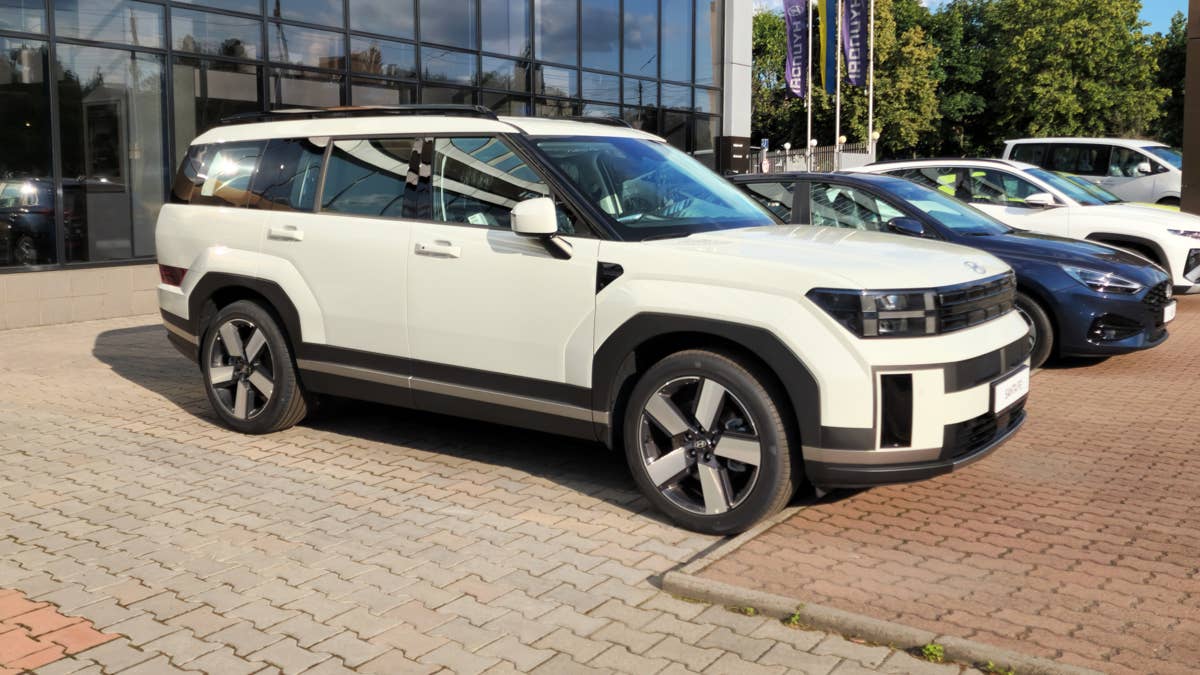
Hyundai Motor (HYMTF) is weighing an expansion of its Georgia Metaplant that would lift annual capacity from 500,000 vehicles to between 700,000 and 800,000 by 2028, CEO José Muñoz told CNBC. At the top of that range, the Bryan County site would become the largest vehicle assembly plant in the United States by capacity, passing facilities run by Tesla (TSLA) and Toyota (TM).
Hyundai walked the certainty back slightly after the interview ran, saying the plans are under consideration and not yet confirmed, reported Quartz. The strategic direction, though, is not in dispute.
Why tariffs pushed Hyundai deeper into Georgia
Muñoz was blunt about the cause. Tariffs “are helping accelerate our localization plan. That’s very, very simple,” he said, according to CNBC.
That is a rare piece of candor from a CEO. Most executives describe onshoring as a long-planned strategic vision rather than a response to a tax they cannot avoid.
More Automotive:
- Ford is done chasing the budget buyer
- Aston Martin just built a $2 million bet on survival
- Waymo doubles down on the cars America won’t let you buy
Muñoz also noted that the buildout started before the tariffs arrived, which is true and worth keeping in mind. Hyundai broke ground in Ellabell in October 2022 and made its $21 billion American manufacturing pledge in March 2025, weeks before the auto duties took effect.
The potential capacity increase now sits inside a larger $26 billion US investment plan running through 2028, Muñoz told CNBC. The company wants at least 80% of the vehicles it sells here built here by the end of the decade, up from roughly 40% in 2024.
Related: Viral Ford video shows why new doesn’t always mean better
That target is the part worth circling. Hyundai Motor Group has been taking share in a market that is barely growing, climbing from 8.4% of US sales in 2020 to 11.2% last year, according to figures Mobility Global supplied to CNBC.
Selling more and more cars in America while importing a large share of them is precisely the position an auto tariff is designed to punish.
What the tariff bill actually costs Hyundai
The financial case for all that concrete shows up plainly in the earnings.
Hyundai absorbed an additional 4.1 trillion won, roughly $2.9 billion, in tariff-related costs across 2025, reported Just Auto. Operating profit fell 19.5% for the year as a result.
The bleeding has slowed but not stopped. Hyundai paid about 900 billion won in tariffs in the second quarter of this year, roughly matching the first quarter, chief financial officer Lee Seung-jo said, according to The Investor.
When I lined those quarterly payments up against the plant’s capital cost, the logic stopped looking like a bet and started looking like arithmetic. Four quarters of tariff payments at that run rate approach $2.5 billion a year, which is a meaningful fraction of what the entire Metaplant cost to build.
The trend line is the useful part. Tariff payments ran about 1.8 trillion won in the third quarter of 2025 and 1.5 trillion won in the fourth before falling to roughly 900 billion won in each of the past two quarters, Lee said, per The Investor.
That is what localization looks like on an income statement. Every model that moves from a Korean line to a Georgia line permanently removes a slice of that number.
Second-quarter operating profit still fell 20.8% to 2.85 trillion won even on record revenue, and tariffs were one of three drags cited alongside a supplier fire and higher raw material costs. Duties a company can engineer around. The other two it cannot.
How the Metaplant compares with Tesla and Toyota
The scale here is easy to skim past, so it helps to anchor it.
- The Metaplant opened in March 2025 with a stated capacity of 500,000 electric and hybrid vehicles a year for the Hyundai, Kia and Genesis brands, according to Hyundai’s newsroom.
- Toyota’s Georgetown, Kentucky, plant, its largest anywhere, builds roughly 550,000 vehicles a year, according to Manufacturing Digital.
- Tesla’s Texas Gigafactory can produce about 375,000 vehicles annually, reported IEEE Spectrum.
- US light-vehicle sales totaled 16.2 million units in 2025, according to NADA.
Put those together and the number stops being abstract. At 800,000 units, a single campus in a rural Georgia county would build roughly one out of every 20 new vehicles sold in America.
What struck me in my analysis of the site’s staffing plan is how far the payroll math runs past the factory gate. The 500,000-unit version already calls for more than 8,500 workers on the megasite plus another 6,900 at nearby suppliers, according to HMGMA.
What Hyundai’s 2028 target means for your portfolio
The Metaplant is already running three models, having added the Kia Sportage Hybrid in June 2026 to the Ioniq 5 and Ioniq 9, according to HMGMA. Muñoz said Hyundai is separately evaluating capacity for body-on-frame trucks and SUVs somewhere other than Georgia.
For investors, the tell is the direction of the tariff line item rather than the headline capacity number. Capacity announcements are cheap and revisable. A falling duty bill against a rising North American build rate is the thing that actually shows up in margin.
Hyundai is guiding to a full-year operating margin of 6.3% to 7.3% and expects a second-half recovery. Watch whether the third-quarter tariff figure lands below 900 billion won.
For buyers, the effect is quieter and slower. Automakers have absorbed most tariff costs rather than passing them through at the register, which is a margin story now and a pricing story later if duties stay.
The uncomfortable part is that none of this reverses on a political timetable. A plant sized for 800,000 units in 2028 will still be sitting in Bryan County in 2040, whatever the tariff schedule looks like by then.
That is the thing about a wall built to redirect capital. The capital shows up, pours a foundation, hires 15,000 people, and stops caring who built the wall or why.
Related: Waymo doubles down on the cars America won’t let you buy