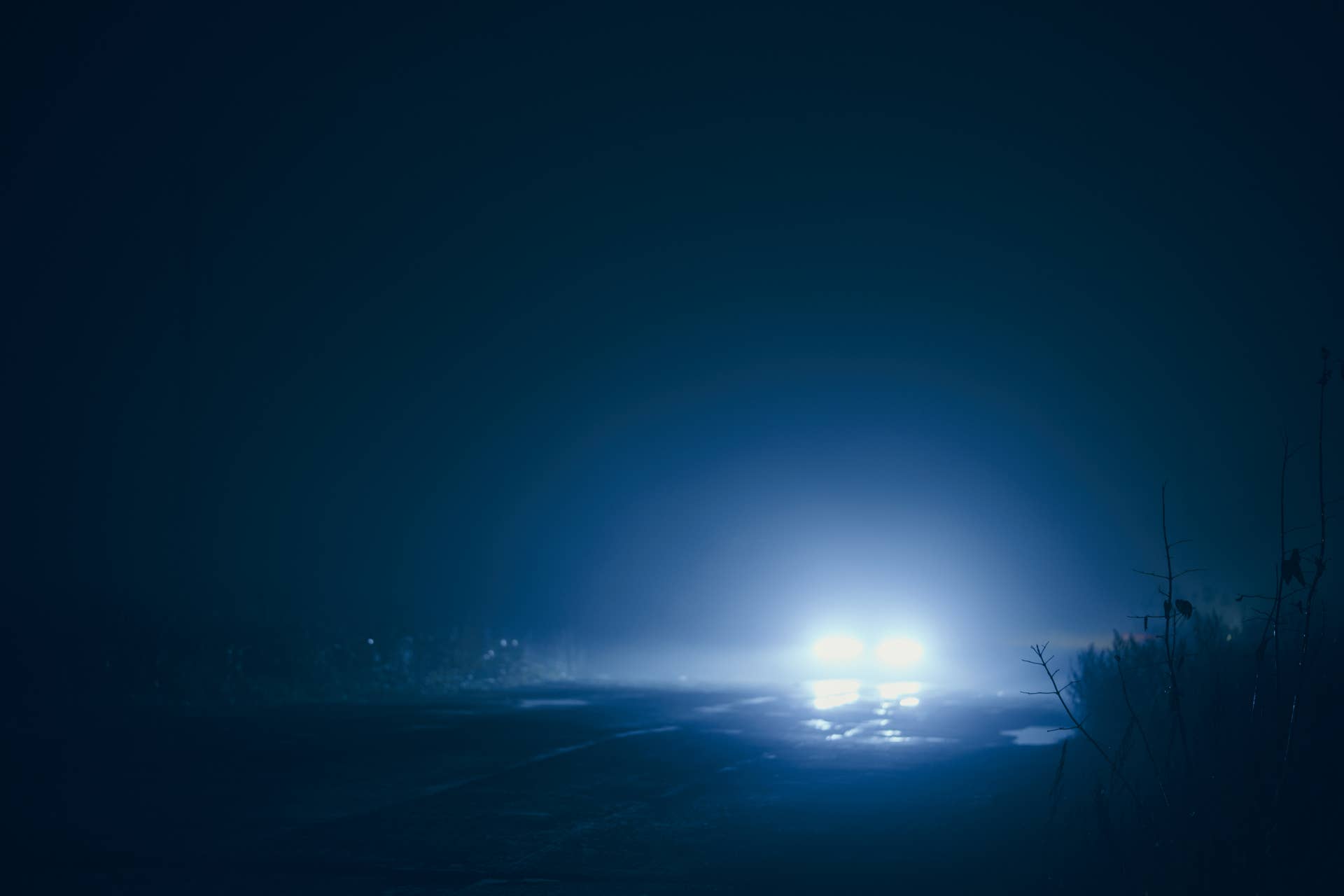
Driving at night is tough enough without having to worry about being blinded from behind by a car whose LED lights are too bright. But in recent years, carmakers have insisted on making their lights ever brighter, much to the frustration of drivers across the country.
Two years ago, Tesla notified the National Highway Traffic Safety Administration (NHTSA) that the headlights on 19,900 of its Model 3 and Model Y vehicles exceeded the maximum brightness allowed by law by nearly double in the most extreme cases.
But instead of fixing it, Tesla filed a petition saying it shouldn’t have to fix the issue because the defect was “inconsequential” to safety, according to TheDrive.
A few weeks ago, the NHTSA denied that petition, and this week it officially issued a recall for more than 20,000 vehicles.
NHTSA recalls Teslas over headlights that are too bright
Headlights that are too bright have become so ubiquitous that they are now a meme on social media.
But the NHTSA didn’t find anything funny about Tesla’s headlight error. It ordered the company to recall 20,349 Model 3s and Model Ys built between 2017 and 2023 because the company delivered them with LED lights it knew were too bright.
According to the petition Tesla filed, the headlights were too bright in specific zones that were “positioned off the roadway both horizontally and vertically, keeping [them] outside of the driver’s or other road users’ natural line of vision,” so the company didn’t really need to fix the issue.
The NHTSA disagreed, explaining that “certain weather conditions such as rain, snow, and fog could result in light from the noncompliant lamps causing veiling glare to the driver or other road users driving in proximity of the vehicle having noncompliant lamps.
“In determining inconsequentiality of a noncompliance, NHTSA focuses on the safety risk to individuals who experience the type of event against which a recall would otherwise protect,” the NHTSA said.
“While [there are] no reports of glare associated with [Tesla] vehicles, the absence of complaints does not mean vehicle occupants have not experienced a safety issue, nor does it mean that there will not be safety issues in the future.”
The agency also disagreed with Tesla’s conclusion that the lights presented “no increased risk of glare for surrounding traffic,” as the purpose of having a maximum candela (the base measurement of luminous intensity) limit is to reduce the glare from oncoming or surrounding vehicles.
Carmakers switch from halogen to LED headlights
Cars used to have halogen headlights, but modern carmakers have replaced those with light-emitting diode (LED) ones.
Halogen lights are incandescent, but unlike the incandescent lights in your home, they contain halogen gas instead of argon gas. Meanwhile, LEDs produce light when an electric current passes through the diode.
LED lights are much brighter than halogen ones and last longer. There are also high-intensity discharge (HID) lights known as “xenon” lights that use gas like halogen lights, but produce more light with greater efficiency.
LED and HID lights produce the brightest outputs, according to W-Insurance, measuring between 3,000 and 4,000 lumens. A lumen is a different measurement from a candela; lumens measure light in all directions, while candelas measure light in a specific one.
Halogen headlights display less than half of that luminosity.
But it’s more than just the brightness. Human eyes are more sensitive to the bluish-tinged light in LED headlights than they are to the yellowish glow of halogen lights.
The issue has even reached the halls of Congress, as congressional Democrats recently introduced the LIGHT Safety Act to fix federal standards and establish a different maximum allowable brightness standard for low-beam headlamps.
Currently, headlight brightness can legally go up to 3,000 candelas, according to W-Insurance. But regulations haven’t changed in decades, even as carmakers have clearly made big changes.
How to deal with bright headlights
Until federal regulators step in, there are ways for drivers to protect themselves at night from headlights that are too bright, according to W-Insurance.
- Keep your windshield clean. A dirty windshield makes the glare from the headlights worse by scattering the light.
- Adjust your own headlights. If your headlights are aligned correctly, it should mitigate at least some of the glare from oncoming cars.
- Avert your gaze when it is safe to do so if the light from oncoming traffic is too bright.
- Wear protective eyewear at night.
But those tips are for when the bright lights are in front of you and do nothing to help if they are behind you, blocking your rearview and side mirror reflections.
That’s where the regulators are supposed to come in. But even if the congressional bill passes, standard changes won’t take effect for at least a year.
So for now, we are stuck on roads with LED lights that are causing drivers a lot of trouble.
Related: Viral Ford video shows why new doesn’t always mean better