Every few years, the biggest event in sports gets a little bigger. More teams, more matches, and more countries with a reason to tune in. Fans tend to notice the added drama. The people who run the sport tend to notice the added money.
For most of its modern history, the World Cup was a tidy 32-team event. That meant 64 matches and roughly a month of soccer before someone lifted the trophy.
That changed this summer. The 2026 tournament, running across the United States, Canada, and Mexico, expanded to 48 teams and 104 matches, the largest edition ever staged. It is the first World Cup hosted by three nations at once.
It also arrived with a Super Bowl style halftime show, ticket prices that rise and fall with demand, and an official resale market that takes a cut from buyers and sellers alike. For fans, that meant more teams to cheer and, often, much steeper prices. For the organization that owns the whole thing, it meant the richest tournament soccer has ever produced.
Now that machine may be about to grow again. Soccer’s world governing body, FIFA, is weighing whether to expand the World Cup to 64 teams for a future edition, a move that would stretch the sport’s signature event to a size it has never tried.
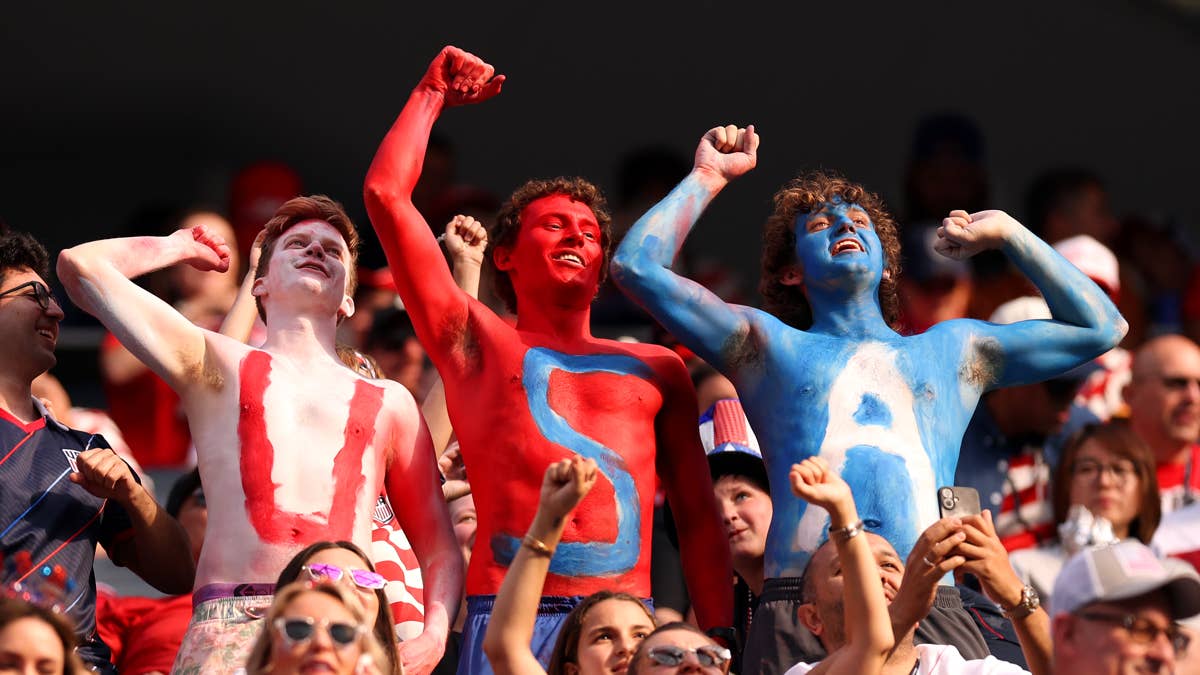
What a 64-team World Cup would actually change
The idea is not brand new, but it is drawing fresh attention. The 64-team concept was first floated by South American confederation CONMEBOL for the 2030 centenary tournament, and it was batted down. It is back because the people staging the current event keep hinting at it.
More Sports Business:
- Why brands are spending billions on 2026 FIFA World Cup
- Dick’s Sporting Goods CEO sees writing on the wall for consumers
- Wall Street likes what Draftkings just took away from itself
The United States can handle a 64-team World Cup and could bid to host the 2038 tournament, Andrew Giuliani, executive director of the White House Task Force on the World Cup, told the Press Association, according to Yahoo Sports. The latest expansion talk ties a bigger field directly to that 2038 race, according to GB News.
Here is what doubling down would look like in practice. A 48-team field already produces 104 matches. A 64-team field would push the match count higher still, adding more game days, more host cities, and far more television inventory to sell.
When I lined up the format changes against the revenue history, the pattern was hard to miss. A 64-team draw would slot neatly into 16 groups of four, a cleaner structure than the current setup. It would also mean even more matches, and every added match is another product FIFA can sell to broadcasters, sponsors, and ticket buyers.
Not everyone is sold. FIFA president Gianni Infantino has shown little enthusiasm internally for going past 48 teams, World Soccer Talk reported. European soccer body UEFA remains opposed, and the Asian Football Confederation has its own doubts, mostly about an already crowded match calendar.
Related: Why the 2026 FIFA World Cup is a billion-dollar retail boom
How the World Cup became a $9 billion business
Expansion has always been about more than soccer.
The last time the field grew this much was 1998, when the World Cup went from 24 to 32 teams, according to Business Standard. The leap from 32 to 48 teams for 2026 is the biggest structural change since, and that move grew the matches available to broadcasters by 47%, according to Caretta Research.
The money tells the rest of the story. FIFA expects to bring in roughly $8.9 billion from the 2026 tournament alone, the bulk of the nearly $13 billion expected in all from the four-year cycle, according to SportsPro. Prize money hit a record $871 million, the same outlet reported.
The ripple reaches well past FIFA’s own bank account. The 2026 event could generate around $41 billion in global economic activity and support more than 800,000 jobs, according to Bank of America Global Research, as covered by LGT Wealth Management.
The World Cup by the numbers
- 1998: the last big expansion, from 24 to 32 teams.
- 2026: a record 48 teams and 104 matches.
- 47%: the jump in match inventory from 2022 to 2026.
- $8.9 billion: FIFA’s projected revenue from the 2026 tournament, according to SportsPro.
- 64 teams: the field size now under consideration, GB News reported.
Even FIFA’s savings reflect the swing. The organization’s financial reserves fell from $3.9 billion after the 2022 Qatar World Cup to $2.7 billion by the end of 2025, according to Business Standard –– a loss the 2026 windfall is expected to rebuild.
What a bigger World Cup means for your money
You do not have to own a soccer team to have a stake in how big this gets. If you own an index fund, you probably already own a slice of the companies cashing in.
Fox (FOXA) holds the English-language United States rights and is airing 70 of the 104 matches across its networks, with every game on its Fox One streaming service, according to SportsPro. The value of those United States broadcast rights jumped 94% from the 2022 tournament, the same outlet reported.
Payments giant Visa (V) is the tournament’s official payments sponsor. Even fast food is in on it, with McDonald’s (MCD) tying a limited 2026 World Cup Happy Meal to the event, as TheStreet has covered.
Here is the part that matters for anyone treating this as a simple growth story. Bigger does not automatically mean richer per game. The value of each match’s broadcast rights actually fell 19% for 2026, and the total number of global broadcast deals dropped 11%, according to Caretta Research.
What struck me in that data is the timing problem. Kickoff times built for North American audiences land in the middle of the night across Europe and Asia, which cooled bidding from some broadcasters. A 64-team World Cup could add inventory faster than it adds value, at least on the media side.
Demand is the tell on the other side. Dynamic pricing pushed some 2026 matches to many times their Qatar 2022 cost, with seats for marquee games selling for hundreds or thousands of dollars, according to SportsPro.
The fan side scales up too. A bigger field means more travelers, more hotel nights, and more spending in host cities, and the 2026 event is already expected to draw about 6.5 million attendees, according to FIFA’s own impact study. That is the part of the story my colleagues have been tracking as a live test of the American consumer.
Why the next World Cup decision is worth watching
The decision is not imminent, and it is far from settled. FIFA has not committed to 64 teams, and the loudest voices in European soccer are still pushing back.
What to watch first is the tournament now underway. If the 2026 event hits its $8.9 billion target, it hands FIFA the cleanest possible argument for going bigger. If ticket backlash and soft hotel demand weigh on the final numbers, the case for 64 teams gets harder to make.
The next signal comes with the 2038 host race, where a United States bid would put the country in line to stage whatever the World Cup has become by then.
Either way, the tournament you watched this summer is no longer the ceiling. It may turn out to be the floor.
Related: World Cup spending may reveal hidden consumer trade