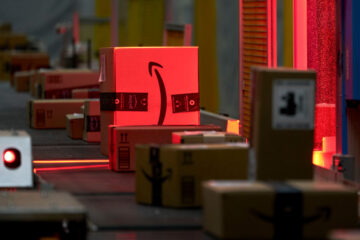
A Latin American e-commerce platform may have quietly discovered the formula for building a dominant online marketplace, growing faster than retail giant Amazon.
Many U.S. consumers may not yet be familiar with the company, primarily because it doesn’t currently operate in the U.S. market. However, across Latin America, it has become one of the region’s most influential technology companies.
Founded in 1999 in Buenos Aires, Argentina, MercadoLibre Inc. (MELI) is an e-commerce and financial services company operating in 18 countries throughout Latin America, with Brazil, Mexico, and Argentina serving as its largest markets.
Although it launched about five years after Amazon (AMZN), MercadoLibre has grown into Latin America’s largest publicly traded company by market capitalization, valued at nearly $90 billion and earning the nickname “the Amazon of Latin America” among many consumers and analysts.
Why MercadoLibre is often compared to Amazon
MercadoLibre’s business model shares several features with Amazon.
Its platform is accessible through both its mobile app and website, allowing users to buy and sell products through a marketplace that includes digital payments and integrated logistics services.
Through Mercado Pago, the company provides digital payment systems widely used across its marketplace and throughout Latin America. MercadoLibre has also built its own logistics infrastructure through Mercado Envios, enabling sellers to fulfill, ship, and track packages at a lower cost.
Like Amazon, MercadoLibre functions as a one-stop shopping platform offering a broad range of products and services. The company emphasizes localization by adapting its marketplace to each country’s language, payment preferences, logistics, and consumer habits, an approach that helped it scale across diverse markets.
MercadoLibre has also expanded into digital entertainment with Mercado Play, a streaming service comparable to Amazon Prime Video that offers movies, TV shows, and other digital content.
MercadoLibre’s strong revenue growth
MercadoLibre has maintained double-digit revenue growth over the past several years as e-commerce adoption continues to rise across Latin America.
In the fourth quarter of fiscal 2025, the company reported net revenue of nearly $8.8 billion, representing a 45% year-over-year increase. Operating income rose 8.4% during the same period.
For the full fiscal year 2025, MercadoLibre generated approximately $28.9 billion in net revenue, up 39%, while operating income climbed 22%.
The company reported 78 million monthly users and 121 million unique active buyers, according to its latest earnings report.
“Latin America offers one of the biggest e-commerce growth opportunities in the world. Penetration is roughly half the level seen in the U.S., U.K., and China, and we see no structural reason why the region should not reach similar levels,” said the company in its letter to shareholders.
To capture that growth, MercadoLibre said it has invested heavily in logistics infrastructure, product assortment, user experience, and its fintech ecosystem, initiatives aimed at strengthening the platform’s network effects.
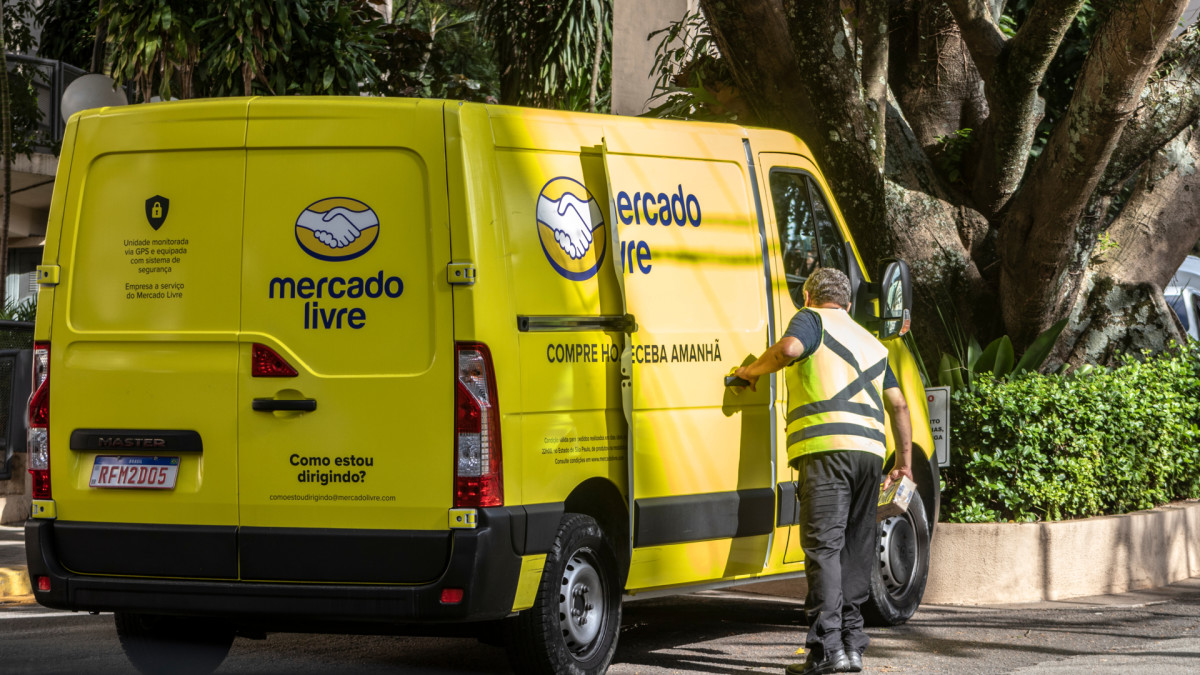
Amazon’s large-scale operations
Despite MercadoLibre’s rapid expansion, Amazon remains much larger in global reach and financial scale.
Amazon currently has a market capitalization of around $2.3 trillion and ships to more than 100 countries worldwide, according to its website.
In the fourth quarter of fiscal 2025, Amazon reported net revenue of $213.4 billion, up 14% year over year.
For the full fiscal year 2025, net sales increased 12%, surpassing $716.9 billion.
Although Amazon doesn’t break out Latin American revenue in its financial reports, its international segment generated $161.9 billion in revenue in 2025, growing 13.3%.
MercadoLibre and Amazon face slowdown despite e-commerce growth
The global e-commerce market was valued at $25.93 trillion in 2023 and is projected to grow at an 18.9% Compound Annual Growth Rate, reaching $83.26 trillion by 2030, according to Grand View Research.
However, even industry leaders are not immune to challenges.
More Retail Business News:
- Lululemon founder escalates fight over company’s future
- 106-year-old retail brand operator closing all stores in bankruptcy
- Apple closes all stores in fast-growing market
Despite the rapid growth of online shopping, economic uncertainty, evolving consumer spending habits, rising competition, and higher operating costs have begun to slow growth across the sector.
MercadoLibre faces margin challenges
MercadoLibre’s stock has declined 12.15% year to date as of March 9, 2026.
The company reported quarterly earnings per share of $11.03, slightly below analysts’ average expectations of $11.44, according to market data.
Despite the miss, Wall Street expectations remain bullish. The stock holds a strong buy consensus rating from 10 analysts. The average 12-month price target suggests potential upside of roughly 48%, with a projected price of about $2,625, according to analyst data compiled by TipRanks.
MercadoLibre also reported overall margin compression of 5% to 6% due to higher fulfillment and logistics costs, increased provisions for credit losses tied to new credit card issuance, elevated funding costs compared to the prior year, and continued investment in cross-border commerce.
MercadoLibre CFO Martin de Los Santos highlighted ongoing investments in financial services and direct retail operations during the company’s latest earnings call.
“The credit card, we are investing in Brazil, Mexico, and now Argentina, and the 1P, which is continuous its path to profitability, but still not profitable on its own,” said de Los Santos.
First-party (1P) sales refer to products sold directly by MercadoLibre rather than transactions between third-party sellers and buyers.
Will Healy, a technology and consumer goods market analyst at The Motley Fool, says MercadoLibre continues to capitalize on its first-mover advantage in Latin American fintech and e-commerce but still faces some challenges.
“[It] needs to reduce the number of loans that consumers do not pay back. Also, local e-commerce sites and e-commerce conglomerates from other regions could put a dent in the success MercadoLibre has had in selling online,” said Healy.
MercadoLibre has turned many of Latin America’s structural challenges into economic opportunities, Healy also wrote in a Motley Fool report. “Revenue growth remains rapid, and its valuation is reminiscent of Amazon when it was a smaller company,” he added.
Amazon navigates cost pressures
Amazon has also faced pressure in recent months, with its stock declining 7.5% year to date as of March 9, 2026.
The company reported quarterly earnings per share of $1.95, slightly missing analysts’ average expectations of $1.96, according to market data.
However, analysts remain optimistic. Amazon holds a strong buy consensus rating from 43 Wall Street analysts, with an average 12-month price target of $279.88, implying potential upside of around 31%, according to analyst data compiled by TipRanks.
In the fourth quarter of 2025, Amazon reported a worldwide operating income of $25 billion. However, about $2.4 billion of that total will be reduced by special charges related to tax disputes, severance costs, and asset impairments, according to the company’s latest earnings call.
The company also expects an additional $1 billion year-over-year cost increase in North America during the first quarter of 2026, largely due to higher spending on its Amazon LEO satellite project.
Amazon has also been heavily investing in Artificial Intelligence (AI) and advanced technologies.
Amazon Web Services (AWS) has recently become a major driver of profitability. In the fourth quarter, AWS segment sales increased 24%, the fastest growth in more than three years.
“This growth is happening because we’re continuing to innovate at a rapid rate, and identify and knock down customer problems,” said Amazon CEO Andy Jassy in the earnings report. “With such strong demand for our existing offerings and seminal opportunities like AI, chips, robotics, and low-earth orbit satellites.”
Amazon expects to invest about $200 billion in capital expenditures in 2026, anticipating a strong long-term return.
Amazon remains financially strong, notes Dan Romanoff, technology analyst at Morningstar.
“Revenue is growing rapidly, margins are expanding, the company has unrivaled scale, and the balance sheet is in great shape,” said Romanoff.
“The marketplace will remain attractive to third-party sellers, as Prime continues to tightly weave consumers to Amazon. We also see AWS and advertising driving overall corporate growth and continued margin expansion.”
The long-term question is less about whether Amazon can expand its AI footprint and more about execution risk, explained Steve Randall, financial expert at InvestmentNews.
“If enterprise AI adoption proves slower or more price-competitive than hoped, the same spending could compress returns for years,” said Randall.