For four years, I ran part of my family’s scaffolding business and had to plan shipping rental orders to our customers. When diesel and gas prices rose, that cut into the bottom line, as rental prices were pretty much an industry standard.
Since most rentals were long-term, the added cost was meaningful, but we eventually made it back. For shorter-term rentals, however, the added cost of delivering and picking up a very heavy product could eat up a significant amount of the profit.
In the trucking business, gas prices eat into profit margins, and intense competition makes it hard for smaller players to pass on those added costs to customers.
Diesel is the latest pressure hitting carriers that were already weakened by years of poor freight economics and rising operating costs. That has contributed to a massive wave of Chapter 11 and Chapter 7 bankruptcy filings.
“A new round of trucking bankruptcies has swept across the U.S. in recent weeks, with carriers ranging from small owner-operators to fleets operating dozens of trucks seeking Chapter 7 or Chapter 11 protection. At least 16 trucking, delivery, and transportation companies entered bankruptcy proceedings between late August and Sept. 21, according to federal court filings and carrier records reviewed by FreightWaves.
Trucking companies hit hard by gas prices
Gas prices are bad, and they may get worse.
“We’re now in a troubling crude oil supply situation, the worst it’s been since several months ago,” Jason Miller, professor of supply chain management at Michigan State University, told TT News.
The increases are dramatic.
“You’ve got diesel prices almost at double what they were a year ago,” Dean Croke, principal analyst at DAT Freight & Analytics, shared with TT News. “Your large contract carriers are somewhat insulated from this discussion about diesel prices. I think it’s an important distinction. But your spot market carriers are getting crushed.”
Smaller players, however, have been hit hard by this.
“Croke described small spot market carriers as enduring an existential crisis due to their limited cash flow and inability to add surcharges,” TT News reported.
The recent filings don’t prove that diesel prices caused each individual bankruptcy. They do, however, show how little financial room some smaller carriers have left as operating costs rise.
“The filings include Chapter 11 cases involving Globemaster Incorporated, Xoco Transport, Jett Transport & Materials, CLJ Transporting, Mill Creek Logistics-Illinois, RP Hay Hauling, Truckload LLC and Pacer Transport. Several smaller carriers filed Chapter 7 cases, which typically involve liquidation rather than reorganization,” according to Freightwaves.
The Chapter 7 filings include A&B Transportation Inc. of Lake Elsinore, California, Texas-based T Yorkman Trucking LLC of Midland, Blue Star Transports LLC of Garland, and Jackdollars Transport LLC of McKinney, a one-truck carrier company.
In California, Eulogia Logistics Inc. of Hacienda Heights filed Chapter 7 as did South Gate-based Rothchild Transportation LLC and Illinois’ C. Pride Transport Inc.
“The bankruptcy filings offer a snapshot of financial stress among small and midsize carriers. The geographically widespread filings show financial pressure continuing to surface across general freight, last-mile, agricultural and specialized trucking,” FreightWaves reported.
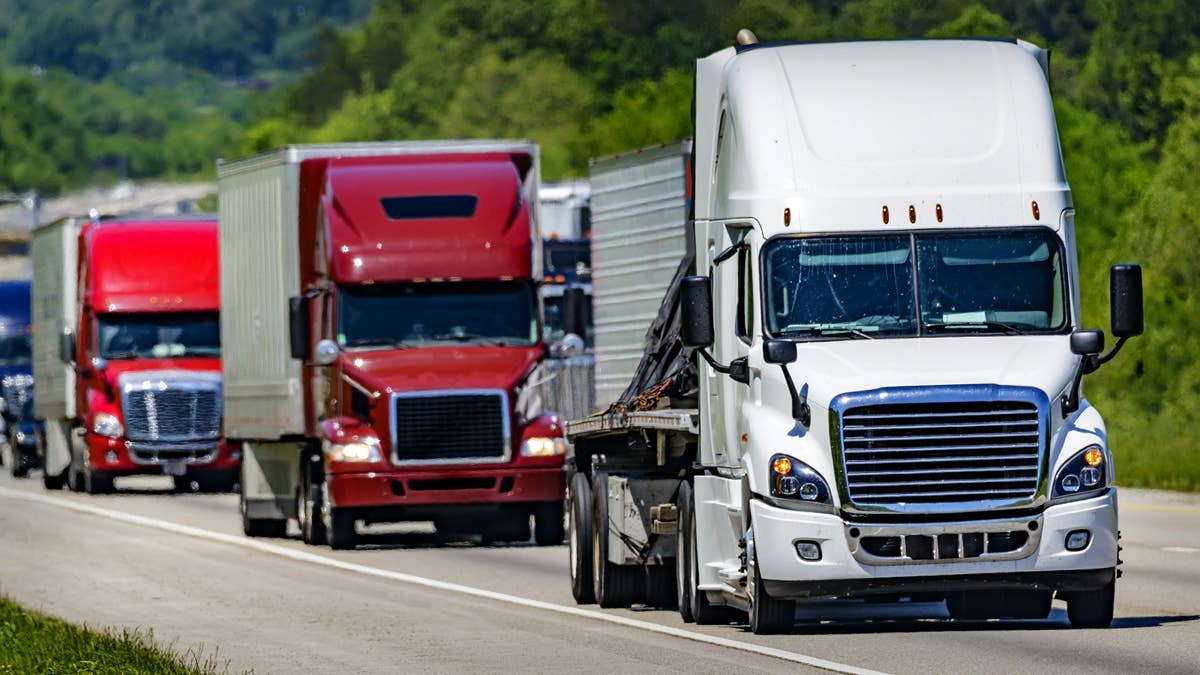
Shutterstock
Rising diesel prices hit consumers hard too
Higher diesel prices raise costs in every step of the food supply chain, from harvesting on farms to freight delivery that carries food to grocery stores, David Ortega, an economist at Michigan State University, told Reuters.
“The majority of our food moves on trucks and those trucks use diesel,” Ortega said.
Consumer food prices rose 2.7% year-on-year in August, according to the latest Consumer Price Index.
“Because diesel is used for many freight and delivery networks, higher diesel prices mean higher transportation costs for a long list of everyday goods. Some businesses have already passed on costs to consumers in the form of added fees on online orders and packages in the mail. And shoppers may see more and more sticker shock trickle down to store shelves,” the Associated Press reported.
Trucking costs were up in 2025
RTM Nexus CEO Dominick Miserandino shared that trucking brands were already on the edge.
“Trucking can be a brutal business because there isn’t much room for error. A carrier can be busy and still lose money if what it earns on a load doesn’t cover fuel, insurance, equipment, maintenance, and labor. After a long period of pressure, some companies simply don’t have enough balance-sheet cushion left to absorb another bad month,” he told TheStreet.
American Transportation Research Institute (ATRI) 2026 Analysis of the Operational Costs of Trucking shows that this year’s increases follow a year when trucking companies already faced across-the-board operating cost increases.
“The industry-average cost to operate a truck in 2025 was $2.336 per mile, 3.4% higher than the previous year and the highest per-mile cost in the report’s history. Excluding fuel, costs rose by 4.2% to $1.854 per mile,” the report showed.
Costs were up in all major line items in 2025, with the largest percentage gains in tolls (13.2%), repair and maintenance (8.6%), driver benefits (6.6%), and tires (6.4%). Only two line items rose at sub-inflationary rates: fuel and, for the second year in a row, driver pay.
ATRI, the research arm of the trucking industry’s largest trade association, has tracked carrier operating costs for decades.”
That changed dramatically in 2026, as diesel prices surged well beyond the increases carriers had absorbed in 2025.
“Faced with rising costs and stagnant rates, carriers executed their largest reduction in freight capacity since the start of the freight recession in 2022 – reducing truck counts by 2.4% and leaving another 10% of trucks unseated on average,” the ATRI report showed.
Related: Another airline cancels almost all U.S. flights due to low demand