The Transportation Security Administration (TSA) doesn’t have a fixed schedule for changing its rules. While some updates happen with relatively little notice due to security concerns, new technology, or federal requirements, others stay unchanged for decades.
That’s why, when a long-standing rule changes, it gets massive attention.
Last year, for example, the news that TSA was eliminating the shoes-off requirements after nearly 20 years exploded across the internet.
Now, the agency is making another major change at U.S. airports by lifting certain gate restrictions that have been in place for 25 years. The news is getting mixed reactions from travelers, as allowing non-ticketed visitors to pass the gates has its pros and cons.
TSA opens departure gates to non-flyers, but there’s a catch
The TSA recently introduced a new program called Gateside by TSA PreCheck, which brings back a popular airport feature that was eliminated after the 9/11 attacks, when TSA was officially established.
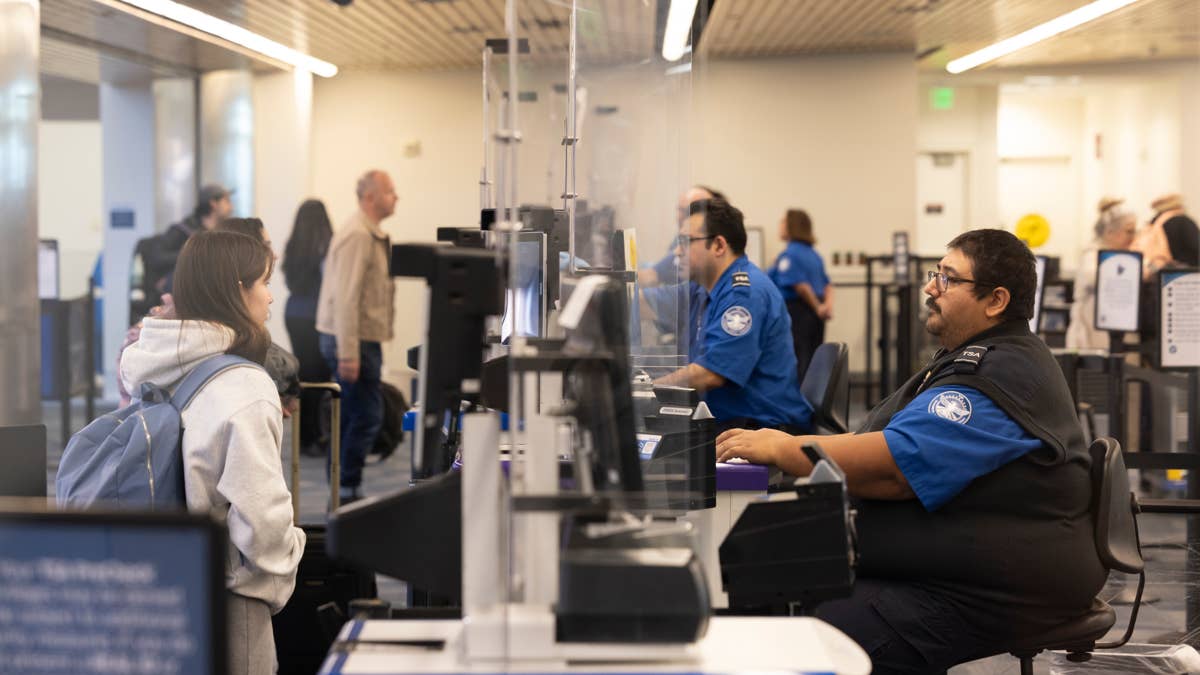
Under the new TSA Gateside program, people who are not flying but just want to say goodbye to their loved ones can access the terminal beyond airport security, but there’s a catch. This privilege is only for TSA PreCheck members, and they need to use their known travel number (KTN) to apply one to three days before their planned visits and receive approval before going to the airport.
The passes are valid for one calendar day, but reentries are allowed on that day.
TSA Gateside key details:
- Who can apply: Active TSA PreCheck members who do not have a plane ticket.
- How to apply: Request a single-day “TSA Gateside” pass online 1 to 3 days in advance.
- Who gets it: PreCheck members whose advance applications are approved for that specific date.
- Cost: Free (for active PreCheck holders).
- Key restrictions:
- Not for the general public: You must already hold an active TSA PreCheck membership; unvetted non-flyers are still barred.
- No spontaneous visits: You cannot show up on a whim — passes must be requested 24 to 72 hours beforehand.
- Very limited airports: Currently active at only 13 U.S. airports, with a gradual rollout planned for others.
- Full security screening: You must still pass through the TSA PreCheck security lane just like a flying passenger.
“As an exclusive benefit for our most trusted travelers, this new program makes it easier to return to the gate for welcomes and send-offs, meet friends during a layover, and enjoy dining and shopping along the way, bringing back the moments that once defined air travel,” the TSA stated.
A full guide on how and where to apply online can be found on the official TSA page.
Airports included in the program:
- Mesa Gateway Airport (AZA) in Arizona
- John Glenn Columbus International Airport (CMH) in Ohio
- Dallas Fort Worth International Airport (DFW) in Texas
- Detroit Metropolitan Wayne County Airport (DTW) in Michigan
- Wichita Dwight D. Eisenhower National Airport (ICT) in Kansas
- Indianapolis International Airport (IND) in Indiana
- Harry Reid International Airport (LAS) in Nevada
- Los Angeles International Airport (LAX) in California
- Bill and Hillary Clinton National Airport (LIT) in Arkansas
- Will Rogers International Airport (OKC) in Oklahoma
- Eppley Airfield (OMA) in Nebraska
- San Diego International Airport (SAN) in California
- Salt Lake City International Airport (SLC) in Utah
TSA is adding airports in a phased approach to expand access to the program.
Travelers react to TSA Gateside program
Travelers’ reactions across online travel communities are widely split, especially between casual and frequent flyers.
Supporters are thrilled about the emotional and practical utility of a non-ticketed pass to departure gates, while some frequent flyers and PreCheck members are highly skeptical, mostly worrying about potential gate crowding.
On the r/tsa Subreddit, travelers staying at terminal-connected hotels (like the Grand Hyatt at DFW Airport) are praising the program because it frees them from being “hotel captives.” It allows them to easily go airside to access a wider variety of dining options.
Here’s some of my other recent travel news coverage:
- Marriott finally fixes an annoying part of hotel rooms
- Delta Air Lines CEO signals major shift in what travelers pay
- Disney World quietly hikes key prices
Then again, users on the r/SaltLakeCity Subreddit have expressed concern that adding thousands of non-travelers to the dedicated TSA PreCheck lanes will slow down the expedited security lines, defeating the purpose of paying for the trusted traveler status.
Industry data confirm that airport crowds are much bigger nowadays than 25 years ago.
In 2000, the year before the 9/11 attacks, U.S. airlines carried a total of 665 million passenger enplanements for the full year, according to Bureau of Transportation Statistics (BTS) data. At that time, TSA did not exist yet, and airport security checkpoints were run by private contractors hired by individual airlines, so there is no equivalent “checkpoint screening” number for 2000.
Looking at overall passenger volume, U.S. carriers handled approximately 972 million passengers across the 12 months of 2025, according to monthly scheduled-service data from the BTS. That represents roughly 46% more passenger traffic than the 665 million recorded in 2000.
These figures are not a direct measure of how crowded a terminal feels, and they should not be interpreted as 46% more people physically standing in airports. Passenger enplanements count boardings, not unique travelers, and today’s airports also have more gates, terminals, and security capacity.
But the numbers clearly show that the U.S. aviation system is handling substantially more passenger traffic than it did before 9/11.
In 2024, TSA screened roughly 904 million individuals at airport checkpoints over the full year, setting a new all-time annual record. In 2025, it broke that record again, screening roughly 906.7 million, the second year in a row above 900 million. This occurred during a period when non-ticketed visitors were prohibited from passing through security checkpoints.
“Golden age of travel” vs. business strategy
While some major travel and news outlets focus on the cultural and operational impact, highlighting “golden age of travel” nostalgia and the attempt to bring back the moments that once defined air travel, others point to the business angle.
For example, an X post from Aakash Gupta, the tech strategist behind the Product Growth Newsletter, pointed out that according to data from Airports Council International, airports derive about 37% of their revenue from non-aeronautical/commercial operations.
By introducing programs such as Gateside to extend passenger dwell time, airports tap directly into proven industry mechanics. A simple 10% increase in secure-terminal dwell time has been shown to boost food and beverage sales by 8%, Gupta highlighted.
Related: Flight delays could cost travelers more starting in October