As summer travel season approaches, many travelers are wondering if airport security rules have changed recently. The Transportation Security Administration (TSA) frequently updates its policies, trying to improve passenger safety while minimizing inconveniences.
Over the last few years, the TSA has made significant changes, such as ending the controversial practice of making people take their shoes off when going through security. Later, it introduced an identity-verification fee for some travelers who arrive without a Real ID.
Then in August 2025, TSA banned three new items for checked bags: cordless curling and flat irons with gas cartridges, butane-filled curling and flat irons, and spare gas cartridges for these tools. The agency prohibited these items because they may create a fire risk in aircraft cargo holds, reported FlyMidAmerica.
More recently, news that TSA has changed its long-standing policy on medical marijuana has been hitting headlines. However, the majority of reports appear to be wrong.
Has TSA changed its policy about medical marijuana on planes?
No, it hasn’t. One of the leading cannabis outlets in the United States, Marijuana Moment, investigated the reports, reached out to the TSA, and compared the wording on the TSA’s website before and after the update, only to find out that nothing meaningful about the medical marijuana policy has changed.
Reports suggesting a new policy were based on website wording changes, not actual rule changes. TSA told the outlet it has only updated its website for clarity and that the policy remains the same.
“TSA’s policy on medical marijuana has not changed. Per TSA’s website: If any illegal substance or evidence of criminal activity is discovered during security screening, TSA will refer the matter to a law enforcement officer,” a TSA spokesperson said in an email to Marijuana Moment.
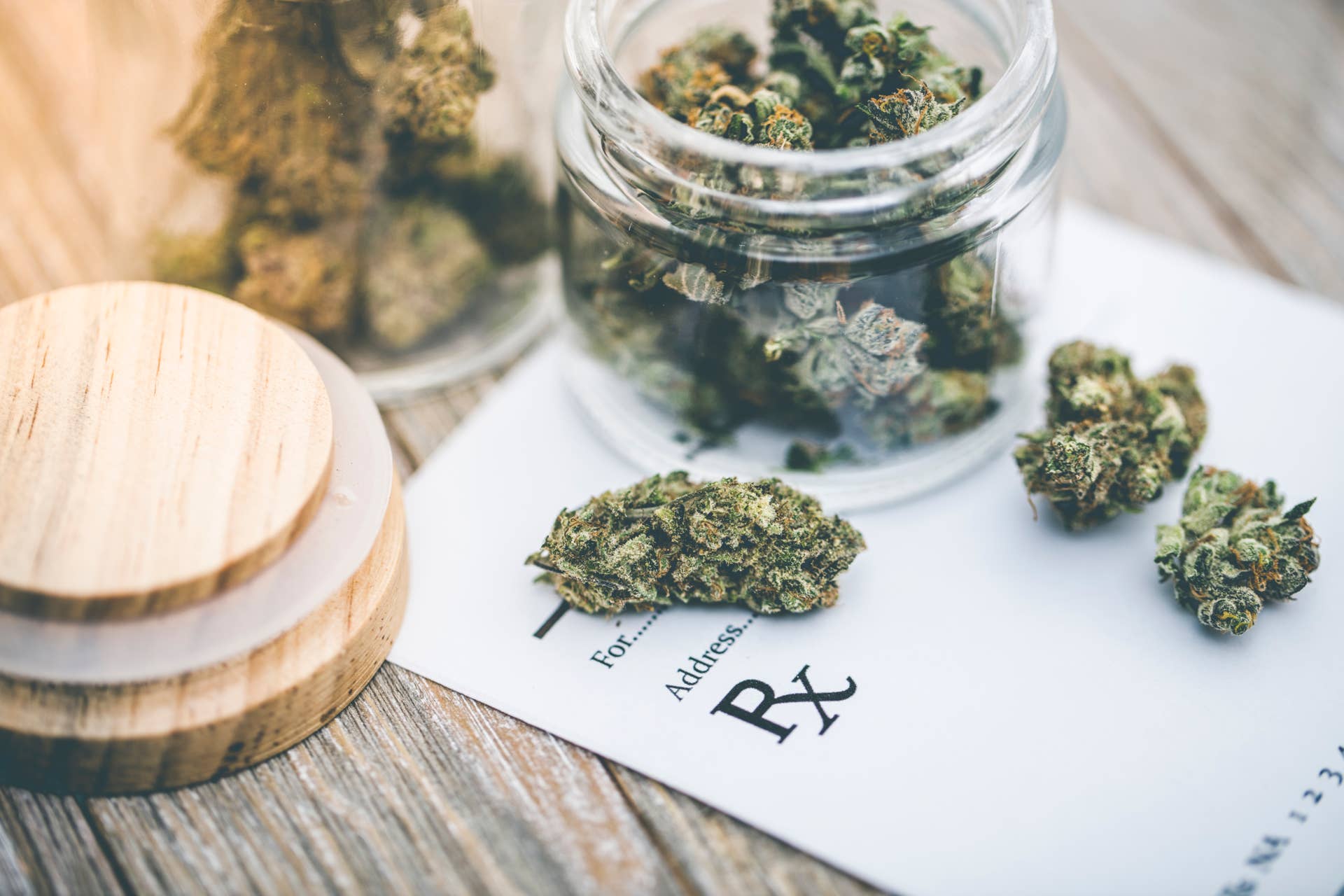
Can you bring medical marijuana on a plane? It depends
Under the current policy that has been in place since 2019, travelers may carry medical cannabis only in situations allowed by TSA rules and permitted by applicable laws.
While it is true that the agency’s listing for medical marijuana on the “What Can I Bring” section of its website was updated on April 27, there was no change in the policy.
TSA’s official website says travelers can bring medical marijuana in both carry-on and checked bags, but with special instructions.
“TSA’s screening procedures are focused on security and are designed to detect potential threats to aviation and passengers. Accordingly, TSA security officers do not search for illegal drugs, but if any illegal substance or evidence of criminal activity is discovered during security screening, TSA will refer the matter to a law enforcement officer,” reads the page.
However, below this summary, there’s a warning marked with a red triangle and exclamation points and written in Italics: “The final decision rests with the TSA officer on whether an item is allowed through the checkpoint.”
This suggests that while TSA officers are not looking for any illegal drugs or legal medication, travelers must take certain measures to minimize the chance of problems when bringing their prescribed marijuana on a plane with them.
“Ideally, try not to travel with marijuana until this is all settled,” Vincent Joralemon, director of UC Berkeley’s Life Sciences Law and Policy Center, told the LA Times. However, if you really must, you should familiarize yourself with certain policies and follow the rules.
If you need to fly with medical cannabis, experts recommend:
- Check the laws in both the state you are traveling from and the state you are flying to.
- Check whether your destination accepts out-of-state medical marijuana cards.
- Review your airline’s cannabis policy, as these can widely differ.
- Bring your medical marijuana ID card or prescription documentation.
- Keep products in their original packaging, if possible.
- Bring only the amount that you actually need for the trip.
Sources: Food & Wine, LA Times
For example, a traveler flying from Pennsylvania to Nevada with medical marijuana might be fine.
Pennsylvania operates a strict medical-only program, meaning patients can legally possess cannabis locally but face strict transport laws. However, upon landing in Las Vegas, the passenger is legally protected under state law, and the Nevada Cannabis Compliance Board explicitly says it offers reciprocity to some state residents.
Even so, travelers must remember that while both the origin and destination states have legal frameworks, the aircraft cabin itself remains strictly under federal jurisdiction, according to Americans for Safe Access.
Experts flag a few reasons passengers run into trouble when bringing medical marijuana:
- When the amount indicates commercial distribution or trafficking.
- When there is a broader law enforcement or security concern.
- When the traveler had otherwise been flagged.
Source: LA Times
Why did the TSA website update cause confusion?
I have been covering the cannabis industry for more than five years, reporting on regulatory updates, technology development, medical achievements and studies, and public sentiment. If there’s one thing that could be said about it, it is an ever-changing sector.
Last year, two major updates emerged, one of which focused on medical marijuana.
Namely, on Dec. 18, 2025, President Donald Trump signed an “Executive Order that will improve medical marijuana and cannabidiol research to better inform patients and doctors. The Order directs the Attorney General to expedite completion of the process of rescheduling marijuana to Schedule III of the Controlled Substance Act,” according to the White House.
Rescheduling could substantially reduce the major finance hurdle for qualifying medical cannabis operators (though broader implementation questions remain unresolved). For decades, this tax rule prohibited any business dealing in Schedule I or II substances from taking ordinary corporate tax deductions, meaning payroll, rent, marketing, and utilities could not be deducted.
The rescheduling marks a major milestone in the medical marijuana space, which could be why many reporters thought there was more to TSA’s website update than a simple wording change.
Related: American Airlines policy change could cost flyers big