The Transportation Security Administration (TSA) recently updated the technology it uses, making several important changes to the way air travelers go through airport security.
While TSA PreCheck is widely considered to have improved the airport experience, especially for frequent travelers, 58% of Americans still agree that getting through the airport is “too much of a hassle,” according to U.S. Travel and Ipsos survey.
The TSA constantly aims to improve this and make airport security less of a bother, while remaining focused on its primary objective: safety.
Recently, I reported on how the agency finally lifted a long-standing airport restriction after 25 years, opening departure gates to non-flyers. This decision, like many other TSA changes, largely divided air travelers, with a number of them thrilled about the convenience and emotional value of sending off loved ones. But others, particularly frequent flyers, expressed concerns about increased security line wait times and gate crowding.
Now, the latest TSA changes, aimed at improving the flying experience, are also showing some drawbacks for travelers.
TSA’s advanced 3D CT baggage scanners have ups and downs
In 2022, the TSA awarded a $781.2 million contract to Analogic to purchase and maintain hundreds of new Computed Tomography (CT) 3D baggage scanners.
As of July 6, TSA had installed 1,162 CT scanners at 296 airports, according to a TSA spokesperson, and as reported by AFAR.
These new machines will improve security threat detection while allowing passengers to keep more items inside their carry-on bags during checkpoint screening, according to an official TSA press release.
This, combined with the automated facial recognition system at airport checkpoints aims to make security screening faster and less reliant on manual checks.
The most noticeable change is a much easier screening process for carry-on luggage. Because 3D scanners give security agents a highly detailed view of the inside of a traveler’s bag, flyers don’t need to remove laptops, large electronics or approved liquids from their bags.
However, each of these technologies has drawbacks, as recently highlighted by Simple Flying and Fox 13.
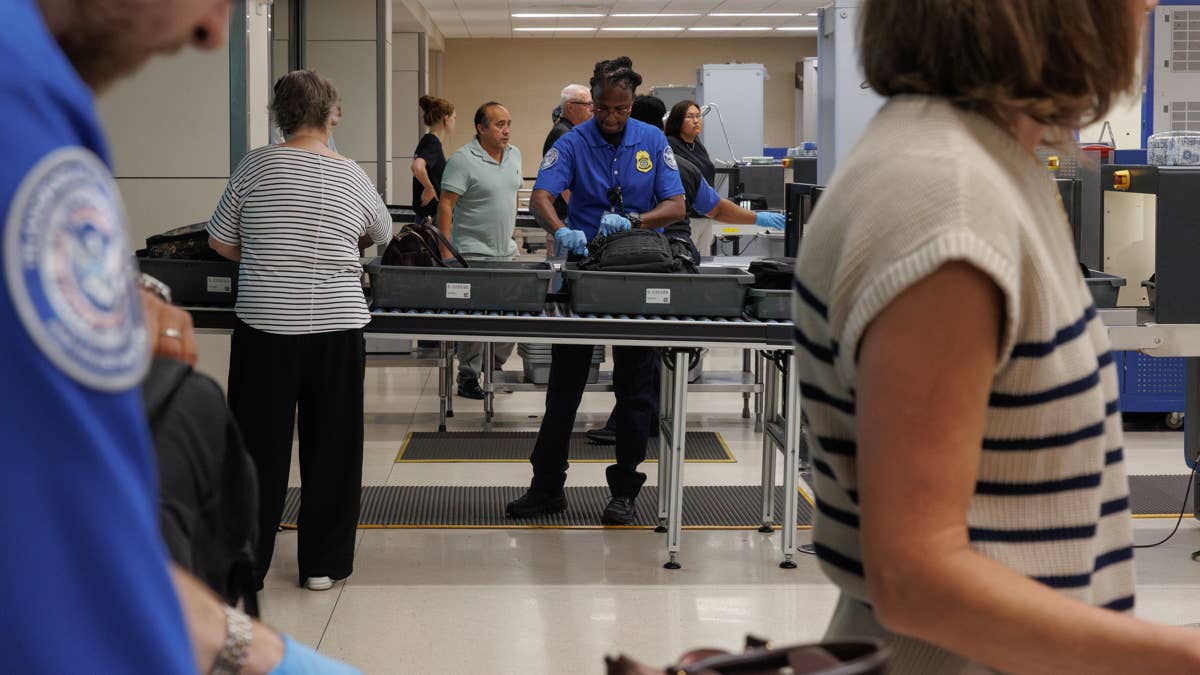
TSA’s advanced 3D CT baggage shortcomings:
- Stricter bag sizes: The new scanners have slightly smaller entry tunnels. This means soft or slightly oversized carry-on bags that agents used to overlook may not physically fit into the scanner, forcing you to go back and check your bag.
- Destroyed camera film: The stronger imaging technology can permanently damage or completely destroy unprocessed photographic film. Photographers must remove all film and request a hand inspection.
- Inconsistent rules across airports: Since the new scanners aren’t at every airport yet, you may leave everything in your bag on your flight out but still be forced to unpack on your return flight.
- No room for overstuffed bags: Standard carry-ons that fit official size limits can still get stuck if front pockets are jammed or expansion zippers are unzipped, forcing you to check the bag.
A spokesperson for the TSA in Florida, Daniel Velez, told Fox 13 that the 3-D X-ray scanners do have a smaller opening than the previous devices.
“This design is necessary to accommodate the advanced imaging technology and ensure optimal performance. TSA officers are available to assist travelers with larger items or special needs to help ensure a smooth screening process,” Velez said.
It is important to note that the size that airlines typically allow for carry-on items, which is measured as 22″ x 14″ x 9″, will fit in the new scanners, according to Simple Flying. The problem occurs when travelers bring slightly larger bags. In effect, the smaller opening also works as an informal check that luggage doesn’t exceed the size limit.
TSA’s advanced 3D CT baggage benefits:
- Leaving liquids and electronics inside bags: The new scanners can check bags without opening them, eliminating the need for travelers to unpack laptops and other electronic devices, or liquids before scanning.
- Faster checkpoint lines and fewer bottlenecks: Because travelers no longer pause to unpack and repack devices or toiletries at the conveyor belt, screening lanes can move faster during peak travel hours.
- Enhanced 3D threat detection with fewer physical bag searches: According to official TSA guidance, officers can rotate bag images 360 degrees on three axes. This detailed view improves weapon and explosive detection while reducing the need for manual bag searches or pat-downs.
- More flexible packing freedom: As highlighted by Simple Flying, flyers no longer need to pack around security convenience. Electronics and toiletries can be tucked deep inside carry-ons rather than kept right at the top for easy removal.
Here’s some of my other recent travel news coverage:
- Marriott finally fixes major pain point for key travelers
- Delta Air Lines quietly ends 17 routes while adding new flights
- Americans losing more protection over delayed flights
Travelers can refuse TSA facial recongition, but expect friction
Under my travel coverage for TheStreet, I reported in August 2025 on how the TSA is expanding facial recognition technology across U.S. airport checkpoints.
This automated system takes a real-time photo of a flyer to confirm their identity, replacing the long-standing practice of officers manually comparing physical IDs against faces. The main benefit of this shift is speed, as it automates identity checks to help move security lines along faster.
However, the system has major drawbacks regarding passenger privacy and data storage. While facial scanning is officially voluntary for domestic travelers, the TSA rarely makes this obvious, leading many flyers to assume the scan is mandatory.
Those who wish to avoid biometric tracking have the right to refuse the camera and request a standard manual check instead.
Despite this right, passenger sentiment remains fraught. Findings from the Algorithmic Justice League’s Comply to Fly report, an advocacy group’s survey, revealed that nearly 48% of travelers didn’t know opting out was possible.
One passenger testified that an agent became “visibly angry with me” and that they were “treated with extreme rudeness the entire time.”
Furthermore, official findings from the U.S. Privacy and Civil Liberties Oversight Board noted that “complaints submitted to TSA’s Contact Center (TCC) suggest that TSOs may not be uniformly implementing this opt-out policy,” leaving travelers who refuse the scan facing confusion and delays.
Privacy experts say that’s exactly why some travelers decline. Travis LeBlanc, a lawyer and former member of the Privacy and Civil Liberties Oversight Board, told HuffPost that the benefit of opting out is that “you don’t have to submit your picture to the government.”
TSA maintains on its website that opting out causes no delay for travelers.
Related: Disney World’s peak Magic Kingdom ticket jumps $10 to $219 for 2027