The federal government just put every state in America on a 30-day clock. For millions of Americans, Medicaid isn’t a policy, it’s the doctor who finally answers, the prescription that gets filled, the clinic that stays open when nothing else does.
But behind that quiet safety net, a different story is starting to surface. One that now has regulators asking a harder question of who exactly is providing that care, and whether they be trusted.
That said, this is now driving a nationwide push in the United States to take a closer look at so-called “high-risk” providers, setting the stage for one of the most sweeping reviews the program has seen in years.
Dr. Mehmet Oz, head of the Centers for Medicare & Medicaid Services (CMS), revealed Tuesday, April 21, that the Trump administration will ask all 50 states to revalidate Medicaid providers in what he described as “high-risk” areas.
States must submit Medicaid provider revalidation plan within 30 days
Part of a sweeping anti-fraud push that is reshaping how Washington oversees one of the largest safety-net programs in U.S. history, states will be required to submit a revalidation plan to CMS within 30 days or face more aggressive federal audits, CMS noted.
The announcement comes as Medicaid covers roughly 80 million low-income Americans, about one in four people in the country, according to the Commonwealth Fund.
That scale, and the decentralized way the program operates across 50 state systems, has long made it a target for waste, fraud, and abuse. Now the federal government is signaling it is done waiting for states to self-police.
What Oz’s Medicaid revalidation demand actually requires of states
Speaking at Politico’s Health Care Summit in Washington, D.C., Oz was direct about what CMS wants, and pointed out who it’s targeting.
“These are non-licensed individuals, often in unsupervised settings,” Oz said. “You have to provide some additional level of audit to make sure that this is legitimately a valuable effort.”
CMS is asking states to confirm that legitimate providers are delivering the services they are billing for and doing so appropriately. Oz did not define what specifically qualifies as a “high-risk” area, a detail that critics will likely press the administration on in the days ahead.
More Medicare/Medicaid
- AARP raises a red flag on Social Security, Medicare
- If your Medicare plan was canceled, do this now
- AARP explains huge new Medicare change coming soon
The audit announcement follows a high-profile enforcement action earlier this year. As Reuters reported, the U.S. paused $259 million in deferred Medicaid payments to Minnesota following an investigation that alleged the state allowed the theft of federal funds intended for social-welfare programs.
That freeze put other states on notice that the federal government was prepared to use funding as leverage.
The crackdown is part of a broader escalation. In March, the White House established the Task Force to Eliminate Fraud, chaired by Vice President J.D. Vance, to coordinate national anti-fraud strategy across federal benefit programs.
The initiative represents a deliberate shift away from targeting individual bad actors toward holding state leadership accountable for systemic vulnerabilities.
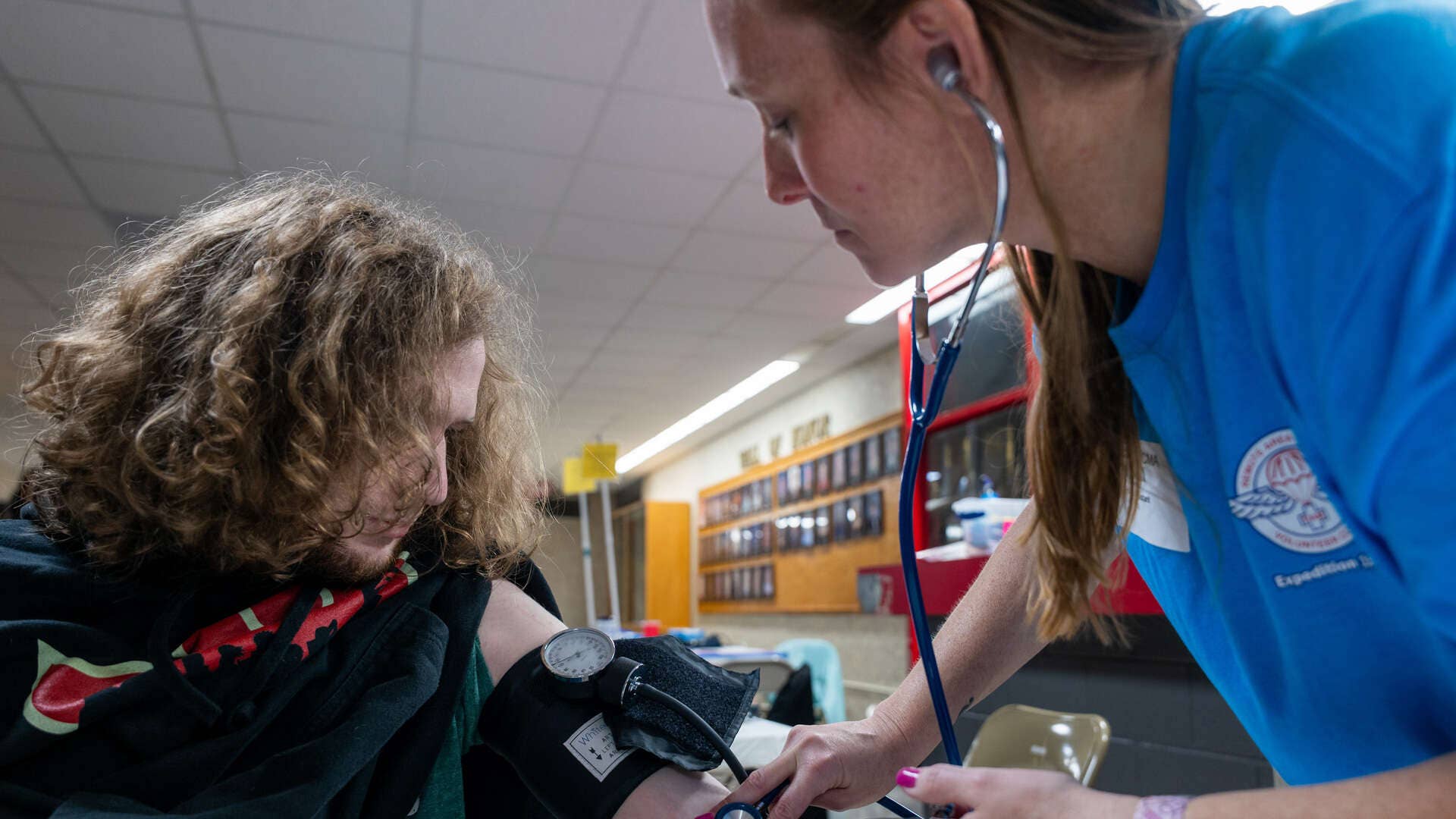
Minnesota is sending workers to inspect 5,500 Medicaid providers
No state has actually felt the pressure more acutely than Minnesota. After CMS required the Minnesota Department of Human Services (DHS) to submit a corrective action plan this winter, the state moved quickly.
It is now deploying 168 state workers to conduct unannounced in-person inspections of more than 5,583 Medicaid providers across 13 programs, which the state considers potentially high-risk for fraud, FOX9.com reports.
“We’re kind of appearing just to catch them in the act of hopefully doing their regular business,” a state official said, describing the inspection approach.
Related: Medicare has an age gap that is costing millions of Americans their health
The visits are designed to validate what providers have submitted on paper. Confirming that operations match what was claimed in revalidation applications. The deadline for DHS to complete the remaining inspections is May 31.
Minnesota’s situation now illustrates the stakes for states that fall short. The $259 million funding pause was not a warning shot. It was a consequence. Other states watching that outcome are now calculating what it means for their own Medicaid oversight programs.
Minnesota Governor Tim Walz and other Democratic governors have pushed back, characterizing the federal actions as politically motivated. Walz and Maine Governor Janet Mills have both described the crackdown as a “political attack” using fraud allegations as cover for cutting programs, NBC New York noted.
Why Medicaid has been on the federal government’s high-risk list for years
The Government Accountability Office (GAO) has flagged both Medicare and Medicaid as high-risk programs on its official High Risk List. A designation reserved for government operations with serious vulnerabilities to fraud, waste, abuse, and mismanagement.
In its most recent update from Leading Age, released in March, the GAO reported 65 open recommendations related to strengthening Medicaid program integrity. These include strengthening collaboration with state auditors, monitoring states’ progress on provider screening and enrollment requirements, and developing clearer criteria to ensure payments are economical and efficient.
Related: Fidelity warns health care could derail retirement
All five evaluation criteria for the Medicaid program, leadership commitment, capacity, action plan, monitoring, and demonstrated progress, were rated only “partially met.” That assessment has been unchanged since 2023.
In other words, the vulnerabilities Oz is now targeting are not new. They have been documented, flagged, and left partially unaddressed for years. What has changed is the administration’s appetite to act on them.
What the Medicaid fraud crackdown means for you
Medicaid is the cornerstone of the American health system. The program covers roughly one in four Americans.
That includes nearly 40% of all births in the U.S., a large share of low-income pregnant women, and the majority of long-term care costs nationally, AHA confirms. Federal funding covers more than 60% of total program costs, with states covering the remainder.
Any disruption to provider networks, whether through disenrollment, funding freezes, or the administrative burden of revalidation, carries real consequences for the people who depend on those services. Minnesota has already disenrolled 160 providers, as Pioneer Press reports, for failing to respond to letters and calls or for other compliance reasons.
For patients in affected programs, particularly those receiving home-based or community care services from smaller or unlicensed providers, the coming months of inspections and revalidations will test whether the anti-fraud push can be executed without cutting off legitimate care.
The administration’s answer, at least for now, is that the cost of inaction is higher. With 65 open GAO recommendations and hundreds of millions of dollars already alleged to have been stolen or misused, Oz and the Trump administration are betting that states, regardless of political affiliation, will fall in line.
And the 30-day clock is active and running.
Related: Amazon quietly makes surprising move into weight-related problems