Intuitive Surgical (ISRG), maker of the da Vinci surgical robot, has been one of the year’s most punished large-cap healthcare names, down about 37% even as revenue keeps climbing.
Analysts spent months cutting targets. Then one firm broke from the pack and told investors the fear had gone too far.
That call matters for anyone holding the stock or watching it after a brutal slide, because it reframes what the recent selloff actually signals.
It also raises a sharper question. If the company keeps growing revenue at double-digit rates, why has the market treated it like a business in trouble?
The answer comes down to one earnings figure, one bold bet on automation, and a Wall Street that still can’t agree on what happens next.
UBS upgrades Intuitive Surgical stock and pushes back on the selloff
On July 28, UBS analyst Patrick Wood upgraded Intuitive Surgical to Buy from Neutral, according to Investing.com.
The move came after the stock dropped about 37% year to date and closed near $361.80.
Wood set a 12-month price target of $500, down from $550, as part of a coverage handoff to a new analyst.
More Healthcare Stocks:
- HCA stock falls on uninsured warning despite earnings beat
- Goldman Sachs says one number will move Eli Lilly stock
- UnitedHealth CFO sends stark warning after earnings
The lower target might read like caution, but the rating tells the real message. UBS called the recent market selloff of ISRG shares wrong.
That is a direct challenge to the fear that has driven the stock down all year, and it sets up the rest of the firm’s argument.
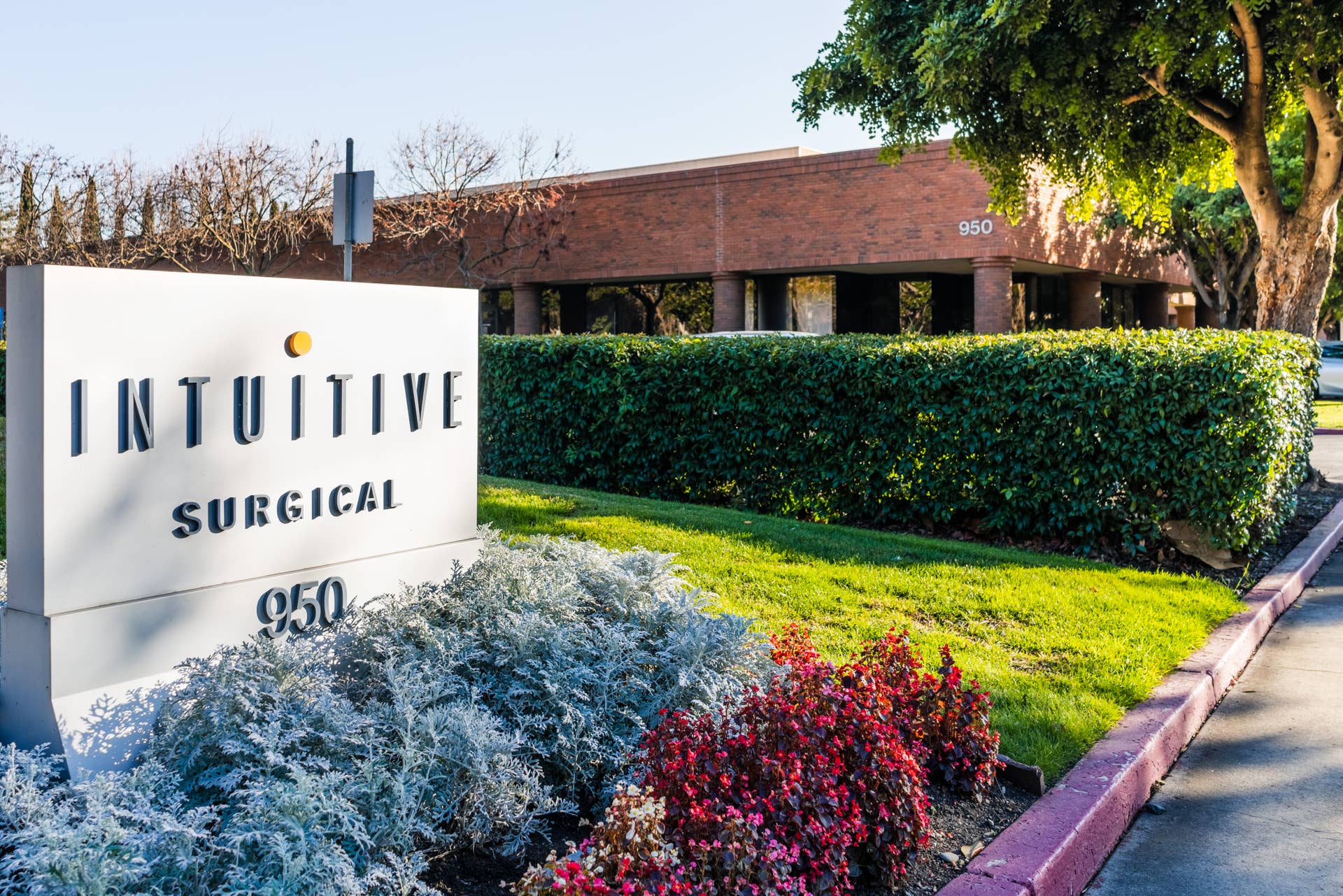
Why UBS thinks the market misread Intuitive Surgical
The bearish case on Intuitive Surgical has centered on three worries: hospital spending, slowing growth, and rising competition from other robotic surgery makers.
UBS argues those fears are overextended. The firm’s core bet is on automation.
UBS’s research shows that as robotic surgery becomes more automated, procedures get faster and cheaper than current laparoscopy, which is the standard minimally invasive technique surgeons use today.
If that holds, more hospitals adopt the technology, and adoption is what drives Intuitive’s recurring revenue.
UBS also flagged growth beyond the core business.
The firm pointed to expansion into cardiac procedures, endoluminal applications that reach inside the body through natural openings, and the Ion lung-biopsy platform.
Put simply, UBS sees several new revenue lines opening at once, while the market prices the stock as if growth has stalled.
What Intuitive Surgical’s latest earnings actually showed
The numbers behind the selloff explain why investors got nervous, and why UBS thinks they overreacted.
Intuitive reported second-quarter revenue of $2.89 billion, up 19% from a year earlier. Worldwide da Vinci procedures grew about 15%.
The company beat expectations on both earnings and revenue. Then the stock fell more than 12%.
The problem sat in one figure. U.S. da Vinci procedure growth slowed to 12%, down from 14% in the first quarter, Investing.com reported.
Management tied the slowdown to ACA subsidy changes, deferred procedures, and pressure in bariatric surgery.
Investors focused on that domestic number rather than the beat, and the reaction was swift.
Still, Intuitive kept its full-year da Vinci procedure growth outlook at 13.5% to 15.5%, a sign management sees the slowdown as temporary.
How UBS fits into a divided Wall Street on ISRG
UBS is not moving alone, and it is not the most bullish voice either.
The upgrade landed after two weeks of mixed calls on the stock. On July 16, Truist Financial cut its target to $510 while keeping a Buy rating.
A day later, Raymond James lowered its target to $483 from $577 but held an Outperform rating.
Related: GLP-1 weight-loss drug popularity reaches new heights with Americans
Even Goldman Sachs, one of the stock’s steadier defenders, kept a Buy rating through the year while the majority of Wall Street cut targets.
So the debate now centers on how fast U.S. growth stabilizes, not on whether the company is healthy.
The wider analyst view stays positive. The consensus rating is a Strong Buy, built on 19 Buy, 3 Hold, and 1 Sell recommendation.
Consensus price targets land at $492.63, which sits well above where the stock trades now.
What Intuitive Surgical investors should watch next
A single upgrade does not fix a stock that is down 37% on the year. However, it does give investors a clearer checklist.
For the UBS bull case to hold up, a few things need to happen:
Signals that would support the UBS call
- U.S. procedure growth stabilizes. The 12% domestic figure is the number that spooked investors, so a rebound toward the mid-teens would ease the biggest worry.
- Automation features convert to placements. Faster, cheaper procedures only help if hospitals actually buy and install more systems.
- New platforms show traction. Early revenue from cardiac, endoluminal, and Ion applications would confirm the diversification story UBS is betting on.
Each item is measurable in the next few earnings reports, which makes the call easy to track.
There are real risks. If ACA subsidy changes keep pressuring U.S. procedure volumes, the slowdown could last longer than one quarter.
Competition is also rising. Rivals are pushing into soft-tissue robotic surgery, and Intuitive’s lead is no longer unchallenged.
For a sense of how much this year has hurt device makers, a look at the health care stocks Trump traded in 2026 shows Intuitive down about 28% at the time, alongside steeper drops at Boston Scientific and Abbott.
The bottom line for ISRG stock
UBS is telling investors the selloff went too far, and the consensus targets agree there is room above today’s price.
But the firm still cut its target to $500, which signals patience rather than a rush.
For long-term holders, automation and the new platforms support staying in.
For anyone considering a new position, the domestic growth number is the one to watch first, because it will confirm or break the recovery.
Intuitive Surgical remains a strong company trading at a beaten-down price. Whether that becomes a bargain depends on how fast U.S. procedure growth turns back up.