Less than a year after announcing plans to end one of retail’s highest-profile beauty partnerships, Ulta Beauty isn’t stepping away from collaborations after all.
Instead, the beauty retailer has joined forces with another major fashion brand as it looks to strengthen customer engagement and accelerate growth following a period of market share losses.
The announcement marks a notable shift after Ulta previously said it would prioritize stand-alone growth, signaling that carefully chosen collaborations remain an important part of its long-term expansion strategy.
Ulta Beauty teams up with Pacsun
Ulta Beauty (ULTA) is partnering with Pacsun on an exclusive fashion-and-beauty collaboration that will be available online and in stores at both retailers for a limited time.
The collaboration includes two curated beauty essential kits featuring products from popular beauty brands, along with a limited-edition hoodie. The launch reflects both companies’ efforts to connect with younger shoppers by blending fashion, beauty, and lifestyle into a single retail experience.
“At Pacsun, we’re always looking for new ways to connect with our community through partnerships that feel authentic to their lifestyle,” said Pacsun CMO Richard Cox in a statement.
“Our partnership with Ulta Beauty brings together two brands that celebrate self-expression, confidence and individuality. By combining Pacsun’s fashion-first perspective with Ulta Beauty’s leadership in beauty, we’re creating an exciting new destination where our guests can discover products that reflect who they are.”
Ulta Beauty CMO Kelly Mahoney said the collaboration builds on the company’s “Rewrite the Rules” summer campaign.
“Our collaboration with Pacsun is a celebration of individuality and creativity, bringing together fashion and beauty in a way that feels fresh, relevant and authentic for our guests,” said Mahoney.
The Pacsun x Ulta Beauty Collection debuted at Pacsun’s SoHo store in New York City on July 28 and will expand to more than 100 Pacsun locations nationwide and online beginning Aug. 6.
The beauty essential kits will be available at select Ulta Beauty stores, on ulta.com, and through TikTok Shop starting Aug. 2, while the hoodie will launch on ulta.com and TikTok Shop on Aug. 6.
The collaboration follows Ulta Beauty’s split from Target
The announcement comes nearly a year after Ulta Beauty and Target (TGT) agreed to end their five-year partnership, bringing an end to one of the retailer’s largest shop-in-shop beauty concepts.
Launched in 2021, the partnership expanded Target’s beauty assortment by introducing Ulta Beauty shop-in-shops in select stores nationwide. It also allowed customers to link their Ulta Beauty Rewards and Target Circle accounts to earn loyalty benefits across both retailers.
The companies will officially end the partnership in August 2026 after operating roughly 600 Ulta Beauty shop-in-shops across the country.
The decision also came as Target grappled with declining sales, slowing customer traffic, and nationwide boycotts that weighed on its business.
In response, the retailer unveiled a multi-year strategy designed to generate more than $15 billion in additional sales by 2030. The plan focuses on introducing new products, expanding merchandise assortments based on customer demand, delivering stronger value, and enhancing the shopping experiences across stores and digital channels.
Early this year, Target introduced nearly 3,000 new beauty products and added more than 60 new brands, with more than 90% of items priced under $20. The expanded assortment spans skin care, makeup, and hair care while combining popular national brands, prestige products, and Target-exclusive offerings.
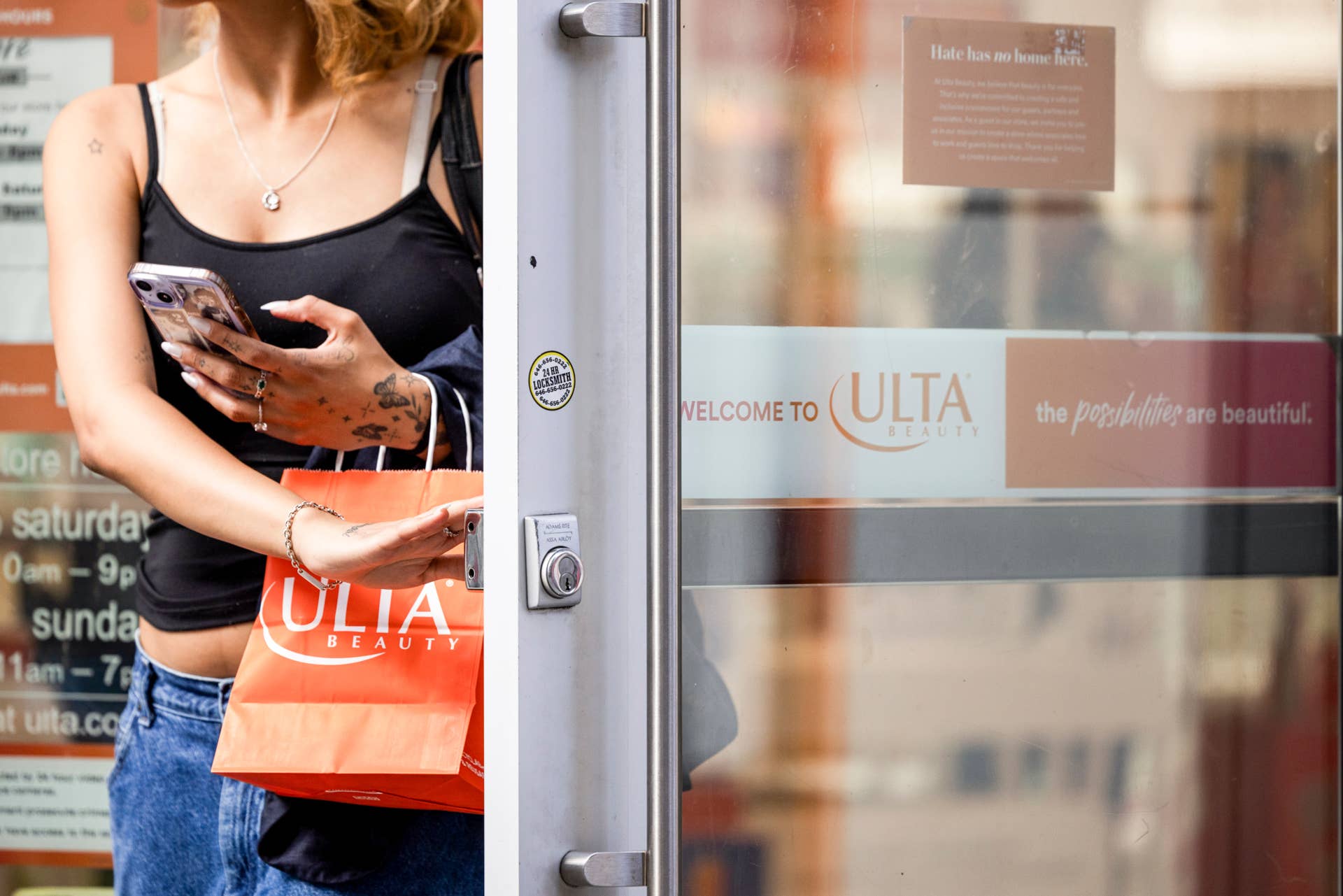
Why the Ulta-Target partnership no longer made sense
Although Target’s beauty business remained one of its strongest-performing categories, the broader partnership delivered mixed results as both companies navigated changing market conditions.
Target generated $109.1 billion in revenue in 2022, but annual sales slipped to $107.4 billion in 2023 and $106.6 billion in 2024, according to the company’s earnings reports. During that period, beauty was the retailer’s only major merchandise category to post meaningful growth.
Ulta Beauty also faced challenges of its own. During the fourth quarter of fiscal 2024, net sales declined nearly 2% from the prior year, marking the company’s first year of losing market share in the beauty category.
The slowdown prompted Ulta Beauty to launch its “Ulta Beauty Unleashed” strategy, a long-term growth plan centered on strengthening its brand portfolio, expanding personalization, and accelerating digital capabilities.
While Ulta Beauty never publicly linked the breakup to Target’s operational struggles, retail analysts argued that deteriorating conditions inside many Target shop-in-shops were hurting the customer experience.
“The Ulta areas in Target have become increasingly messy, they suffer from inadequate staffing, and are often cordoned off from the rest of the store by retractable belt barriers. Persistent low stock levels have further diminished the experience,” wrote GlobalData Retail Managing Director and Retail Analyst Neil Saunders on LinkedIn.
Ultimately, ending the partnership allowed both retailers to sharpen their respective strategies. Ulta Beauty shifted its focus toward accelerating its stand-alone growth, while Target moved to bring its beauty business fully in-house through its Target Beauty Studio concept.
Why Ulta Beauty is partnering with Pacsun
Ulta Beauty’s latest collaboration comes as the retailer shows signs of regaining momentum following a difficult period marked by slowing sales and market share losses.
During the first quarter of fiscal 2026, the company reported net sales growth of 11.1% year over year, while comparable sales increased 5.3%, suggesting its turnaround strategy is beginning to gain traction.
Here’s some of my previous coverage of retail strategies:
- Luxury retailer exits beauty business and ends major partnership
- Why fashion retailers are banking on beauty to boost growth
- Iconic mall retail anchor brings back a famous product line
The partnership also reflects a broader retail trend in which brands increasingly collaborate across categories to reach younger consumers through limited-edition collections, exclusive product launches, and social media-driven campaigns that generate excitement beyond traditional advertising.
For Ulta Beauty, Pacsun provides access to Gen Z shoppers, one of the most influential consumer groups in both beauty and fashion.
As Gen Z gains purchasing power, the demographic has become increasingly important for retailers seeking long-term customer loyalty. Pacsun’s growing influence with younger consumers, therefore, makes it an attractive partner for beauty brands looking to expand beyond traditional cosmetics retailers.
Roughly 68% of Gen Z view their purchases as a reflection of “who they are and what matters to them,” according to a Forbes Council study.
Although Pacsun is privately held and does not publicly disclose its financial results, ECDB estimates the retailer generates approximately $668 million in annual revenue and projects annual growth between 5% and 10%.
The retailer has also undergone a significant transformation in recent years. After filing for bankruptcy in 2016 and closing stores, Pacsun has staged a turnaround under CEO Brieane Olson, who took the helm in 2023. Since then, the company’s revenue has climbed from just over $700 million to nearly $1 billion, while profitability has at least doubled, according to Inc.
Much of that turnaround has been driven by repositioning Pacsun from its legacy Southern California surfwear identity into a youth-focused lifestyle brand centered on fashion, sports, music, and art.
The company has further strengthened its connection with younger consumers by publishing an annual Youth Report and launching its Youth Advisory Council in 2025, initiatives designed to involve customers in shaping future products and brand decisions.
The collaboration underscores how retailers are increasingly using cross-category partnerships to reach younger consumers, strengthen brand loyalty, and create shopping experiences that extend beyond traditional product categories.