One of the best parts of my job here at TheStreet is our 24/7 global newsroom staffed with incredibly talented and brilliant colleagues — and this guy is my absolute favorite.
Stephen “Sarge” Guilfoyle, TheStreet Pro’s veteran analyst, longtime trader and expert commentator, said that Federal Reserve Chairman Kevin Warsh’s recent comments on inflation make very clear where the central bank’s focus is.
“Warsh told Wall Street to beat it. His concern is Main Street, and his focus is making the right decisions economically,’’ Guilfoyle said
Warsh’s Aug. 28 speech, made at the bank’s annual economic summit in Jackson Hole, Wyoming, displayed a noticeable hawkish shift.
The chairman addressed the need to monitor inflation in a more nuanced tone than the “word salad” that many investors and other Fed watchers said they heard from him after the July policymaking meeting.
Hence the chairman’s pledge to tame elevated inflation — “We have work to do” — immediately reset market expectations in the CME Group FedWatch Tool for a 25 basis-point hike probability to nearly 60% at the Federal Open Market Committee meeting next month, up from 35% on Aug. 27.
Guilfoyle concurs.
“He sees inflation as an ongoing problem and sees nothing that tells him that inflationary trends are easing,’’ Guilfoyle said, adding that “Warsh, in my opinion, told us that the FOMC is going to increase short-term interest rates, either on Sept. 16 or if not then, on Oct. 28,’’ the next two monetary policy meetings.
Veteran analyst sends strong message on Warsh’s hawkish Fed rate path
As I reported, Warsh acknowledged the U.S. economy is strong, the labor market currently stable and the earnings and corporate profits remain elevated. But even as oil prices have started to dip as the Iran War stagnates, there is an underlying concern that inflation levels have been above the Fed’s 2% target for over 65 months.
That’s not acceptable, according to Warsh and Guilfoyle.
“My feeling is that if the Fed does not raise short-term rates soon, then this Fed Chair will lose credibility with markets. The speech was that hawkish. His conviction seemed to be that sincere,’’ Guilfoyle said.
Warsh’s prepared remarks said: “The Fed plays an essential role in the economy and the markets. And our tools are powerful. We determine the path of short-term interest rates. And market participants will always try to anticipate what we will do next. But we should not indulge a regime in which market participants are looking primarily to the Fed for their next trade.”
Guilfoyle’s response: “As we already knew, Warsh does not like forward guidance as it has not been a reliable tool in the recent past. He is flat out telling us that he is not likely to guide on rates going forward. This kind of leadership at the Fed, in my opinion, was a long time coming.’’
Warsh focuses on inflation side of the Fed’s mandate
The Fed’s dual mandate from Congress requires maximum employment and stable prices.
- Lower interest rates support hiring but can fuel inflation. This risks fueling further inflation, potentially leading to an inflationary spiral.
- Higher rates cool prices but can weaken the job market. This increases the cost of borrowing and further stifles economic activity.
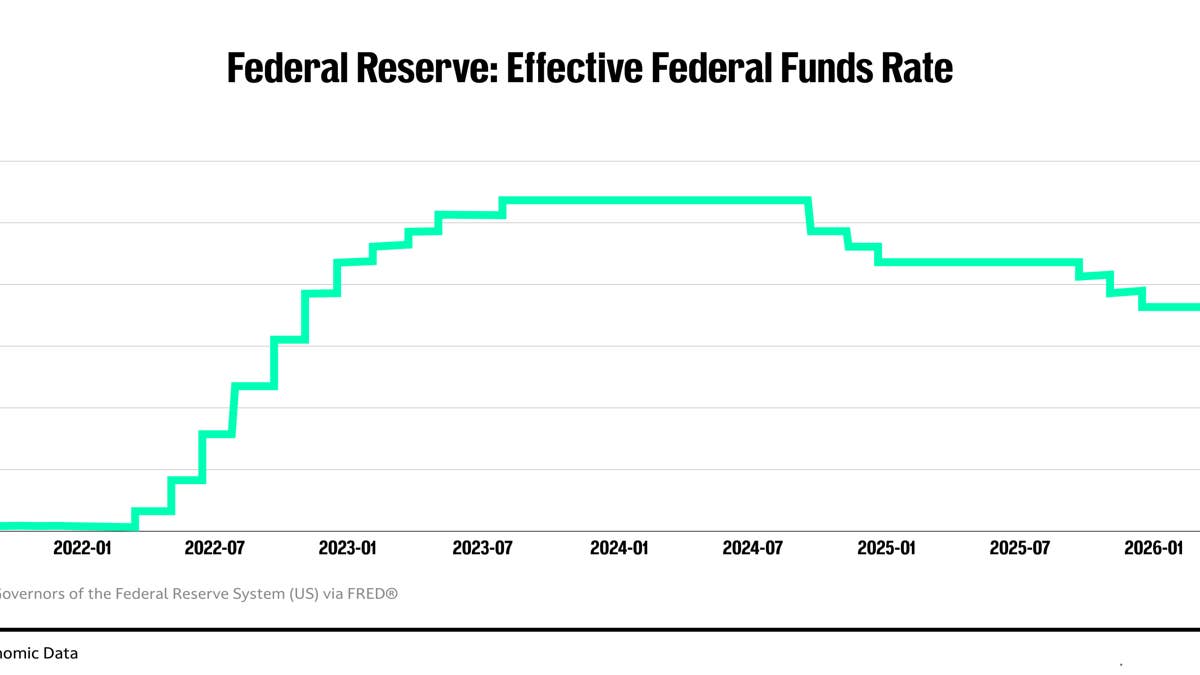
As I reported, the rate-setting FOMC voted 9-3 last month to hold its benchmark Federal Funds Rate target in a range of 3.5% to 3.75%. The three dissenters wanted to raise rates by 25 basis points because of inflation concerns.
Related: Investors drop two-word verdict on Warsh’s Fed rate shift
The funds rate is the interest rate at which banks lend balances at the Federal Reserve to other banks overnight.
A change in the funds rate triggers moves in short-term borrowing costs ranging from credit cards to student loans and home equity loans.
Policymakers had cut rates by 25 basis points at its last three meetings of 2025 to shore up the softening labor market.
These “insurance” cuts stopped after the majority of policymakers decided the risk from higher prices was outweighing signs that the jobs market was stabilizing.
President Donald Trump has been very vocal that the Fed should slash interest rates to 1% or less. He most recently blamed the FOMC board, which Warsh leads, as being “too political” for not following up on his directive. But thus the president has not spewed the sort of criticisms at Warsh, his nominee to lead the Fed, as he did at former Chairman Jerome Powell.
Key inflation measures remain elevated
Warsh said the Fed’s predominant focus right now should be on the price side of the mandate.
The 12-month change in the Personal Consumption Expenditures — an economic measure of consumer spending that’s the Fed’s preferred inflation statistic — and the Consumer Price Index measures remain elevated.
Excluding food and energy, the July PCE price index increased 3.3% from one year ago.
“Warsh did not scrap the 2% target. He was not vague,’’ Guilfoyle said. “He committed to fighting inflation as a priority as he believes in the Fed’s dual mandate — and the one side of that mandate that the central bank has failed on since the pandemic is the inflation side.
The Cleveland Fed Inflation Nowcasting model points to a 0.27% month-over-month increase in August’s core PCE, which would round to 0.3% and could reinforce the case of persistent underlying and sticky inflation.
Related: J.P. Morgan drops Fed rate bombshell over Warsh, inflation