It was only weeks ago that the general thinking was that War in the Middle East and overinflated stock valuations were coming home to roost, setting investors up for a reckoning.
The logic was sound, given that the mid-term year is historically one of the riskiest for the S&P 500, suffering an average 18% drawdown since 1950, according to Carson Investment Research, and the S&P 500, led by an AI frenzy, was trading at a forward P/E ratio above 20, historically not great for forward stock market returns.
However, instead of the expected Y2K-style Internet bust, the S&P 500 has powered back recently, retracing 11% losses for the Nasdaq 100, home to the biggest technology stocks, to fresh all-time highs.
Long-time Wall Street veteran analyst Sam Stovall wasn’t surprised by the drawdown or the rally. He’s been predicting strong S&P 500 returns all year. In fact, based on a report Stovall sent me, his team at CFRA, an influential sell-side research firm to major hedge and mutual funds, has boosted its S&P 500 target for the rest of the year.
CFRA now expects the S&P 500 to finish 2026 at 8650, delivering a very rare fourth consecutive year of double-digit returns.
“The target revision reflects a confluence of fundamental, technical, and historical factors, which underpin our conviction that this bull market still has room to run,” wrote Stovall.
S&P 500 is proving naysers wrong (for now)
There is plenty of evidence that the bull market run is running on fumes. A general complacency has entered the chat, with investors increasingly confident that sell-offs will inevitably create enriching ‘buy-the-dip’ moments.
The S&P 500’s year-to-date return stands at 13% as of this writing, despite Consumer Price Index, or CPI, inflation tracking at 3.5% year-over-year in June, well above the Federal Reserve‘s stated 2% inflation target. Unemployment is also troubling at 4.1%, down from 4.4% in January, but up from 3.4% in April 2023.
However, the steady drumbeat of layoffs and pressure on cash-strapped consumers from rising prices has been more than offset by earnings growth best described as ‘white hot’.
“The driving force has been the surge in second-quarter and full-year 2026 earnings, which were initially expected to show Y/Y gains of 21% and 23%, respectively, but are now seen jumping 47% and 30%, according to S&P Capital IQ consensus estimates,” points out Stovall.
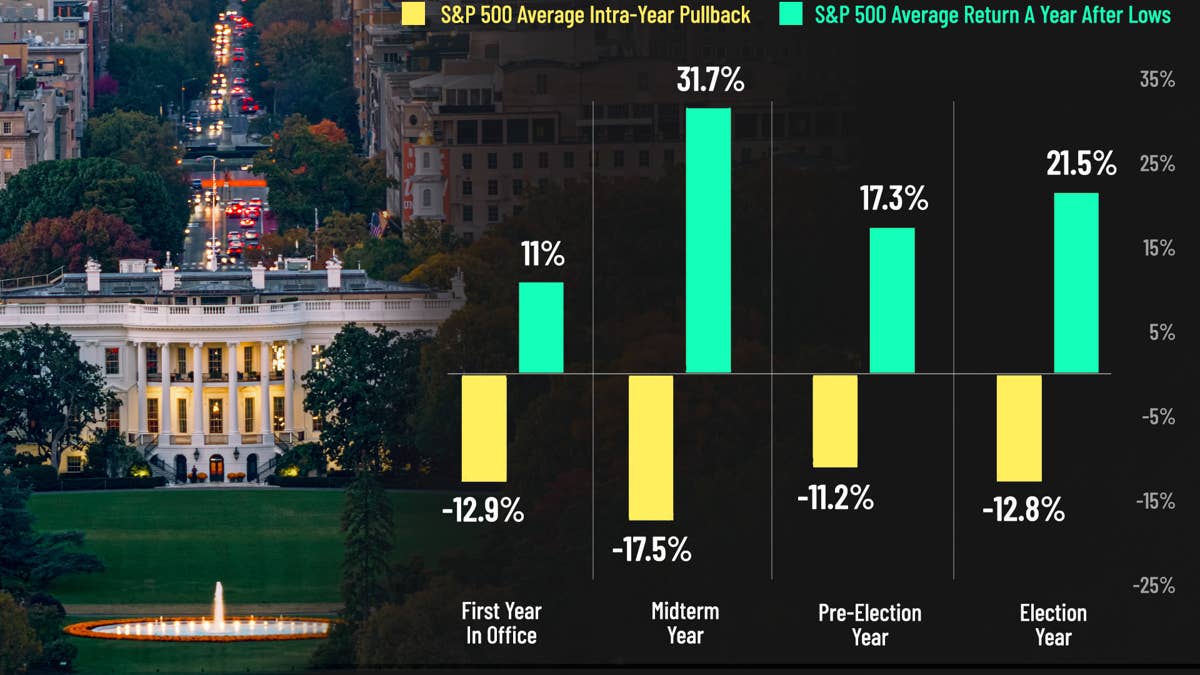
Carson Investment Research, FactSet, TheStreet
FactSet data is even stronger. Nearly 90% of S&P 500 companies have reported their second-quarter earnings results, and on average, FactSet says the S&P 500’s year-over-year earnings growth is clocking in at 50.4%, its highest level since the second quarter of 2021, when results were being compared to the 2020 Covid-era lockdown.
CFRA boosts S&P 500 target for 2026
Valuation is often cited as a reason for bullishness or bearishness. But there isn’t a bell that signals it’s time to buy or sell, making tops and bottoms hard to spot. Furthermore, the S&P 500 spends far more time rising than falling, historically, making it easier to use sentiment measures to identify buy opportunities than sell points.
This dynamic is why so many advocate a set-it-forget-it approach to the S&P 500 exchange-traded funds, like iShares SPY or Vanguard’s VOO. Timing buys and sells is notoriously challenging, given that human emotion usually means we’re more inclined to sell near the lows (fear) and buy near the tops (greed).
More Wall Street:
- Wall Street’s AI trade faces its biggest valuation test
- The next Wall Street shift is already underway
- Wall Street sends strong 4-word verdict on the stock market
To reduce the risk of selling (or buying) at precisely the wrong moment, many investors focus on momentum. After all, objects in motion tend to stay in motion, and the trend is investors’ proverbial friend.
“Embracing the adage that the trend is your friend, CFRA raised its 12-month S&P 500 price target to 8,650 and year-end 2026 closing level to 8,050, for a near 4% upside from the August 7 close,” said Stovall.
What’s next for the S&P 500
If the S&P 500 cooperates with CFRA number-crunching, it will mean investors have enjoyed a relatively rare period of success.
The S&P 500 has notched only four consecutive years of double-digit returns once before since World War II, according to Stovall (twice if you include the S&P 500’s predecessor). That one time since the official S&P 500’s inception will likely raise some eyebrows, given it occurred during the Internet Boom, when it climbed double-digits five years in a row from 1994 through 1999, before its three-year Internet Bust bludgeoning from 2000 through 2002.
While Stovall’s CFRA projects more gains, a 4% return may not be all that enticing for some investors, particularly given the run-up in bond yields. The 10-year Treasury Bond yield is 4.71%, its highest since January 2025. That’s a pretty compelling yield that may attract some money away from stocks.
Momentum is a powerful force, but we’ve made a significant move already, and we remain in a period of the year ahead of midterm elections that can be volatile. It wouldn’t be too surprising if that path to 8650 is anything but a straight line.
Related: Warren Buffett sends a blunt message to stock market investors