Most retailers design their stores to make sure customers see as much merchandise as possible. That’s why grocery chains usually have their dairy cases in the back corner.
A lot of shoppers buy milk, and even if that’s all you need, you will be exposed to lots of other items you might buy along the way. In many cases, stores are not set up for ease of shopping. They’re designed to maximize how much you spend.
Kohl’s, for example, puts its Amazon returns desk in the back of its stores so customers, who may have no intention of actually buying anything, get exposed to as much merchandise as possible.
In some cases, however, retailers want to deliver the best experience possible. Whole Foods, which Amazon owns, puts its Amazon Locker, where you can pick up packages and drop off returns, at the front of its stores.
In theory, you can pick up your Amazon delivery and never actually see any Whole Foods products.
Walmart has now opted to redesign its stores to make it easier for customers to find what they want.
Target wants a better experience for customers
In May, Target shared a $5 billion plan to remodel some stores and open 30 new locations. One of the core goals of the remodels is to make shopping easier and make in-store shopping closer to the digital shopping experience.
“Target is ramping up the pace of its remodels this year, bringing our elevated shopping experience to more guests. It’s a bigger transformation for our stores than at any point in the past decade, with updated layouts that are easier to navigate and discover the best of Target’s style, design and value,” the chain shared in a press release.
The chain’s remodels have focused on meeting the needs of each store’s customers.
“Every store is different. If yours has two entrances, one will be designed around ‘ease’ and the other around ‘inspiration.’” The ‘ease’ entrance might have features like Drive Up parking spaces, an online Order Pickup counter, self-checkout lanes and grab-and-go grocery and essentials right there as you walk in — everything the guest needs to get in and out quickly,” according to a Target press release.
More Walmart:
- Walmart’s 7,200 price cuts land heaviest in one category
- Walmart makes another move to win higher-income shoppers
- Walmart makes unusual nuclear power bet
Target CEO Michael Fiddelke talked about the shift toward “elevating the guest experience” during the chain’s first-quarter earnings call.
He said that the chain has an “aspiration to be the most delightful shopping experience in retail.”
That’s a change that explicitly acknowledges that brick-and-mortar stores have to serve the customer, not the retailer, because they’re competing with shoppers opting out of stores altogether and buying online.
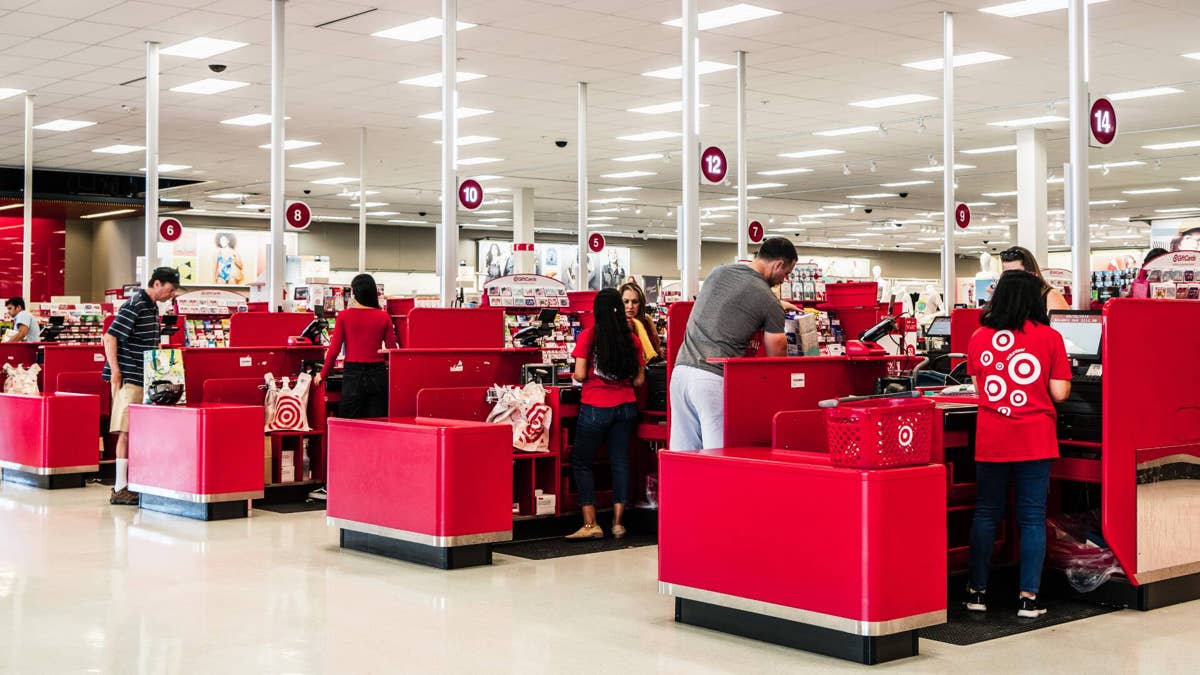
Walmart wants to make in-store shopping easier
Walmart has similar aspirations, and its U.S. CEO David Guggina spoke about them at the Oppenheimer 26th Annual Consumer Growth and E-Commerce Conference in June. He believes that while the chain wants an omnichannel model, stores remain at the heart of its business model.
He noted that Walmart thrives during a challenging economy.
“Our business model is really built for this environment. And when customers become more deliberate in their spending, they turn to Walmart to save not only money but time,” he said.
The time factor has figured into the company’s store plans.
“We’re also focused on positioning more in-demand inventory closer to our customers through things like remodels, new fulfillment centers, new stores and better inventory management and better inventory flow,” he added.
Guggina believes that stores need to make shopping easy and be designed to support the company’s digital sales.
“Our stores are one of Walmart’s greatest competitive advantages, and really they are the foundation of our omnichannel strategy. About 90% of U.S. households live within 10 miles of a Walmart, enabling us to reach 95% of households in less than 3 hours and 60% in less than 30 minutes. So we can deliver very quickly,” he added.
Walmart has repeatedly said remodels produce higher sales and customer satisfaction than comparable older stores.
Target and Walmart compete with digital-only retailers
In the two years I spent running a very large toy store, I had two groups of competitors to worry about: big-box stores like Walmart and Target, and online retailers, which included Amazon, as well as specialty retailers offering limited service, but very low prices on niche areas such as radio control and model trains.
I couldn’t really compete with someone already going to Walmart or Target who picks up a board game or some Legos while already there. To win customers from those chains, we had to offer different merchandise that required more knowledge to sell, and usually a savvier customer.
To battle online retailers, we had to make the store (Time Machine Hobby in Manchester, Conn.) as inviting a destination as possible. That meant everything from having play areas to employing a knowledgeable staff, handing out lollipops as people left, and making sure that everyone felt like a regular.
Herb Sorensen, scientific advisor, TNS Retail and Shopper, thinks retailers have two key problems to fix when it comes to the shopping experience.
“The ‘typical’ shopper comes through the door looking to buy a few items
and faces the problem of 30,000+ items scattered across a large sales floor. ‘Where
are those items?’ ‘How will I know which of the hundreds offered I
should buy?’ These twin time wasters also represent large opportunities,” he wrote on RetailWire.
He thinks the solution is easy. Simply tell the shopper:
- Where to go
- What to buy
GlobalData Managing Director Neil Saunders believes it’s also very important for chains to maximize ease of shopping in their stores.
“A very significant proportion of sales that are attributed to the online channel are, in fact, multichannel sales that rely on both stores and online for success. On average, one third of ‘online’ non-food purchases — where a customer actually transacts online — are in fact reliant on physical stores for product selection, pick up, or return,” he wrote on his company’s website.
Related: After 80 stores close, 63-year-old chain gives Chapter 11 warning