Grabbing a morning coffee and a gallon of milk used to mean two separate stops. Walmart just closed that gap.
The retail giant is rolling out a new delivery partnership that puts a familiar coffee and donut brand right inside its shopping app.
For Walmart (WMT) stock investors, the move signals how far the company’s delivery ambitions have grown beyond milk and paper towels.
Here’s what shoppers can expect, and why it matters for the company’s bottom line.
Walmart partners with Dunkin’
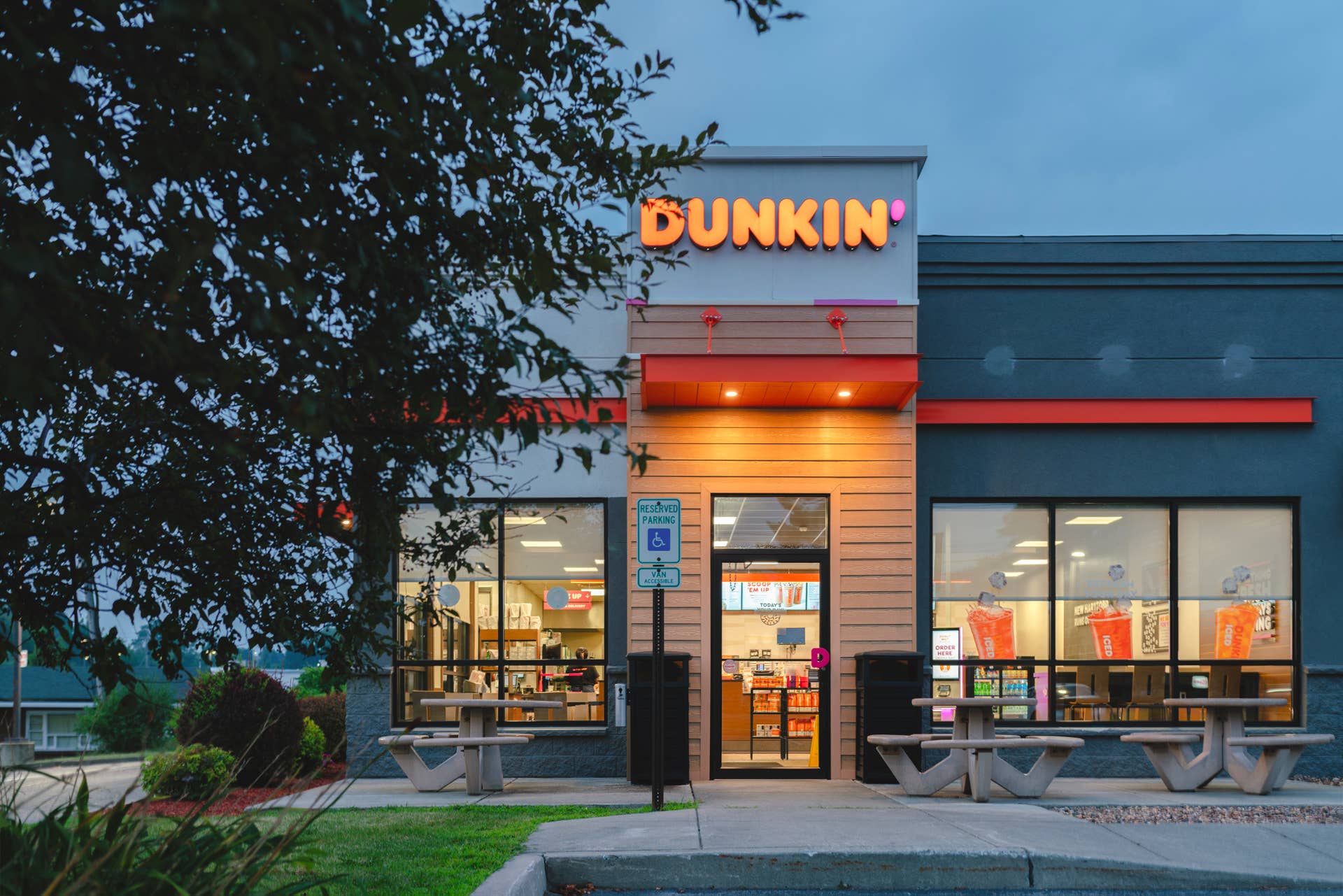
Walmart is expanding its restaurant delivery business through a partnership with Inspire Brands, the parent company of Dunkin’.
The deal lets customers order Dunkin’ beverages and food and have them delivered alongside their regular Walmart order.
The rollout starts with about 150 Dunkin’ locations that already operate inside Walmart stores. It will soon expand to most of Dunkin’s roughly 10,000 locations across the country, including stores unrelated to Walmart.
Walmart is reaching into the broader restaurant world, using its own drivers and app to bring orders to customers’ doors.
More Walmart:
- BofA points to crucial Walmart numbers most investors ignore
- Walmart, Costco, and CVS have a new way to bring you back
- Kroger makes a pricing move Costco and Walmart will love
“Our goal is simple: make it even easier for guests to enjoy Dunkin’ whenever and wherever they want it,” Dunkin’ Brand President and Inspire Chief Brand Officer Scott Murphy said. “By bringing Dunkin’ into the Walmart shopping experience, we’re creating another convenient way for guests to get their favorite beverages and meals at the speed of Dunkin’.”
Eligible customers will see Dunkin’ appear automatically in the Restaurants tab of the Walmart app, based on their delivery address.
From there, ordering works the same way as any other Walmart purchase, using the checkout process shoppers already know.
Walmart takes on DoorDash and Uber Eats
Walmart made its first move into restaurant delivery back in June 2026, when it added Subway meals to Express Delivery in select markets.
The test proved popular enough that Walmart is now scaling the idea up fast, and Dunkin’ is the next big name on the list.
Walmart’s pitch is built around a few clear advantages:
- A store footprint within 10 miles of about 90% of the U.S. population
- An established last-mile delivery network already used for groceries
- Millions of shoppers who overlap with Dunkin’ and Subway customers
- The ability to combine a restaurant order with a regular Walmart cart
- A flat delivery fee model instead of the surge pricing common on other apps
This combination is what makes food delivery more than a side project.
As Business Insider noted, Walmart is moving onto turf long dominated by DoorDash and Uber Eats, both of which already deliver for Dunkin’.
Related: Walmart reveals its most important investment yet
Walmart described itself as “a rapidly emerging contender in the restaurant delivery business.”
Greg Cathey, Walmart’s senior vice president of e-commerce fulfillment transformation, offered more insight into the strategy. “By expanding restaurant delivery beyond our stores, we are offering a value and convenience proposition that is unmatched,” he said, according to Business Insider.
What the Dunkin’ partnership means for Walmart stock investors
Delivery speed has become one of the clearest threads running through Walmart’s recent growth.
On the company’s second-quarter fiscal 2027 earnings call in August, CEO John Furner explained why speed matters to the broader business, and how it could accelerate customer acquisition.
“Speed isn’t simply a fulfillment metric; it is an acquisition strategy,” Furner told analysts on the call. “Customers who use fast delivery shop with us more frequently, they deepen engagement with us, and they are more likely to become Walmart+ members.”
The management comment lines up neatly with the Dunkin’ deal. Every coffee order delivered through the Walmart app is a chance to get a customer into the habit of opening that app first, whether they need a donut or a dozen eggs.
Furner also pointed out during the same call that e-commerce sales grew 23% globally last quarter, with fast delivery in the U.S. up 48%.
For a company generating close to three quarters of a trillion dollars in annual revenue, a coffee-and-donut deal might look small on paper, but it fits directly into the platform strategy Walmart has been building. Membership, advertising, marketplace sales, and delivery all reinforce one another, rather than operating as separate businesses.
Whether Dunkin’ customers start adding household essentials to their coffee orders remains to be seen.
Still, Walmart is clearly betting that the more reasons customers have to open its app, the more they’ll use it for everything else, too.
Related: Walmart adds Starbucks rival’s exclusive coffee, energy drinks