Warren Buffet sums up new Federal Reserve Chairman Kevin Warsh in two words:
“Good choice.”
But wait. There’s more.
First, a very short history lesson.
President Donald Trump nominated Warsh in January to replace Jerome Powell as the head of the world’s largest central bank.
Warsh, a former Fed governor and Stanford University scholar with strong ties to Wall Street, took over the role in May after a somewhat turbulent Senate confirmation process that focused in part on the Fed’s independence from political interference by the Trump White House.
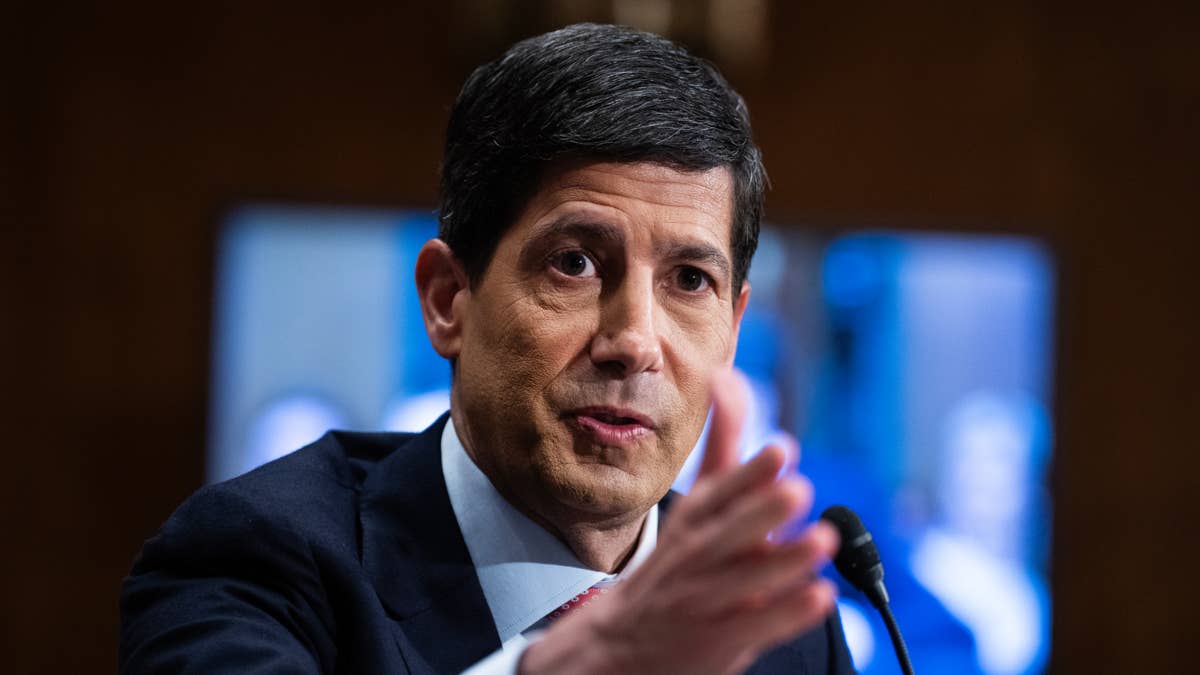
“I will tell you what I’ve said to the president repeatedly and said to the Treasury Secretary: They chose an independent guy to do the job and that’s exactly what I plan on doing,” Warsh told the Senate Banking Committee July 15 while delivering the semi-annual Monetary Policy Report to Congress.
Earlier that same day, Berkshire Hathaway’s legendary investment guru told CNBC that he approved of Warsh’s performance during his first seven weeks at the helm of the Fed and beyond.
“He cares about the country,” Buffett said. “I think that’s been true of a good many. It doesn’t mean their decisions are always great, but because sometimes the decisions are so tough.”
Buffet backs “regime change” by Fed’s Warsh
As I’ve reported, Warsh has launched a host of strategies to overhaul the central bank’s processes on monetary policy and bank regulation.
A longtime champion of Fed reform, Warsh has consistently referred to these tactics as a “regime change.” He plans to establish five task forces of former central bankers, academics, and industry experts to develop a new framework that features upgrades based on artificial intelligence and other data-driven economic models.
Financial markets await the outcome with some anxiety.
Not the Oracle from Omaha, though. He’s cool.
“I think he will do the best he can at achieving the job he was assigned to do, which is 2% inflation and maintaining maximum employment,” Buffett said.
Buffet supports Warsh‘s leadership
President Trump was outraged when Powell refused to bend to his repeated demands to slash interest rates dramatically to 1% or less, in an attempt to lower borrowing costs on everything from the credit cards in your wallet to the $39.42 trillion national debt.
He repeatedly attacked Powell professionally and personally — calling him “a moron” — and vowed he would only nominate a replacement Fed Chairman who followed his lead on monetary policy. Trump has since walked back those comments and left Warsh alone — for now.
Buffet expressed confidence in Warsh’s leadership through the current global crisis as well as the rest of his term as chairman.
“He can’t be perfect at it, and just like I know I couldn’t be perfect at taking people’s money and earning super returns on it,” Buffet said.
Iran war resets Fed interest-rate bets
Warsh’s nomination in January came at a time when Main Street and Wall Street were expecting the Fed to slash benchmark interest rates by as much as three times this year due to the resilient economy and a stabilizing labor market.
Then the U.S.-Iran war erupted in February, sending oil prices soaring across the globe and hitting affordability-weary Americans at the gas pump and in their electric bills.
Economists, traders, and other Fed watchers began spinning and resetting forecasts and bets that the huge and unexpected rise in prices would require the central bank to hike short-term borrowing costs to quell rising price pressure across the global supply chain.
Monetary policy: Delicate balance of prices, jobs
The Fed’s dual mandate from Congress requires maximum employment and stable prices.
Lower interest rates support hiring but can fuel inflation.
Related: Cooler inflation delivers big win for Fed interest-rate bets
This risks fueling further inflation, potentially leading to an inflationary spiral.
Higher rates cool prices but can weaken the job market. This increases the cost of borrowing and further stifles economic activity.
Fed holds interest rates steady
The rate-setting Federal Open Market Committee voted unanimously last month to hold its benchmark Federal Funds Rate target in a range of 3.5% to 3.75%.
But the minutes of the June FOMC meeting showed some hawkish policymakers concerned about increasing inflation risk and the short-term impact on interest rates.
A change in the funds rate triggers moves in short-term borrowing costs ranging from credit cards to auto loans and influences longer-term rates such as mortgages.
Traders adjust Fed interest rate-hike bets
Consumer and wholesale prices dropped in June, reflecting a dip in oil prices that surged from the energy shock of the Iran war. Note: Those headlines emerged amid a dramatic military escalation by both the United States and Iran that revived oil and inflation jitters.
Following Warsh’s two days on Capitol Hill and the June inflation reports, futures traders reset bets to nearly 90% that the FOMC would hold rates steady again at its July 28-29 meeting.
September is a coin toss, with the CME Group FedWatch Tool also penciling in a 51% chance of a rate hike then, as well as a more than 70% probability of a rate increase by the end of the year.
Related: Fed’s Warsh faces tough interest-rate smackdown in Congress