Warren Buffett’s decision to start building a stake in Alphabet is being seen as a late-career imprimatur for artificial intelligence.
For stockholders in Berkshire Hathaway (BRK.A) (BRK.B), it could have a more crucial message.
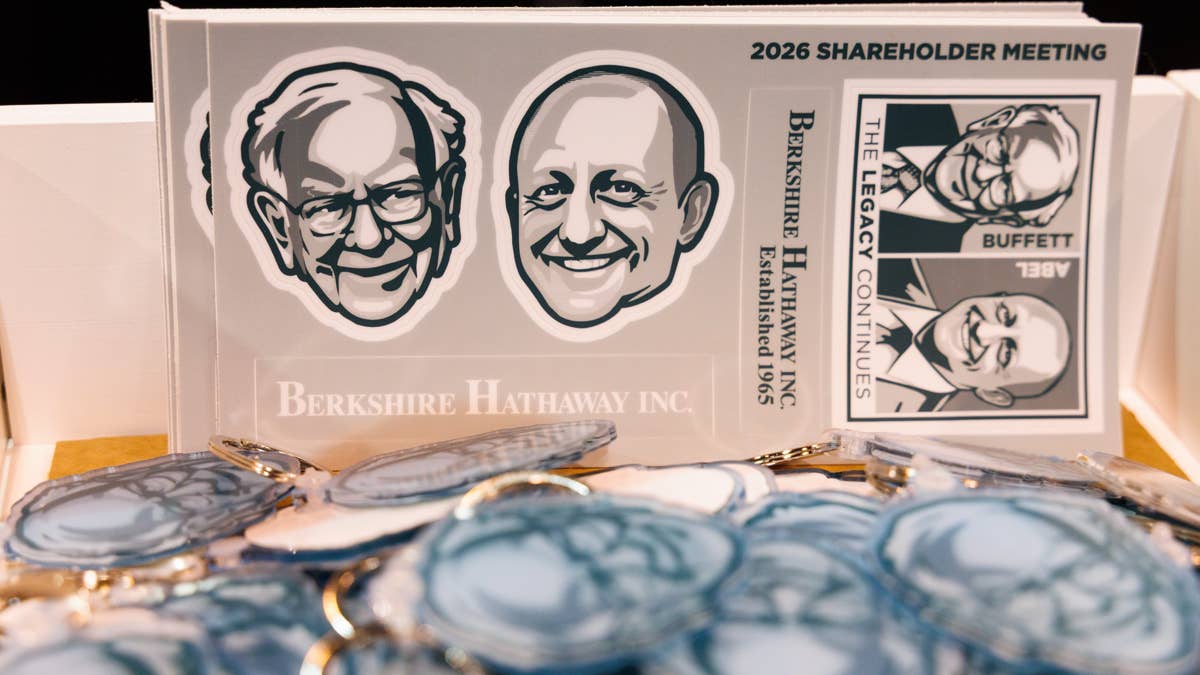
Buffett relinquished the CEO title on Jan. 1, passing the baton to Greg Abel after six decades of shaping Berkshire. He remains chairman, the largest shareholder in the corporation, and one of the most watched investors in history.
The situation makes for an odd transition. While Abel officially oversees Berkshire’s capital, Buffett still has the reputation, ownership stake, and clout to move markets with a few comments.
The Alphabet (GOOGL) (GOOG) bet is an early sign that the handoff may not be as abrupt as investors feared, according to Forbes.
Buffett said he initiated the position but also said Abel authorized the choice. Most crucially, Berkshire continued to add to its Alphabet position after Abel became CEO.
So the investment is more than just a wager on Google’s search business or on its position in AI. It’s a test of whether Berkshire can hand down Buffett’s investment process, not just his job title, to the next generation.
“I didn’t make any decisions that Greg Abel didn’t approve of, and vice versa,” Buffett said.
Berkshire’s biggest succession risk is capital allocation
Buffett isn’t making daily decisions for Berkshire’s businesses.
Insurance by Geico. BNSF runs a railroad. Berkshire Hathaway Energy owns utilities and energy infrastructure. The company’s manufacturing, service, and retail sectors have long operated in a decentralized framework.
Abel also brought a lot of operating experience. He was previously chief executive of Berkshire Hathaway Energy and was responsible for its noninsurance businesses. Berkshire’s 2026 proxy statement indicates that Abel succeeded Buffett, who remained chairman and held around 30% of Berkshire’s voting interest.
The harder task in delegating responsibilities is deciding what Berkshire should do with its money.
Buffett used insurance float and operating cash flow to buy businesses and publicly traded equities and let them compound for decades. His propensity to hold cash when possibilities looked undesirable was as vital as his readiness to make a concentrated bet when one appeared.
Abel inherited that problem on a scale never before seen.
Abel’s first annual shareholder letter stated Berkshire started 2026 with over $370 billion of cash and U.S. Treasury assets. The company’s operating companies generated $46 billion in cash flow in 2025.
That cash gives Berkshire a cushion, supports its insurance operations, and allows it to act quickly when other buyers need financing.
It also adds pressure. Cash may protect shareholder value when stocks are overvalued, but it is a drag when management cannot consistently identify attractive places to put it.
Related: Warren Buffett pulls no punches on stock market for 2026
Abel has tried to reassure shareholders that Berkshire’s framework will stay in place.
In his 2025 shareholder letter, he said the company would continue to invest primarily in businesses it understands, focusing capital in high-conviction possibilities and calculating returns over extraordinarily long periods. He also noted the CEO is ultimately responsible for Berkshire’s share portfolio.
That last bit is crucial. Buffett might still give some suggestions, but it’s now Abel’s job to figure out if those ideas satisfy Berkshire’s risk and return standards.
The Alphabet deal indicates the two men may share more investing judgment than the formal leadership shift shows.
This stability might alleviate a big anxiety baked into Berkshire stock: that its capital-allocation edge would exit the company when Buffett left the CEO’s office.
Alphabet shows how the Buffett-Abel handoff may work
Berkshire revealed a holding in Alphabet for the first time for the quarter ended Sept. 30, 2025.
The corporation owned about 17.85 million Class A Alphabet shares, worth about $4.3 billion, its Securities and Exchange Commission Form 13F said.
The job became more important with Abel as CEO. Berkshire Hathaway’s latest Form 13F for the first quarter of 2026 recorded almost 57.8 million Alphabet shares in its investment accounts. Their worth was at $16.6 billion on March 31.
More Warren Buffett:
- Warren Buffett’s $187 billion warning grows louder every day
- Warren Buffett sends 7-word instruction to stock market investors
- Warren Buffett successor triggers massive stock portfolio shakeup
Form 13F does not specify which individual made each stock selection. Berkshire’s disclosure also includes holdings handled by a range of subsidiaries and investment managers.
That question was somewhat answered when Buffett disclosed his investment in Alphabet.
The time is a more crucial signal of succession.
Berkshire started the role when Buffett was CEO and extended it after Abel took over. It appears to straddle the eras of leadership rather than belong to one or the other.
Alphabet also meets more closely with Berkshire’s traditional requirements than its tech label suggests.
The corporation owns a mature search platform, a vast advertising network, YouTube, Google Cloud, and a rising subscription business. These businesses create recurring income streams and offer Alphabet various options to support its AI expansion.
Alphabet’s sales jumped 22% to $109.9 billion in the first quarter of 2026. Google Search and others’ revenue rose 19 percent, and revenue from Google Cloud climbed 63 percent to $20 billion.
In the cloud business, operating income tripled to $6.6 billion, while the operating margin for that segment increased to 32.9%, according to Zacks. Alphabet said it expected to recognize just over half of the backlog as revenue within 24 months.
Those figures help explain why Buffett could consider Alphabet an intelligible firm, even with all of its technical sophistication.
The investment case does not depend on forecasting which one AI model will prevail. It’s based on the premise that Search, advertising, and cloud computing provide Alphabet with the distribution, customer relationships, and revenue flow that most AI competitors can’t readily replicate.
The legal status of Alphabet had also become clearer before Berkshire made its investment. In September 2025, the Justice Department won remedies in its search-monopoly case against Google.
The regulations limited some deals and compelled Google to offer some search data and services to qualifying competitors, but the process gave investors additional insight into its impact on the firm.
Less ambiguity doesn’t mean no danger, however. Alphabet’s 2025 annual report continues to identify regulatory actions, competition, and the cost of artificial intelligence infrastructure among the factors that could affect its results.
This makes Berkshire’s increasing position especially revelatory.
Buffett and Abel weren’t buying a risk-free technology firm. They appeared to be deciding that Alphabet’s economic advantages outweighed those dangers for Berkshire.
What Berkshire investors should watch after Buffett’s endorsement
1. Will Berkshire continue adding to its Alphabet holdings?
The investment was considerable at the end of March, but still minor relative to Berkshire’s cash pile and its largest equity investments.
Additional buying would indicate that Alphabet is becoming one of Berkshire’s high-conviction investments rather than a temporary opportunity.
2. Who will make the next big decision at Berkshire?
Once Abel became CEO, Buffett told shareholders in November 2025 he would be “going quiet,” Newsweek reported. “Sort of,” he then added. His message to shareholders praised Abel as a strong manager, tireless worker, and honest communicator.
The Alphabet disclosure confirms that “quiet” doesn’t mean uninvolved.
Buffett’s engagement can calm shareholders as Abel makes his mark on the company. Yet if investors believe every positive decision is Buffett’s and every bad decision is the new guy’s, that might hinder the transfer, too. Abel needs investments that are unmistakably his own.
3. How will Berkshire handle the capital intensity of Alphabet?
The demand for AI processing capacity intensified, and the corporation raised its 2026 capital expenditure outlook to between $180 billion and $190 billion. Alphabet said the spending supported growth in Search, Google Cloud, and other artificial intelligence technologies.
That size poses a challenge to Buffett’s argument. Alphabet has typically created massive cash flows without the factories, inventory, or physical networks that come with Berkshire’s industrial operations. AI is making the company much more capital-intensive.
For Berkshire’s investment to attract long-term returns, Alphabet has to earn enough returns from data centers, chips, and energy obligations to support that spending.
4. What is Berkshire’s own rate of deployment?
Abel has claimed the company’s big cash pile is not a sign that it is stepping back from investment. He has also admitted that the scale of Berkshire makes it harder to compound rapidly.
Alphabet provides one answer to the scale challenge. With its huge market cap, Berkshire can invest billions of dollars in a firm without needing to own the entire company, and its liquidity allows it to increase or decrease its holdings without negotiating an acquisition.
Key takeaways for Berkshire investors
- Buffett said he initiated Berkshire’s Alphabet investment with Abel’s approval.
- Berkshire opened the position before Buffett retired as CEO and expanded it after Abel took control.
- The timing suggests Berkshire’s investment process may be transferring more smoothly than its leadership titles imply.
- Alphabet’s Search and cloud businesses provide earnings that distinguish it from speculative AI stocks.
- Alphabet’s enormous AI capital spending creates a significant return-on-investment risk.
- Abel still needs to establish an independent capital-allocation record.
Buffett’s Alphabet endorsement will naturally appeal to Alphabet shareholders.
He claimed he wished he had seen the potential earlier and argued the company had better odds than most investments sold on Wall Street. The bigger effect is for Berkshire stockholders, though.
The post-Buffett risk for the corporation was never that its railroad would forget how to carry freight or that its insurers would cease selling policies. It was that Berkshire might hold hundreds of billions of dollars without the judgment to use them.
Buffett’s continuous presence implies stockholders still can’t completely divorce Abel’s judgments from his influence. But the post survived the leadership change, was approved by both men, and was enlarged under the new CEO, which is a strong sign of continuity.
Berkshire does not ask Abel to take on Buffett’s persona or public face. He needs to use the discipline that let Buffett turn down most possibilities, move quickly on a few, and hold winning enterprises for years.
The Alphabet investment implies the method may outlive its originator. That may be the most crucial message in the whole conversation for shareholders anxious that Buffett’s departure will take away Berkshire’s most important competitive advantage.
Ultimately, Alphabet eases Berkshire’s succession concerns, since the investment crossed both leadership eras. It does not resolve the issue because Buffett still originated the idea.
Related: Warren Buffett’s $187 billion warning grows louder every day