TheStreet aims to feature only the best products and services. If you buy something via one of our links, we may earn a commission.
If there’s one thing that most folks can agree on, it’s that our health and our families’ health is one of the most important things in the world. Staying healthy and in tip-top shape isn’t something to mess around with, and while the right foods and the right exercise certainly can make all the difference in feeling and looking our best, so can the water that we’re drinking.
Water doesn’t just quench your thirst. It offers a whole host of benefits. It helps regulate your body temperature and prevent overheating, lubricate and cushion your joints, flush out waste, enhance memory and boost concentration, and lower your risk of urinary tract infections (UTIs) and kidney stones. That’s why the recommended daily 11.5 cups for an average adult isn’t just a lofty goal but a healthy suggestion. The problem comes when the quality of your water isn’t as pristine as it should be.
Although tap water is heavily regulated in most developed nations, there is still a risk of contamination when it makes its way from the water treatment facility to your faucet, especially when it’s flowing through old or faulty pipes. Occasionally some federal regulations also don’t cover all known or emerging contaminants and some legal limits are outdated making it always a good idea to take the safer route and invest in a water filter.
Not only do they remove trace contaminants, but they can improve taste and odor and are a more eco-friendly alternative to constantly buying bottled water. In fact, the average American household spends around $100 to $500 or more annually on bottled water — and a water filter can give you that same bottled water taste without shelling out all that money.
There are many different types of filters, but overall they pretty much produce the same results. By blocking, trapping, or chemically neutralizing contaminants in the water, not only can you improve the safety of your water but also the taste and odor. Although certainly not a necessity for your home, it’s fair to say that at the reasonable prices that water filters go for, it’s well worth the expense and extra protection to invest in one as soon as possible — especially when there are so many kinds to choose from.
Faucet-mounted filters
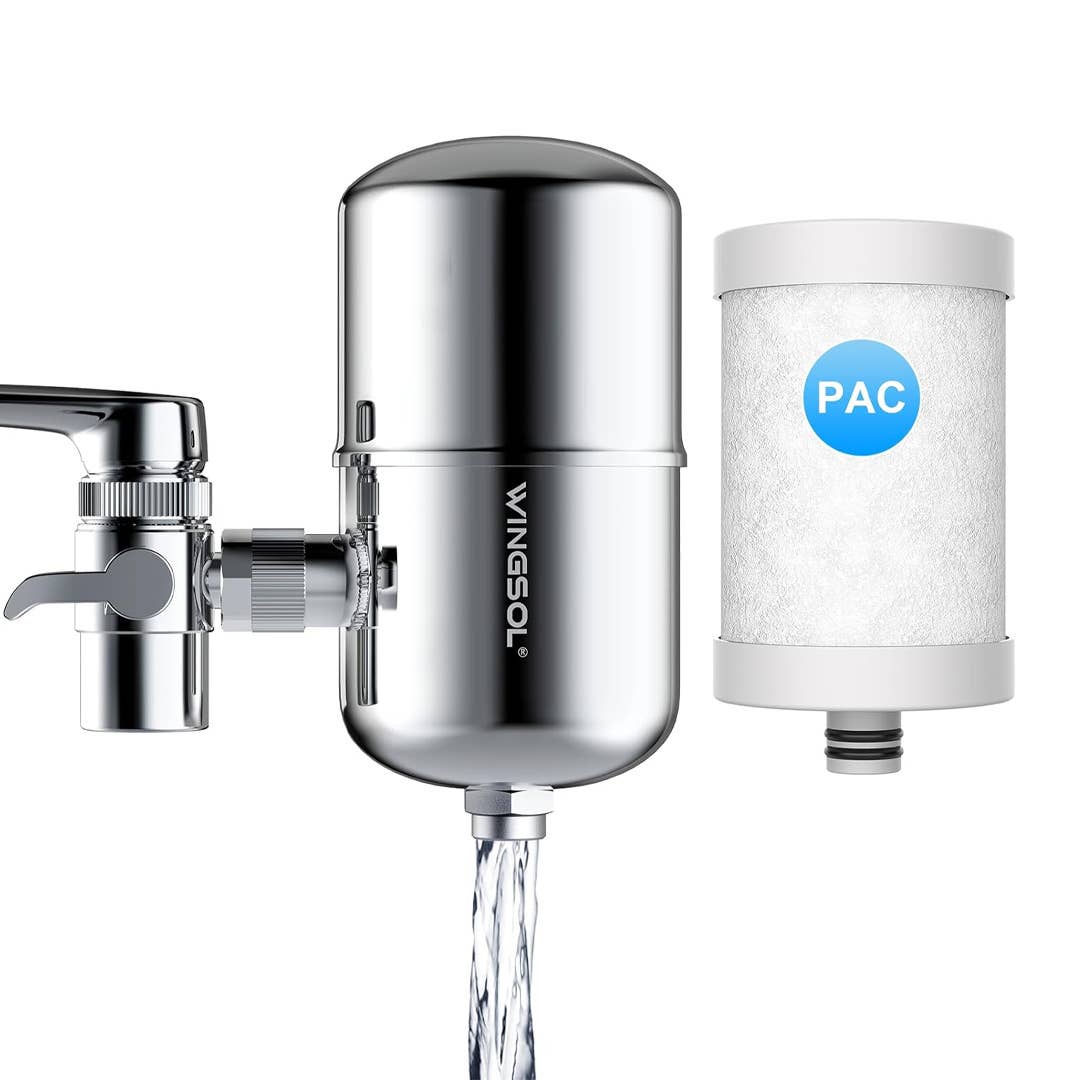
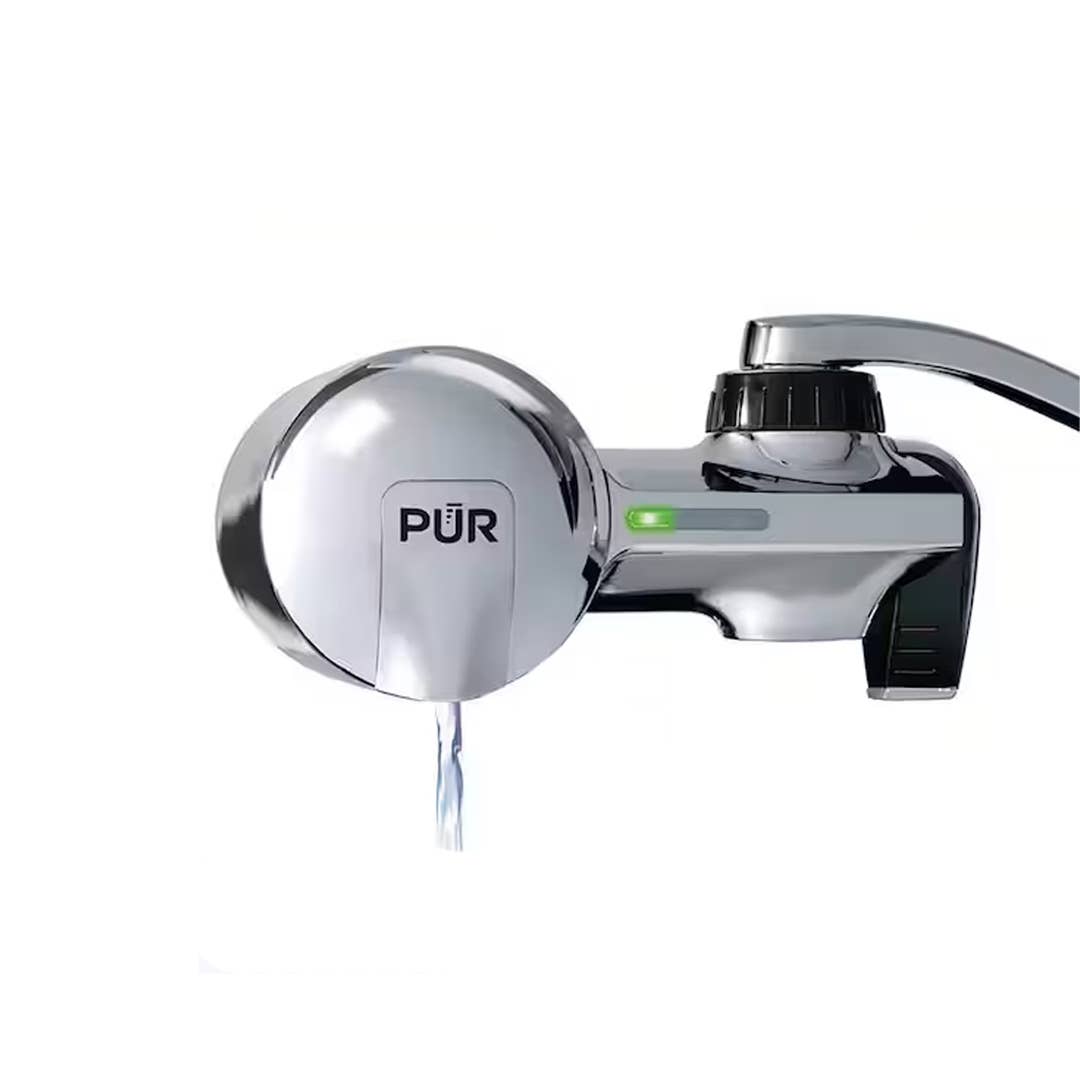
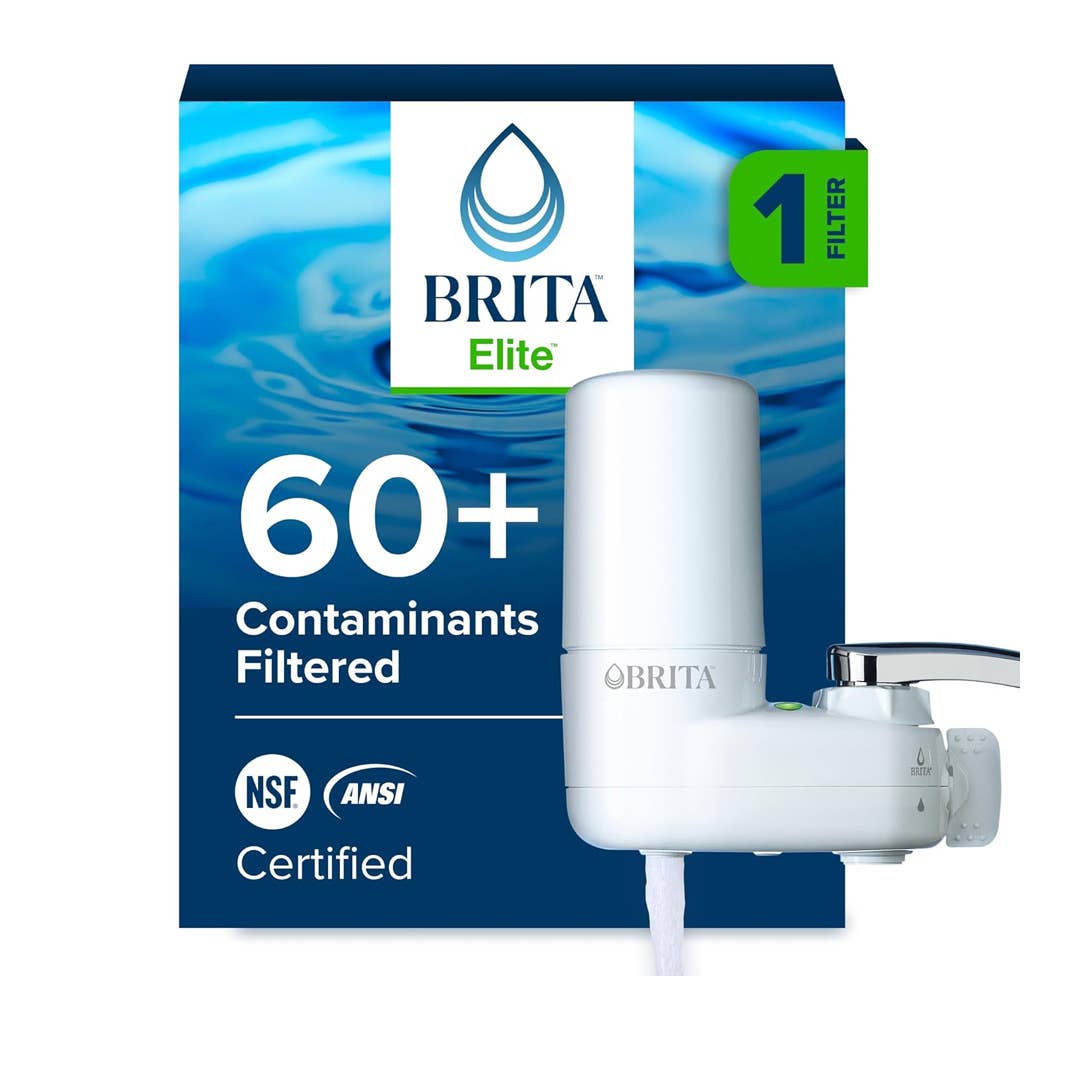
Faucet-mounted water filters are fairly self-explanatory and very easy to install. They are attached directly to your faucet, ensuring that whenever you turn it on water goes directly through it and into the multi-stage filtration cartridge. Most models use some sort of adsorption screen or carbon screen to filter out debris and contaminants, and many now have bypass valves so that you can switch between tap water and filtered water without needing to remove it completely.
Faucet filters should only be used with cold water, because hot water can damage the filter. Faucet filters typically need to be replaced every two to four months.
Wingsol Stainless Steel Faucet Water Filter
PUR Faucet Mount Filtration System
Brita Faucet Mount Water Filter System
Pitchers and dispensers
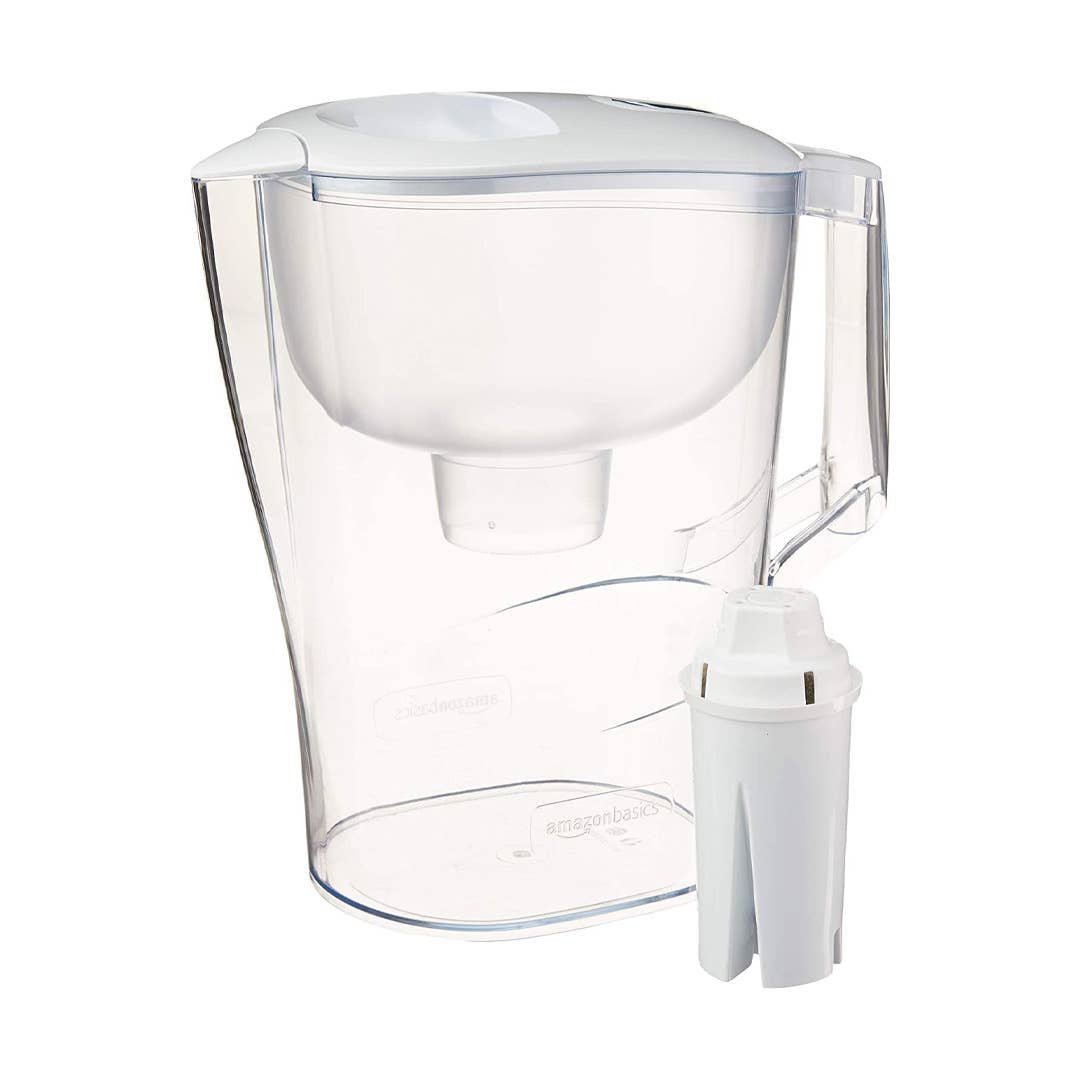
Unlike faucet filters, which bring the filter to the water source, pitchers and dispensers are filled with water and, using a gravity-fed system, purify the water for drinking. Most models feature a separate compartment that holds the unpurified water until it’s filtered and then dispenses into a separate area. Typically, pitchers and dispensers use a physical mesh screen or an activated carbon screen to filter our debris.
The difference between the two is mostly in regards to size. Pitchers hold anywhere between five to 12 cups of water while dispensers can hold between 18 to 44 cups. Pitchers are designed, for the most part, to be stored easily in your fridge, whereas dispensers are more limited in where they fit in the fridge. Most folks store them on the bottom shelf for easy access or on their countertops. Pitchers have a handle for easy pouring whereas dispensers typically have a push-button spigot. For smaller families or individuals who live alone, a pitcher is probably preferable over a dispenser, but for larger groups a dispenser would be the best way to go. Filters typically need to be changed every two months or after filtering 40 gallons of water.
Amazon Basics 10-Cup Pitcher with Filter
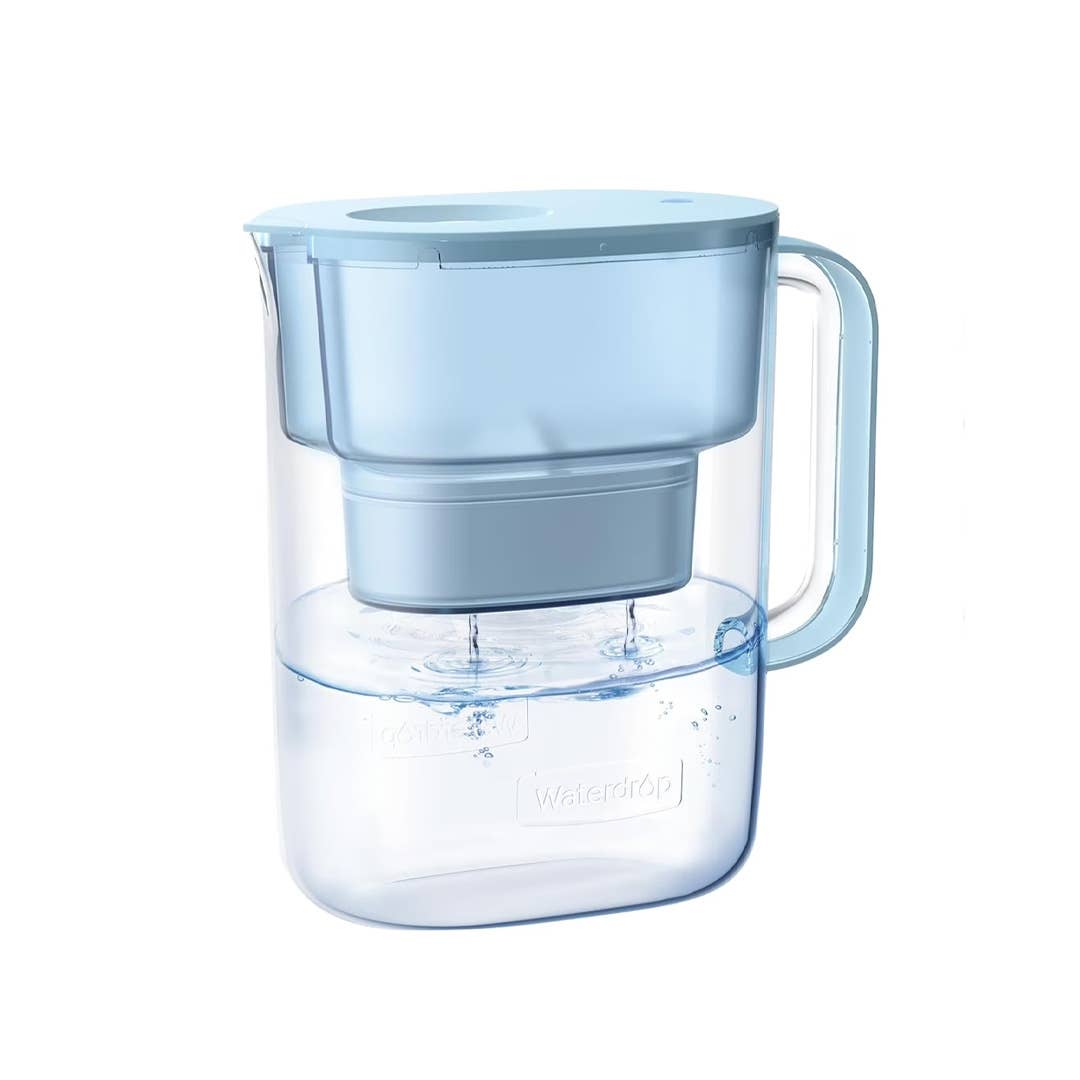
Waterdrop Water Filtration Pitcher
ZeroWater 22-Cup 5-Stage Water Filter Dispenser

Water bottles
Perfect for on-the-go use or outdoor activities, many water bottles are being designed with filter systems. Using built-in or replaceable filter cartridges, water is filtered as you drink from these specialized models. As you sip through a straw or spout, the water is sucked through the microscopic filtration layers, purifying it and neutralizing it, leaving you drinking fresh, clean water with every sip. Other models use a press pump design where you manually press or pump an internal filter plunger down into a filled water bottle to clean dirty water and transform it into a drinkable state. There are also filter adapters that attach to the bottom of water bottles.
They are a cost-effective, very eco-friendly option that’s perfect for folks constantly on the move or on the go. When you don’t know where you’ll be getting your water throughout the day, it’s the perfect way to alleviate any worries. Filters typically need to be changed every two to six months or after filtering 25 to 40 gallons of water.
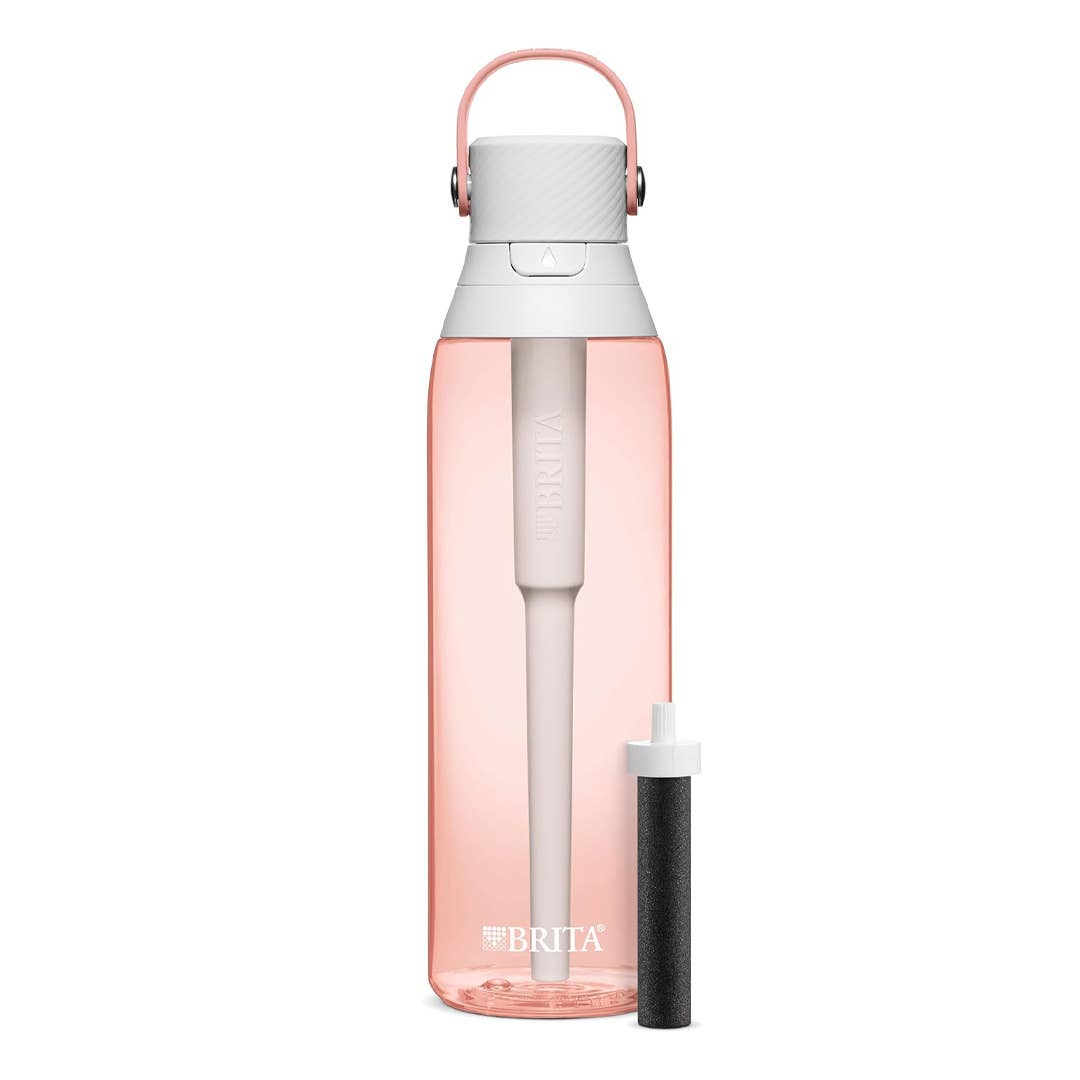
Brita Hard-Sided Plastic Filtering Water Bottle
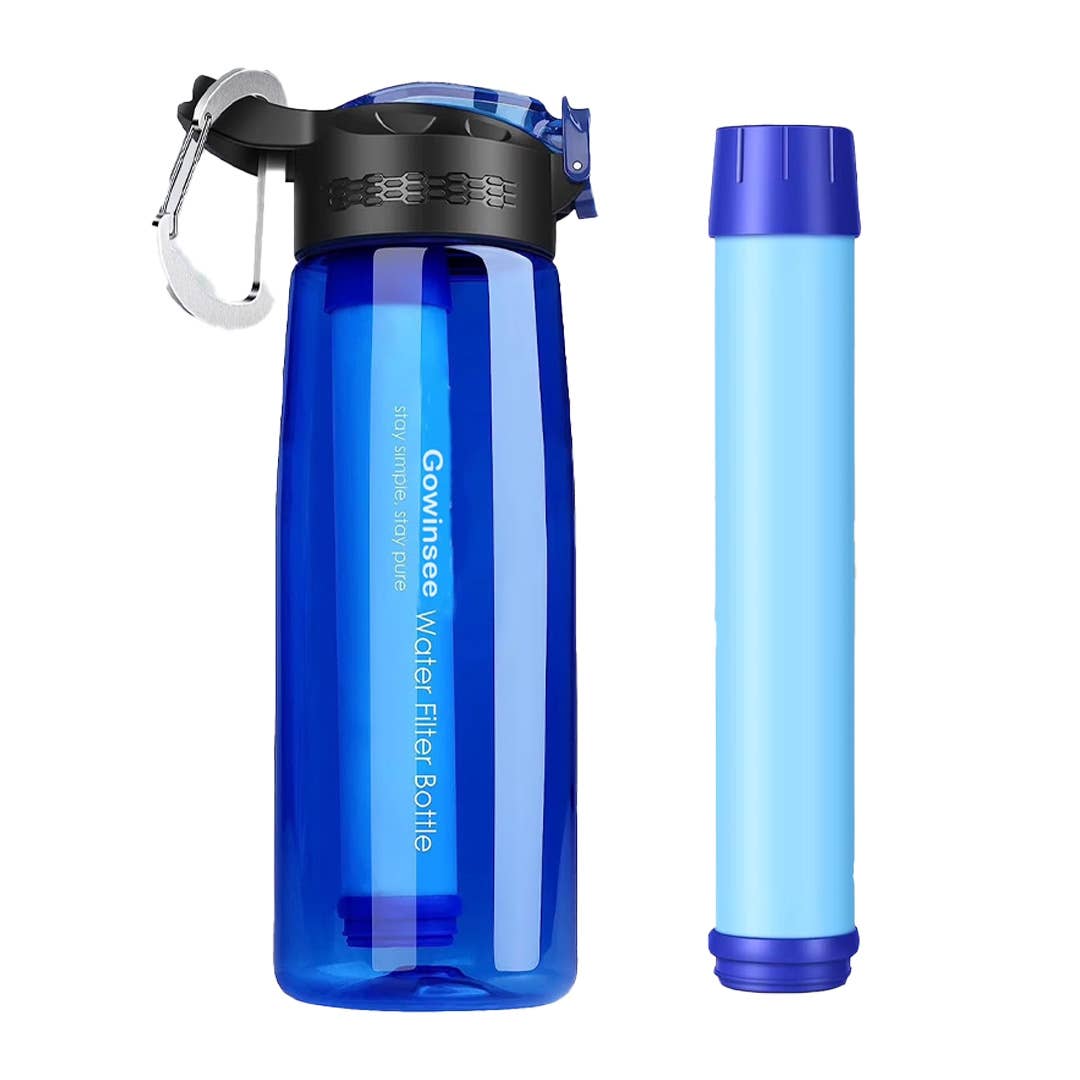
Gowinsee Filtered Water Bottle
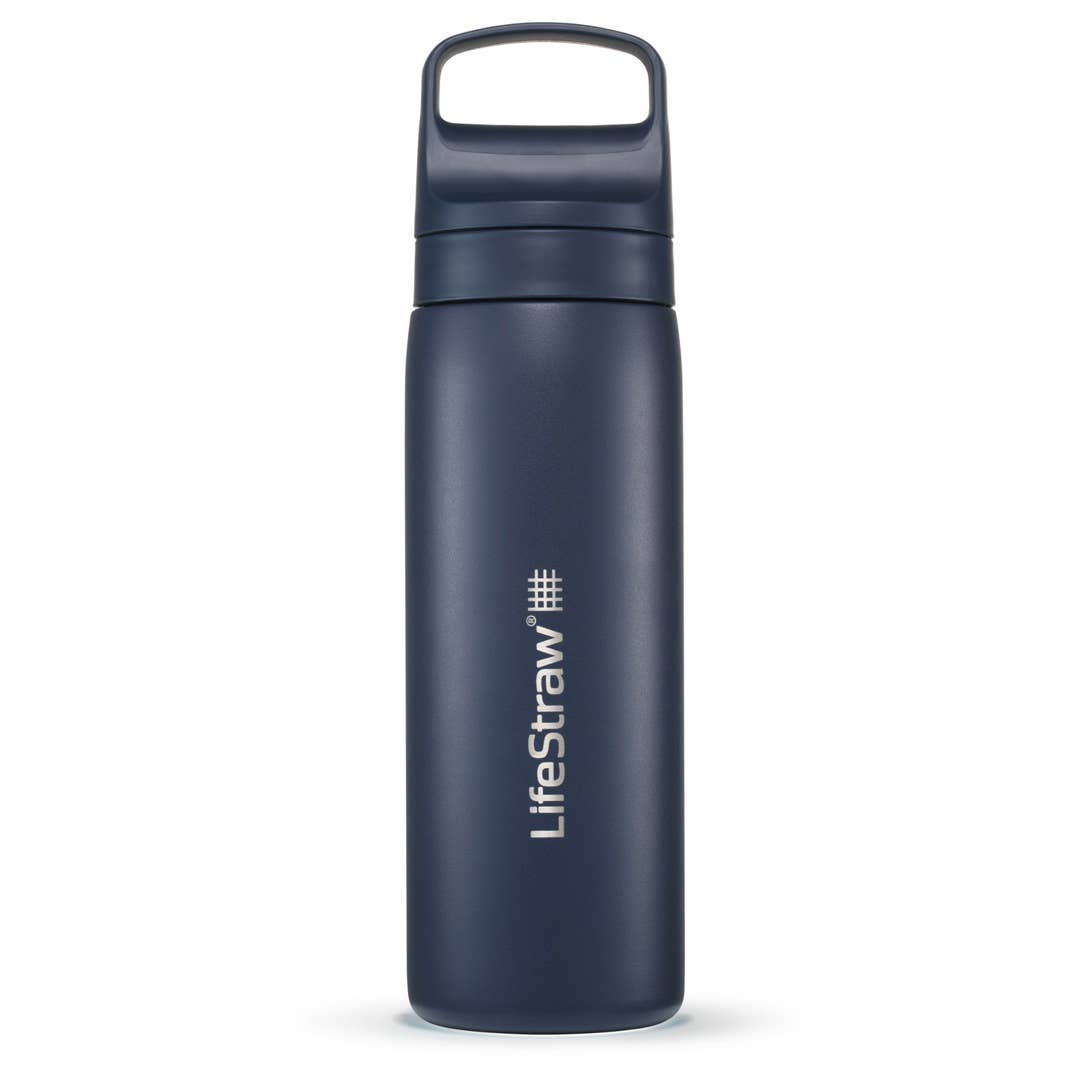
LifeStraw Go Series Insulated Water Filter Bottle
Stand-alone systems
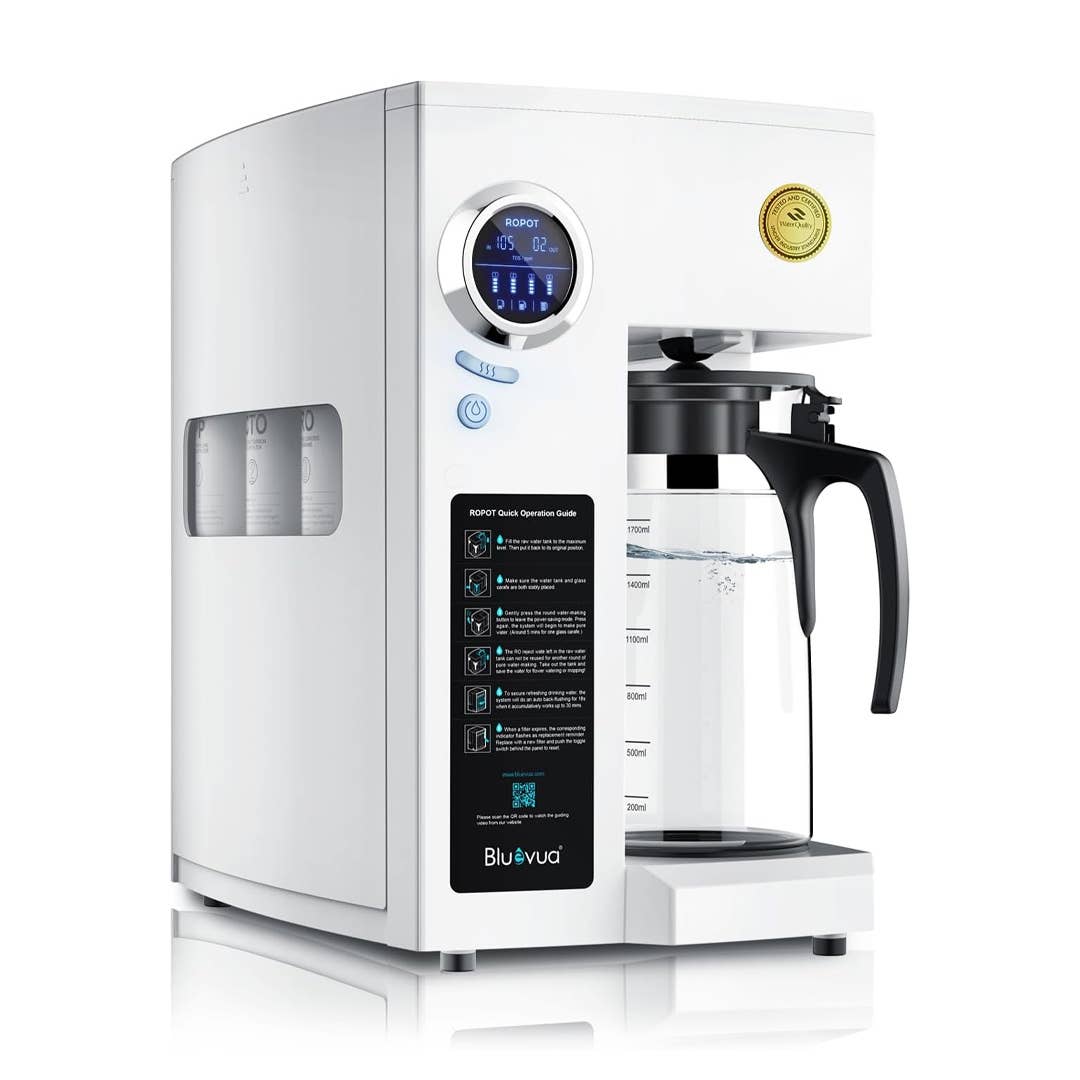
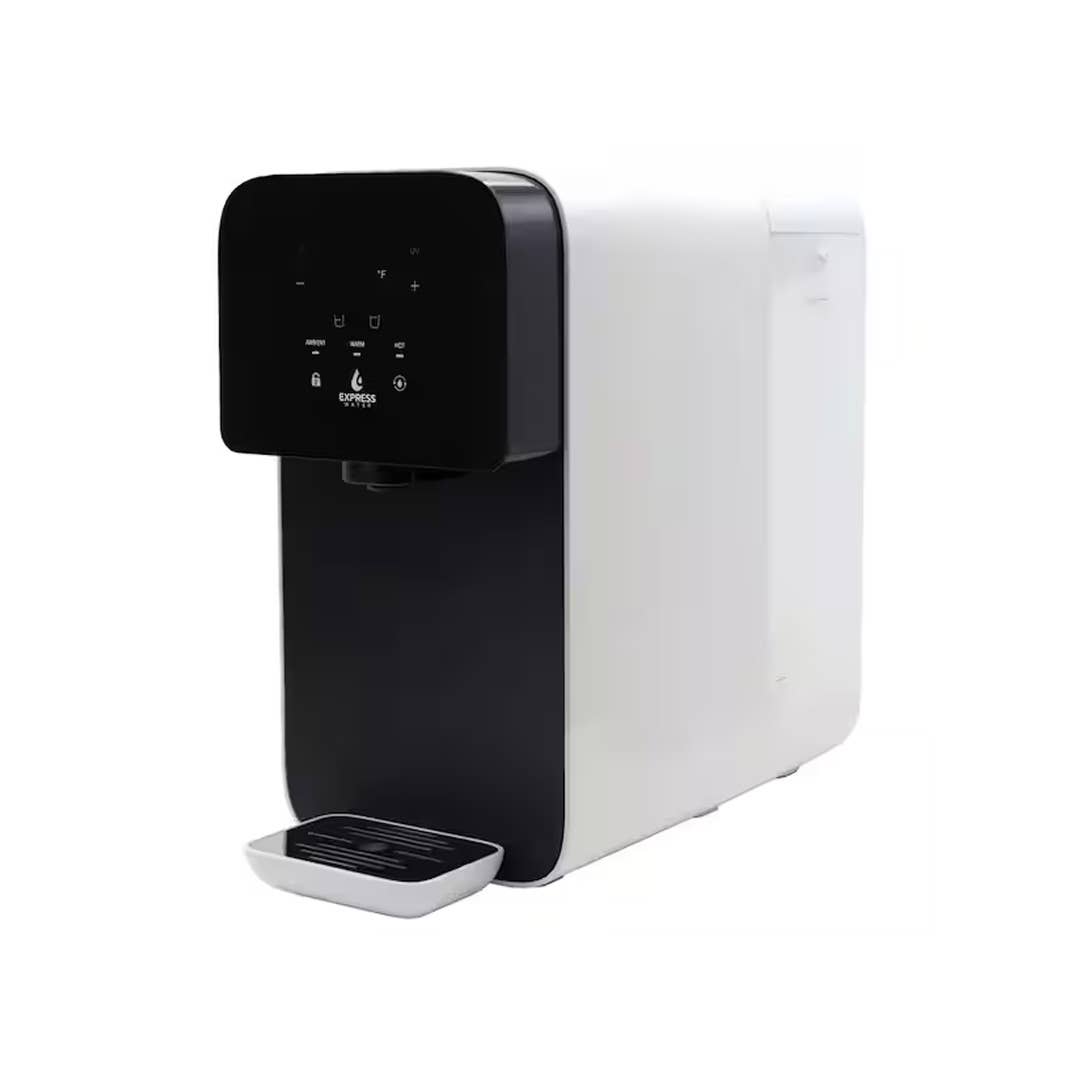
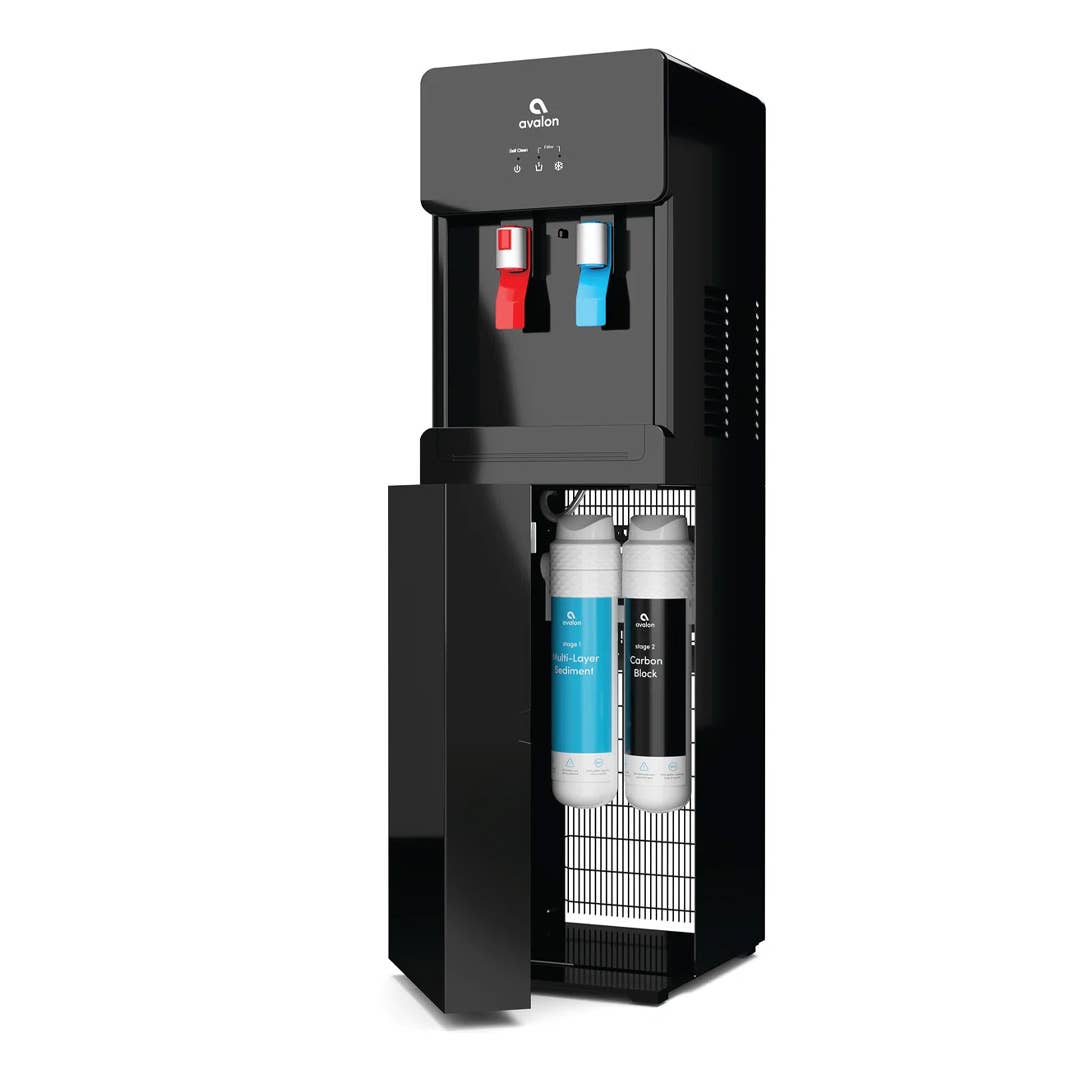
If you have the space for it, a stand-alone filtration system isn’t the worst idea. Operating separately from the home’s main plumbing, most stand-alone systems use activated carbon, reverse osmosis, or distillation to purify and filter water. Whether you’re going through water quickly and you’re tired of constantly filling up the pitcher or dispenser, they are the easy way to ensure that everyone has access to clean water with little to no work on your end and eliminating the use of heavy plastic jugs. Designed as countertop units or gravity-fed systems, they almost feel like a permanent fixture in your home without the work or complex installation required. They provide an endless supply of filtered water without any heavy lifting, and many offer water in various temperatures like ice-cold or boiling hot, making it convenient for all kinds of use. Because they are more spacious, they are not ideal for folks who have limited or small spaces. Filters typically need changing every three to 12 months depending on filter type, water usage, and local water quality.
Bluevua Countertop Water Filter System
Express Water UV Countertop Water Filter System
Avalon Free Standing Electric Filtered Water Dispenser
Under-sink systems
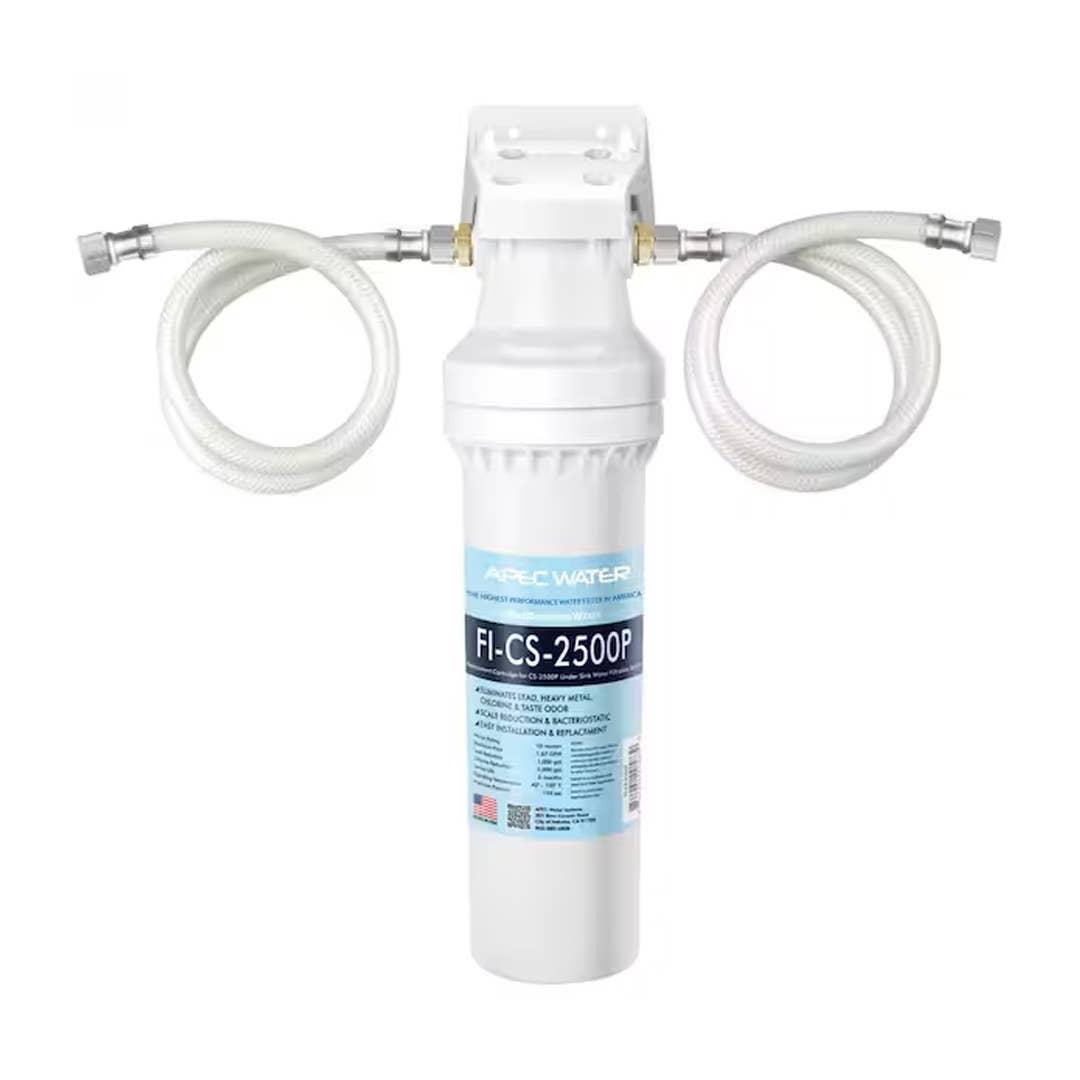
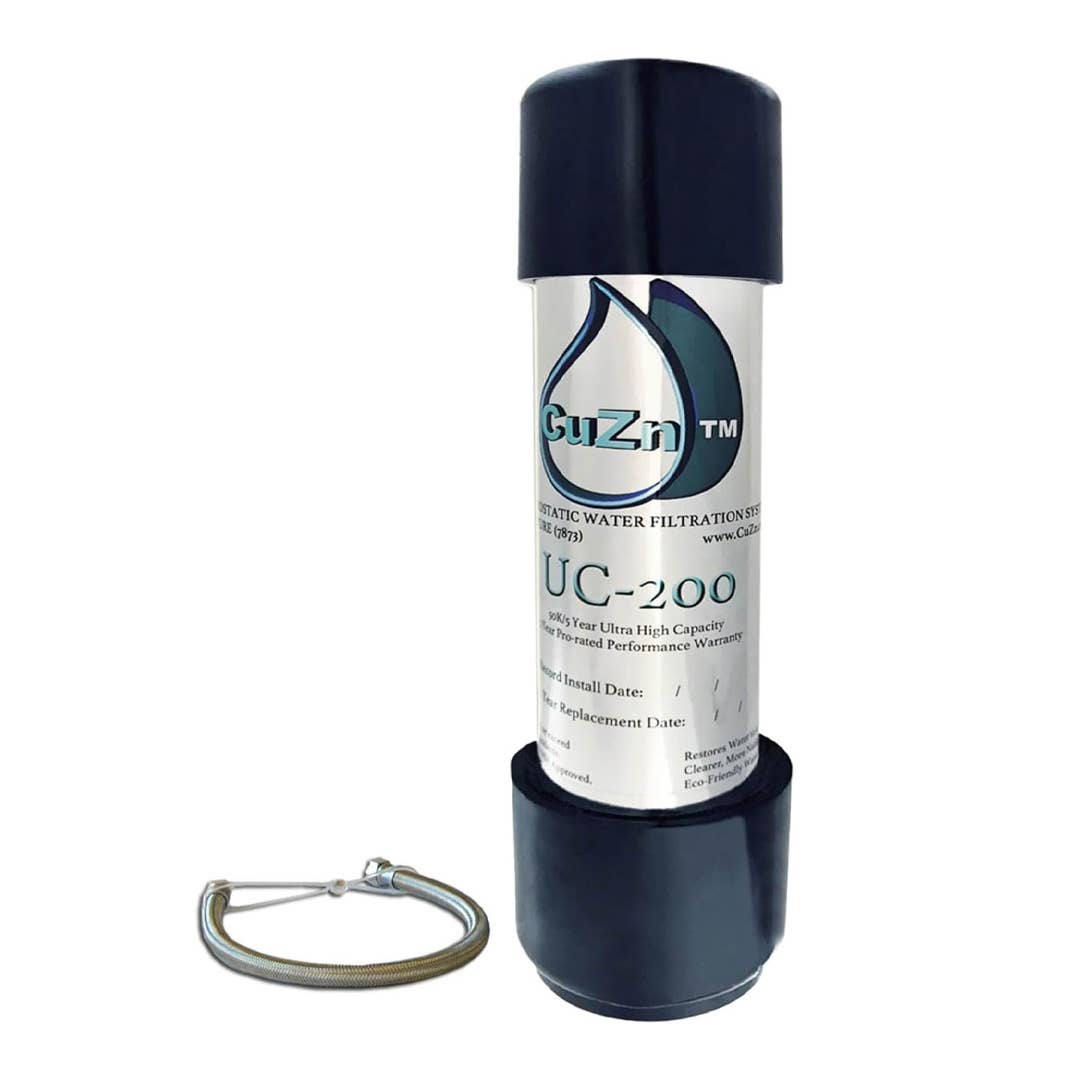
Whereas the faucet-mounted filter connects above the sink to the faucet, the under-sink filtration systems connect beneath the sink — fairly self-explanatory, right? The filter is attached to your existing cold water line, diverting a portion of the water supply directly into the filtration system rather than letting it go through the faucet. After passing through a multi-stage filtration system, the water is pushed back through the pipes out of your dedicated drinking faucet. Thus, under-sink systems are designed with two distinct faucets — one for washing and one for drinking.
The bonus of an under-sink system is that you don’t have to worry about storage or taking up precious counter or fridge space. They are also praised for their heavy-duty filtration systems, highly effective at reducing and eliminating lead, mercury, other heavy metals, chlorine and chloramines, pesticides, microplastics, and harmful cysts. Requiring little to no maintenance, other than a filter change every six to 12 months, they are expensive in installation but can save you more money in the long run.
Waterdrop Under Sink Water Filter System
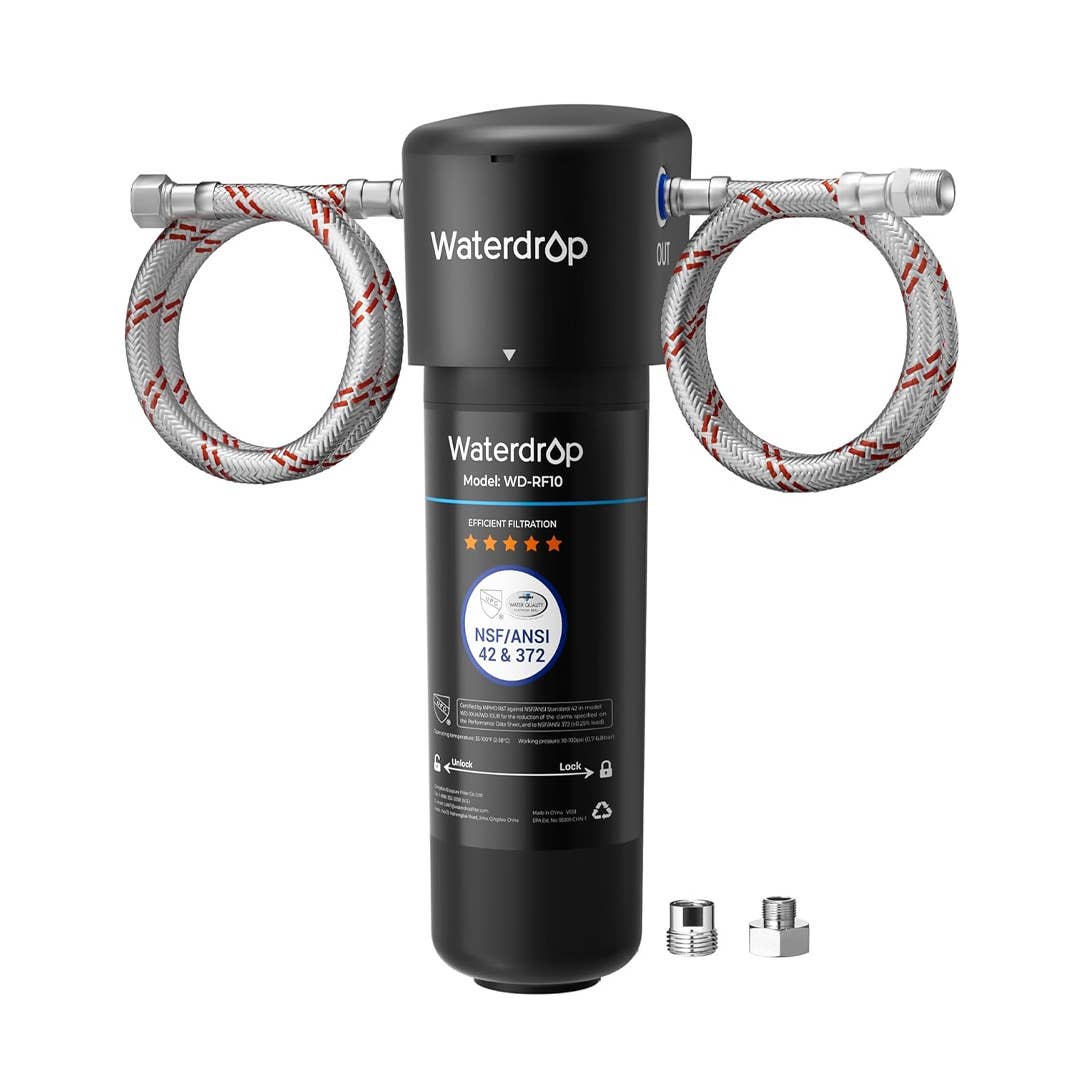
APEC Water Systems CS-Series Under-Counter Water Filtration System
CuZn Under Sink Water Filter
How do water filters work?
Water filters work in a few different ways. Physical filtration models typically use a woven mesh fabric or screen to trap larger debris, rust flakes, or sentiment. You’re less likely to come into contact with these in your home. Adsorption models, the most common for at-home use, use activated carbon to filter out contaminants. The carbon has a large surface area that chemically attracts and traps unwanted molecules like chlorine or pesticides. Finally, there are reverse osmosis systems which use a multi-step process to filter our dissolved minerals, heavy metals, and salts. It operates by forcing water through an incredibly fine semi-permeable membrane, cleaning the water and leaving it completely purified.
What do water filters remove?
Some people conjure up images of large debris when we talk about filtering water, but most contaminants remain unseen. Some contaminants, like sulfur or chlorine, can affect the way the water tastes or smells, and by removing it you can enjoy a more refreshing drink. Lead, copper and PFAS, which can come from old plumbing or agricultural runoff, are also removed with water filters, as are microplastics, bacteria, and parasites.
TheStreet Shopping is your guide for shopping insights and advice. We look beyond the price tag to find the best value in home, tech, and wellness gear based on product features and real-world use. Read more about our Editorial Standards and How We Choose Our Shopping Deals.