Wells Fargo made a significant call on interest rates six weeks ago. On May 13, its economists made a different one. And the reasoning behind the reversal says something important about how this bank reads the current inflation environment.
The disagreement between Wells Fargo and two other major institutions on what comes next for the Fed is wide enough that investors cannot afford to ignore it.
What Wells Fargo now expects from the Fed in 2026
Wells Fargo reaffirmed on May 13 its forecast that the Federal Reserve will implement two quarter-point rate cuts in 2026, despite April’s Consumer Price Index and Producer Price Index both coming in hotter than expected.
The bank’s economists attribute the current inflation pressures primarily to rising energy prices driven by geopolitical factors, specifically the Iran war and the Strait of Hormuz disruption.
More Federal Reserve:
- Federal reserve reveals troubling reality about wealthy Americans
- Fidelity, Fed raise red flags on 401(k)s and IRAs
They believe those pressures are likely to be “significant but temporary,” and that a marginal softening in the labor market this summer will compel the Fed to take action to support economic growth, GuruFocus confirmed.
That view marks a full reversal of Wells Fargo’s April 6 position, when the bank formally dropped its rate cut forecast for 2026 entirely. At the time, the bank said “the balance of risks has shifted to incentivize patience from the Fed.” The return to a two-cut forecast on May 13 reflects how quickly the macro picture has shifted as energy-driven inflation data came in.
Why Wells Fargo sees current inflation as temporary, not structural
The distinction Wells Fargo is making is important. Not all inflation is the same from a monetary policy perspective. Inflation driven by supply shocks, particularly energy price spikes from geopolitical disruptions, tends to be self-limiting in a way that demand-driven inflation is not. Consumers and businesses respond to higher prices by reducing consumption, which itself eases pressure over time.
Wells Fargo’s view is that the April CPI and PPI prints, while uncomfortable, reflect that supply-shock dynamic rather than a broad-based reacceleration of underlying price pressures. If the energy shock eventually resolves, whether through diplomacy or market adjustment, the inflationary impulse from that source fades, leaving the Fed with room to respond to any softening in the labor market.
That argument contrasts sharply with what Citigroup has been signaling. Citigroup revised its expected timeline for rate cuts due to robust employment figures and persistent inflation risks, according to GuruFocus.
The disagreement between two major banks on what the same inflation data mean illustrates how contested the rate outlook has become.
What JPMorgan and the Fed itself are signaling
Wells Fargo’s two-cut call also sits to the dovish side of JPMorgan’s current base case. JPMorgan economists project the Fed will hold rates steady for the rest of 2026 before potentially hiking a quarter point in the third quarter of 2027, according to J.P. Morgan Global Research.
JPMorgan’s view holds that rate cuts are more likely only if the labor market weakens significantly or if the economic fallout from higher energy prices becomes more severe than currently projected.
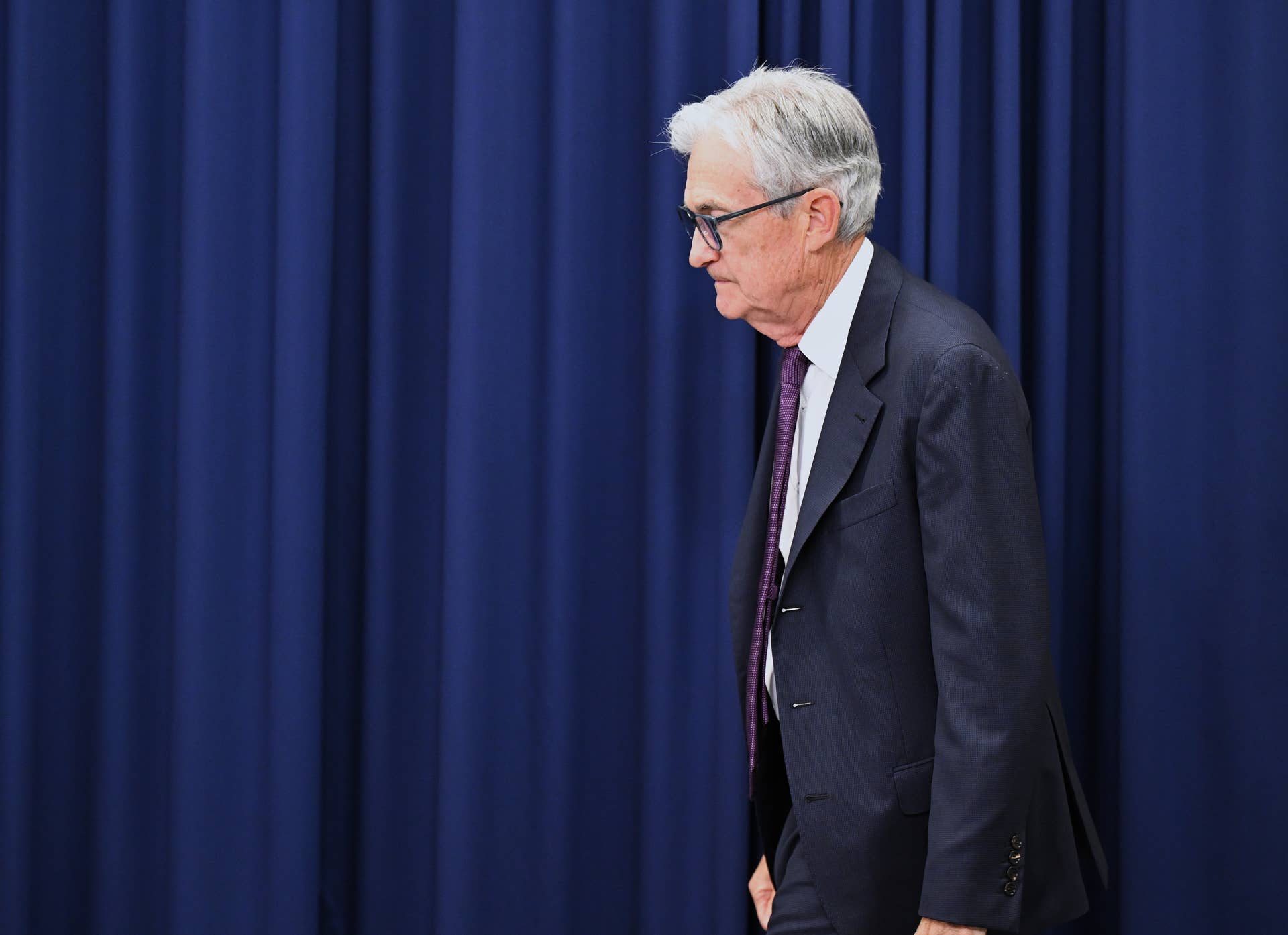
Fed Chair Jerome Powell has reinforced a cautious tone, indicating the central bank is in a position to “wait and see” how evolving risks, including energy shocks tied to the Middle East conflict, affect inflation and growth.
That language leaves room for cuts if conditions deteriorate without committing to any specific timeline, according to the Federal Reserve.
Rui/Getty Images
What the rate cut debate means for markets and investors
The divide between Wells Fargo, Citigroup, and JPMorgan on the rate outlook reflects a genuine uncertainty about how the current macro environment will resolve. Each institution is looking at the same data and arriving at materially different conclusions about what the Fed will do. That kind of divergence is itself a signal about how elevated uncertainty is right now.
For markets, the difference between two cuts, no cuts, and a potential hike by mid-2027 is enormous. Lower rates would support rate-sensitive assets including real estate, utilities, and highly leveraged companies, ease credit conditions, and reduce borrowing costs for consumers carrying floating-rate debt. A higher-for-longer scenario has the opposite effect on each of those categories.
The next several months of inflation and labor market data will do more to resolve this debate than any individual bank’s forecast. If the energy shock fades and core inflation moderates as Wells Fargo expects, the two-cut view looks prescient.
If inflation stays elevated, JPMorgan’s more cautious position will look like the better call. The Fed itself will be watching exactly that data before it decides.
Key figures on the 2026 Fed rate outlook as of May 13:
- Wells Fargo forecast: Two quarter-point rate cuts in 2026, reaffirmed May 13; energy-driven inflation viewed as “significant but temporary,” according to GuruFocus
- Wells Fargo’s prior position: No rate cuts expected in 2026, announced April 6; reversed on May 13
- Citigroup view: Revised expected cut timeline later due to robust employment and persistent inflation risks, according to GuruFocus
- JPMorgan base case: Fed holds rates steady through end of 2026; potential quarter-point hike in Q3 2027 if inflation remains elevated, according to J.P. Morgan Global Research
- Fed Chair Powell’s position: “Wait and see” on evolving geopolitical and energy risks before adjusting policy, according to the Federal Reserve
- Recent inflation triggers: April CPI and PPI, which both came in hotter than expected, driven primarily by energy prices, GuruFocus confirmed
Why the timing of interest rate cuts matters as much as the number
Wells Fargo’s forecast says two cuts are coming, but the bank points to summer labor market softening as the catalyst. That timing matters because it tells investors where to look for the trigger.
If unemployment starts rising or job growth decelerates meaningfully in June and July payroll reports, that would give the Fed cover to begin easing in the fall, consistent with Wells Fargo’s timeline.
Markets often move most sharply not when cuts actually happen but when the narrative shifts and traders collectively decide they believe cuts are coming. Wells Fargo is effectively saying the current pessimism on rate cuts is overdone, and that when the data turns, the move in rate-sensitive assets could be faster than the current mood implies.
Whether that plays out depends on whether energy prices stabilize, whether the labor market shows the softening Wells Fargo expects, and whether core inflation decelerates enough to give the Fed confidence it has not lost control of the disinflation process.
Those are three independent variables, each with its own uncertainty range. The fact that Wells Fargo is willing to call two cuts despite that uncertainty is itself a signal worth noting.