Costco gets a lot of attention for its $1.50 hot dog and soda combination meal and its $4.99 rotisserie chicken, but that’s not the biggest driver for the chain.
In fact, even though the warehouse club has built its business around the promise of low prices, even that isn’t directly what’s driving the majority of customers to shop there.
“Store brands influence where people grocery shop. 56% of shoppers say their primary store’s private brand selection is very or extremely important to their decision to shop there,” according to The Food Industry Association’s annual “Power of Private Brands 2026: Consumer Trends – From Stores to Homes.”
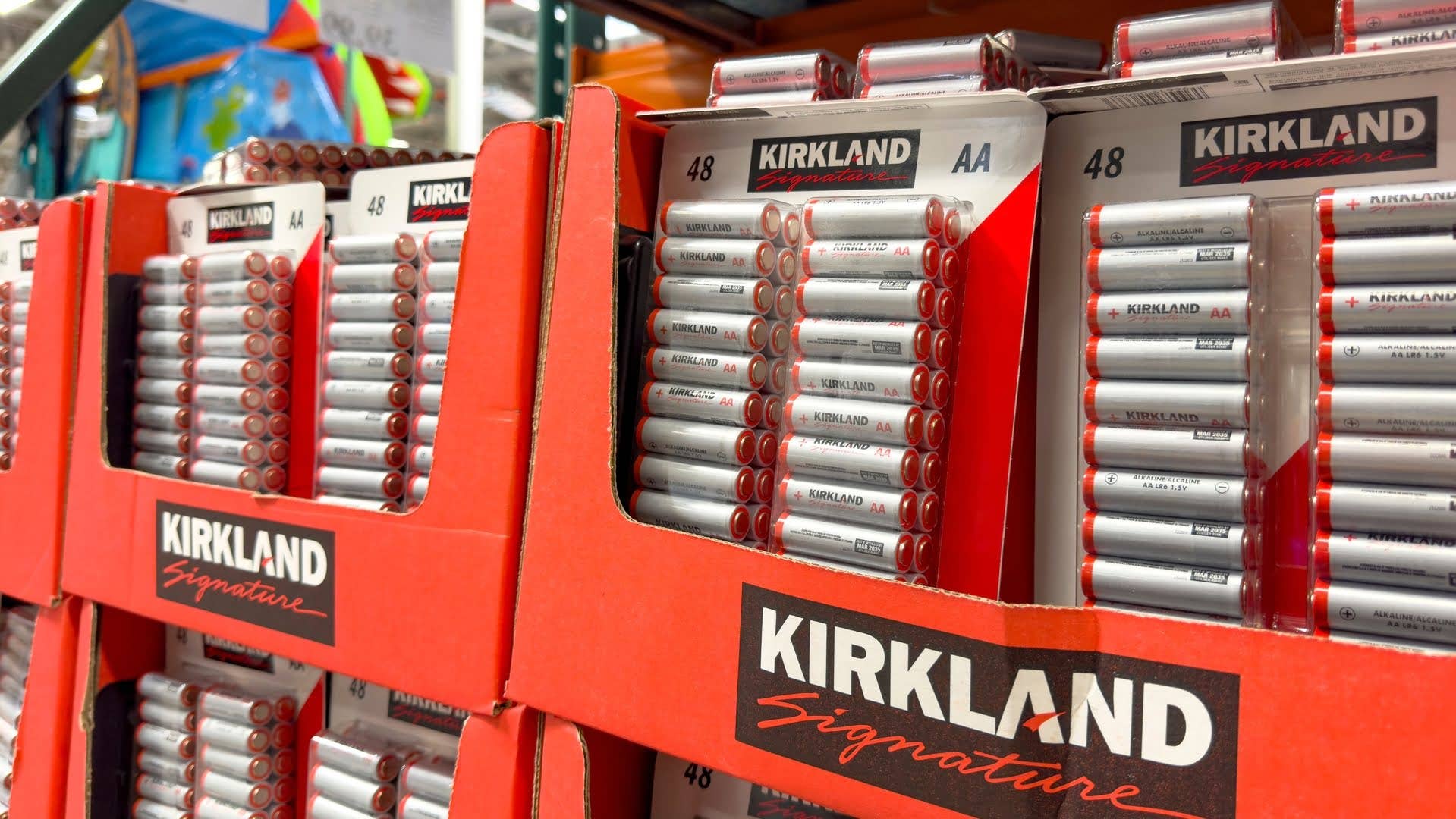
Costco’s private label brand, or house brand, as it’s sometimes called, Kirkland Signature has a massive edge over rivals including Kroger, Walmart, and Target, all of which have invested heavily in private labels.
Costco had a private label head start
Kirkland Signature grew out of a failed plan by Costco founder Jim Sinegal.
“Between 1981 and 1991, leadership at the retailer began noticing price increases for name-brand products — like Clorox, Gillette, and Quaker Oats — carried in Costco stores. Around the same time, Costco co-founder and former CEO James (Jim) Sinegal also observed that customers in Europe were starting to choose private label items instead of name-brand options” Food & Wine reported.
That lead to the chain releasing around 30 different private label brands in the early 90s. Those included Chelsea toilet paper, Meridian coffee, Cloud detergent, Pinnacle legal tablets, and more.
Costco had the right idea in producing its own items that compared well to national brands at favorable prices, but it was not until 1995 that Sinegal decided to consolidate under a single label.
“In 1995, Sinegal was motivated to unify all products under one private label after a warehouse manager in Los Angeles struggled to recall the name of one of Costco’s many in-house brands. To simplify branding for its private label items, they were grouped under a single name: Kirkland Signature,” Food & Wine added.
It was a change that put Costco on its current path and a move that ultimately changed expectations for private labels.
Shutterstock
Costco made private labels acceptable
Supermarkets carried private labels in the 1990s, but my experience with them was that they were more about value than quality. My local Star Market, for example, carried a Lucky Charms knockoff featuring a wizard sold in plastic bags rather than a cardboard box.
Stores still carried white label beer cans and other generics.
CNN explained the operating environment for house brands in the 1990s.
“Most customers were fiercely loyal to specific brands, not retailers. A store that didn’t carry major labels would likely get crushed, which gave manufacturers immense leverage,” CNN reported. “Additionally, many store brands were also considered dull, cheap knockoffs of national brands.”
Costco changed that by building a reputation for Kirkland as a high-quality brand.
“Kirkland is a brand in its own right,” Barclay’s Retail Analyst Karen Short told CNN. “It is one of the reasons people go to Costco. That’s not necessarily something you can say about many private labels.”
RTMNexus CEO Dominick Miserandino told TheStreet that Costco has built equity in Kirkland Signature over decades and that has paid off.
“It’s simple, they’ve established a level of quality and people appreciate that quality of Kirkland brands over the other house brands,” he said.
Private label sales are growing
“Nine in 10 American households (92%) currently have store brand products at home, up from 89% last year,” according to the FMI report.
The study also showed that Americans are buying more store brands.
- Nearly half of shoppers increased their store brand purchases over the past year, compared to the 31% who increased national brand purchases.
- Shoppers are increasingly buying store brands because they genuinely like them. Taste is now cited by 37% of shoppers buying more store brands, up from 26% in 2023, and quality has risen from 30% to 39% over the same period.
“Consumers aren’t just choosing store brands out of habit or necessity; they’re choosing them because they’ve earned the trust of American families,” said Tom Cosgrove, director of industry relations for FMI.
Costco, like most retailers, does not break out its house brand sales in its earnings reports, but some numbers have been reported.
Kirkland Signature “accounts for around $86 billion in annual sales, or around a third of Costco’s total haul,” according to a Wall Street Journal report from earlier this year.
By comparison, Kroger’s numerous private label brands last year brought in $32 billion, or about 25% of the supermarket chain’s total sales excluding fuel, according to an SEC regulatory filing.
Costco plans to continue to build on its Kirkland Signature edge.
“Kirkland Signature remains a top focus to deliver great value for our members, with KS items typically offering 15% to 20% value compared to the national brand alternative, with equal or better quality. In Q2, we launched approximately 30 new KS items, including crispy wings, blackened salmon, and various apparel items,” CFO Gary Millerchip said during Costco’s second-quarter earnings call.
Related: Costco invests in Kirkland brand, shares special dividend news