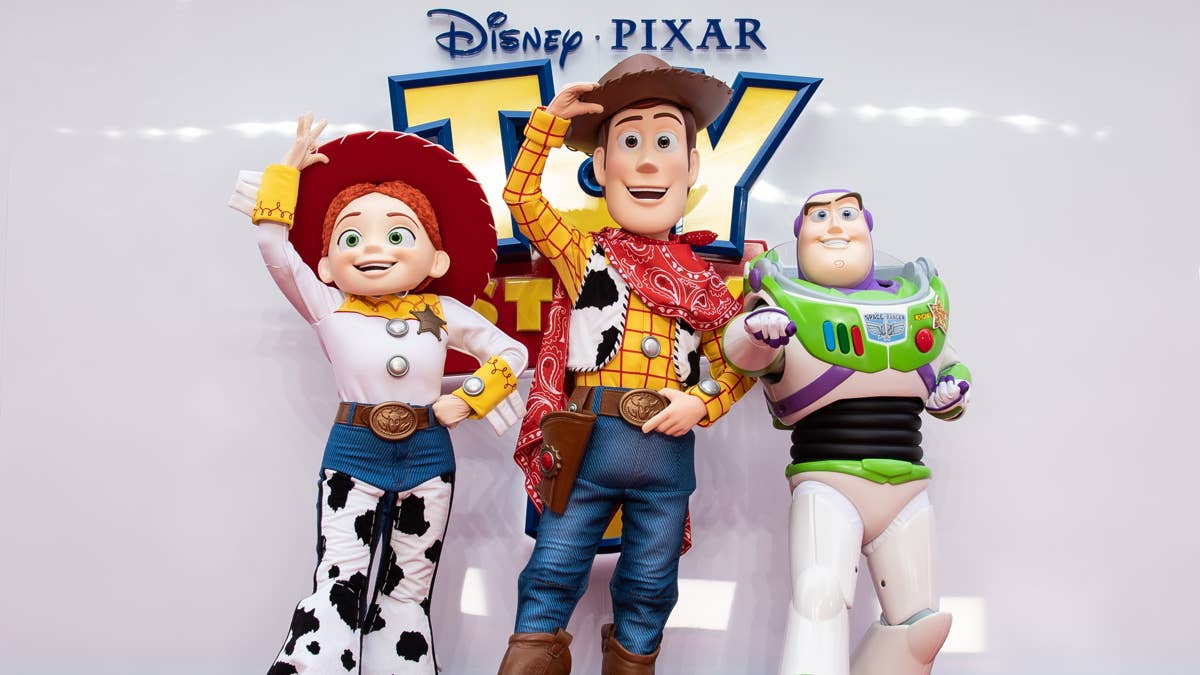
More than three decades after the original “Toy Story” debuted in 1995, Disney is preparing to release “Toy Story 5” exclusively in theaters on June 19, 2026. The film arrives seven years after “Toy Story 4” and at a pivotal moment for the movie industry, as studios continue searching for ways to bring audiences back to theaters in the streaming era.
While moviegoing habits have changed dramatically over the past decade, Disney is counting on one of Pixar’s most valuable franchises to prove that theatrical releases can still generate excitement across generations.
Through a combination of nostalgia, contemporary themes, and high-profile talent, the company appears to be positioning “Toy Story 5” as a major box-office event rather than simply another sequel.
Box office sales continue to face headwinds
The movie theater industry has struggled to fully recover from the disruption caused by the COVID-19 pandemic.
Domestic box office revenue experienced its sharpest decline in 2020, falling 81.4% to approximately $2.1 billion, according to Box Office Mojo data. The drop was especially notable given that the industry had reached a record high of nearly $11.9 billion just two years earlier in 2018.
While theater attendance and revenue have slowly but steadily improved since then, the industry has yet to return to pre-pandemic levels. The domestic box office generated $8.65 billion in 2025, up 1% from the previous year.
Disney has remained one of the industry’s strongest performers through the recovery. Four of the 10 highest-grossing domestic releases in 2025 were produced or distributed by the company, highlighting its continued ability to attract audiences to theaters despite growing competition from streaming platforms.
The “Toy Story” franchise has grossed more than $3.3 billion across its four films, with “Toy Story 4” the highest earner at $1.07 billion worldwide, according to The Numbers data.
With this context in mind, “Toy Story 5” represents more than a franchise sequel. It is also a test of whether established intellectual property can continue to drive theater attendance in a landscape increasingly dominated by digital entertainment.
How “Toy Story 5” is positioning itself for success
Few entertainment franchises have maintained cultural relevance across multiple generations. Disney (DIS) has repeatedly demonstrated an ability to extend the lifespan of its intellectual property, from Mickey Mouse and the Disney “Princess” franchise to “The Lion King” and “Toy Story.”
A key component of that success has been the company’s willingness to evolve familiar stories as consumer preferences change. Rather than relying solely on nostalgia, Disney frequently introduces new themes and characters that resonate with contemporary audiences.
“Toy Story 5” follows that strategy.
The film features a new original song by Taylor Swift, “I Knew It, I Knew You,” and introduces a new character, “Pizza with Sunglasses,” voiced by Bad Bunny. The involvement of two of the world’s most popular music artists reflects Disney’s effort to keep the franchise relevant to younger audiences while expanding its reach beyond traditional family moviegoers.
The strategy carries significant marketing advantages. Both Taylor Swift and Bad Bunny rank among the most-streamed artists globally and have built large, highly engaged fan bases capable of generating substantial online attention.
Here’s some of my previous coverage on Taylor Swift and Bad Bunny:
- Target makes huge deal for Taylor Swift partnership
- Bad Bunny drops a new clothing line with a huge retailer
The film’s storyline also addresses the growing influence of technology in children’s lives, a challenge many modern families face. The central conflict explores the relationship between traditional toys and digital entertainment through a new character named “Lilypad,” a smart tablet.
By incorporating themes of screen time, digital devices, and childhood development, Disney connects the franchise to issues that resonate with both children and parents, as well as to conversations already happening in many households. For adults who grew up watching the original films, those themes may make the story feel particularly relevant.
Disney appears to be betting that this blend of nostalgia and contemporary storytelling can help transform “Toy Story 5” into the type of event-driven theatrical experience that has become increasingly important for box-office success.
As communications analyst Sarah Lamodi wrote in The Harvard Gazette, audiences are often drawn to films that create a sense of collective experience.
“When there’s an event or specialness to a certain film, it tends to do well, but when people think of event cinema, they tend to think of things that are really big — films that are expensive, films that are lavish — but I also feel like something to pay attention to is how the event-ness isn’t just a question of size, but a question of delight in collective experience,” wrote Lamodi.
The rise of streaming has changed the industry
The broader challenge facing theatrical releases is the rapid growth of streaming platforms.
Services such as Netflix, Hulu, Amazon Prime Video, and Disney+ have fundamentally reshaped how consumers engage with entertainment. Convenience, on-demand access, and expansive content libraries have made streaming the preferred viewing option for many households.
Industry data reflects that shift. According to IBISWorld, revenue generated by internet publishing and streaming services has more than doubled over the past decade, significantly outpacing growth across much of the broader information sector.
The video streaming industry has expanded at a compound annual growth rate of 7.4% over the five years through 2026. Revenue is projected to reach $102.8 billion this year alone, representing annual growth of 5.3%.
Streaming now accounts for nearly half of all television viewing in the U.S., while industry profit margins have increased from 25.9% of revenue in 2021 to 28.1% in 2026.
These trends underscore the increasingly competitive environment facing theatrical releases. Studios are no longer competing solely against other films; they are competing against an entertainment ecosystem that gives consumers instant access to thousands of viewing options from home.
What this means for the future of the film industry
Disney’s strategy for “Toy Story 5” reflects a broader shift taking place in today’s entertainment landscape. As streaming continues to dominate consumer attention, theatrical success is becoming more dependent on creating experiences audiences believe are worth leaving home for.
By combining a globally recognized franchise, current themes, and high-profile talent, Disney is attempting to turn “Toy Story 5” into more than a movie release. The company aims to create a cultural event that draws multiple generations to theaters.
Whether that strategy succeeds could provide valuable insight into the future of theatrical filmmaking and the role major franchises will play in the industry’s continued recovery.
“I know that these Toy Story movies will keep going one way or another,” said “Toy Story 5” Director Andrew Stanton in an interview with Polygon. “They’re too valuable. So I wanted to improve the odds that they’ll get done right and the best way I could do was teach by example.”
Here’s some of my previous coverage on the entertainment industry business:
- Justin Bieber turns Coachella 2026 into a $5M merch empire
- Why the 2026 FIFA World Cup is a billion-dollar retail boom
- Why F1’s sponsorship boom is nearing $3 billion
For Disney, the success of “Toy Story 5” may ultimately be measured by more than ticket sales. It could also serve as an indicator of whether established franchises still have the power to bring audiences back to theaters in the streaming age.
Related: Disney World shares new theme park ticket prices for 2027