A handful of stocks have done most of the heavy lifting in your portfolio over the past four weeks, whether you’ve noticed or not. That’s the polite way to put it. The blunter version is that the entire U.S. stock market right now leans on the financial confessions of five companies.
Since the S&P 500 bottomed earlier this month, the index has clawed back 13% in a four-week sprint, and most of that move came from the same names that dominate every conversation about artificial intelligence: Alphabet, Amazon, Meta Platforms, Microsoft, Apple, Nvidia, and Tesla.
Together they’ve earned the nickname Magnificent Seven, and four of them, Alphabet, Amazon, Nvidia, and Meta, are each up more than 25% off the bottom, according to Bloomberg.
Now five of those seven step into the earnings confessional this week. The combined market value at stake is roughly $16 trillion, and every portfolio manager I know is canceling their dinner plans for Wednesday, April 29.
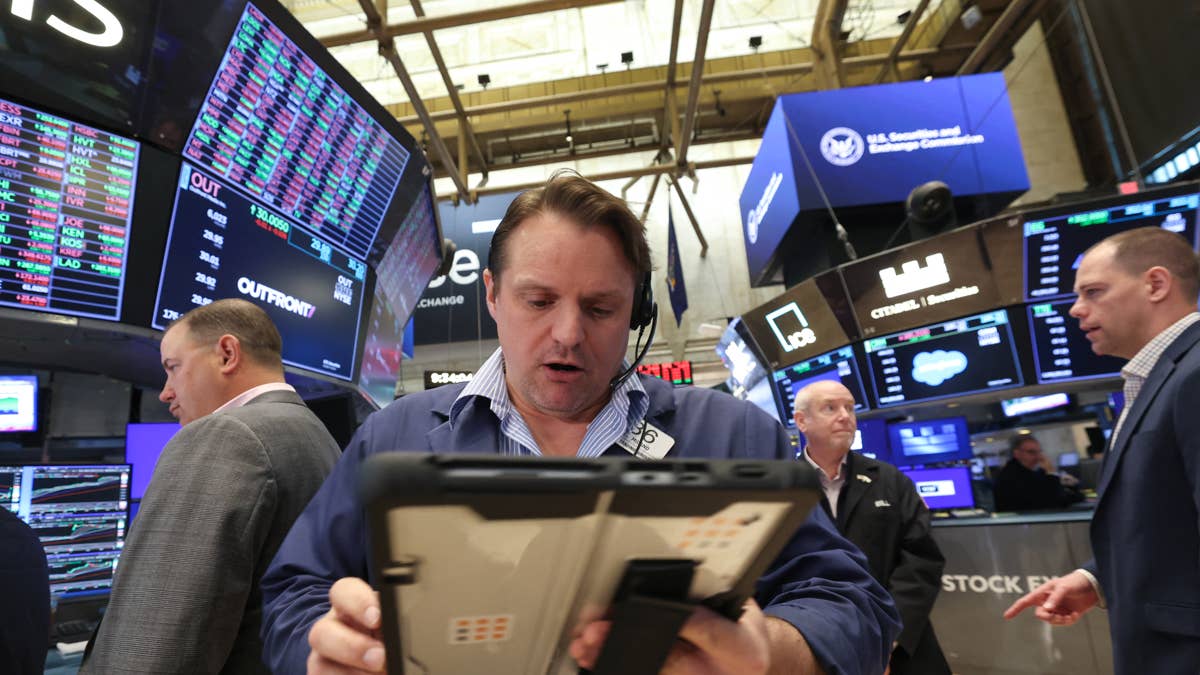
Why one earnings week now decides the whole market
Market concentration isn’t new, but the current reading is a different animal. The Magnificent Seven now represents about 33.7% of the S&P 500, up from just 12.5% a decade ago, according to AInvest market analysis.
That means a third of the country’s flagship index now lives or dies on the operating margins of seven companies. Most of those companies sell ads, cloud services, iPhones, or some mix of the three.
Related: Vanguard debunks a costly myth haunting Mag 7 investors
When I ran the capex math against the data compiled by Bloomberg, the picture got sharper. Combined capital expenditures from Microsoft, Alphabet, Amazon, and Meta are projected to hit $649 billion in 2026, up from $411 billion in 2025. That’s not quarterly. That’s annual, and it’s roughly what the U.S. government spends on Medicare in a single year.
The reason all that money is sloshing around is artificial intelligence. The hyperscalers, that’s the industry’s nickname for the four largest cloud platforms, are racing to build the data centers, chip clusters, and power grids needed to train and run the next wave of AI models. Each of them argues that whoever underbuilds will lose a generational platform shift. None of them want to be the one who blinks first.
That arms race has worked beautifully for the rally. It also means the entire premium baked into these stocks rests on one assumption, which is that all this spending will eventually translate into recurring revenue at the margins investors expect from software.
This week’s earnings are when that assumption gets tested in public.
More Wall Street
What Microsoft, Alphabet, Amazon, and Meta have to prove on April 29
Alphabet, Microsoft, Amazon, and Meta are scheduled to report after the close on April 29, with Apple following on Thursday, according to Bloomberg. Together those five companies are worth nearly $16 trillion, representing a quarter of the S&P 500 by themselves.
The bull case heading in is straightforward. Magnificent Seven first-quarter earnings are projected to grow 19% year over year, compared with 12% for the rest of the S&P 500, according to Bloomberg Intelligence. On full-year 2026, the gap is expected to widen, with the group’s net income growing 25%, compared to 11% for the S&P 493, according to Morgan Stanley research cited by Yahoo Finance.
Tesla already cleared the first hurdle. The EV maker beat first-quarter adjusted earnings estimates last week, though the report was overshadowed by a jump in capital spending.
What investors are actually watching the week of April 26
- The four-week S&P 500 rally has added 13%.
- Combined Big Four capex is projected at $649 billion in 2026.
- Q1 Magnificent Seven earnings growth is expected at 19%.
- 2026 net income growth is forecast at 25% for the group versus 11% for the S&P 493.
“It’s going to be a critical week,” and results need “to validate this recent move,” Truist Advisory Services chief investment officer Keith Lerner told Bloomberg.
Where the AI math gets uncomfortable for investors
This is where the story gets nervous. The same companies that powered the rally also dragged the Magnificent Seven down 16% during the first three months of 2026, more than twice the decline in the S&P 500. The reason was the same one investors are bracing for again. Capital expenditure shock.
When Microsoft reported in late January, capex hit $37.5 billion in a single quarter, and Azure growth came in lighter than analysts wanted to see. The stock fell roughly 5% after-hours that night.
Microsoft Chief Executive Satya Nadella has been making the case that the spend is justified. “We knew there was going to be margin in that area, and we kept building,” Nadella said at the Morgan Stanley TMT conference earlier this year, comparing today’s AI buildout to the early days of his cloud bet, according to Morgan Stanley’s own published recap of the event.
What struck me when I dug back through the analyst reaction was how often the same word kept turning up. Return on investment. Hyperscalers “need to prove that the spending will deliver strong returns,” Brian Barbetta, co-leader of Wellington Management’s technology team, told Bloomberg. Wedbush Securities managing director Dan Ives went further, comparing the current cycle to “the biggest infrastructure buildout since the railroads,” according to research notes published by Tech-Insider.
That’s a flattering comparison until you remember most railroad investors of the 1870s lost their shirts. The infrastructure was real. The returns took decades.
What the week of April 26 means for your money
For the average reader checking a 401(k) on the train home, the math is uncomfortably simple. If your retirement account holds an S&P 500 index fund, you already own these seven companies whether you bought them deliberately or not. Roughly a third of every dollar in that fund moves with them. On a $30,000 balance, that’s about $10,000 riding on April 29 and 30 earnings calls.
A blowout week, with strong cloud growth, disciplined capex guidance, and clean AI monetization stories, would likely extend the rally and add to the gains already booked since the bottom. A miss, especially on guidance, could unwind weeks of progress in a single session, just as it did in March.
There is a middle path, and it’s the one some long-term investors are quietly hoping for. A few earnings stumbles among the Magnificent Seven would force capital to rotate into the rest of the S&P 500, the so-called S&P 493, where revenue growth has been recovering quietly. That kind of broadening would be healthier for the market over time, even if it stings in the moment.
The reports start landing on April 29 after the bell. Set a reminder.
Related: Forget the Magnificent 7, it’s now the Magnificent 2